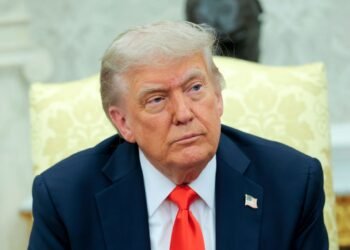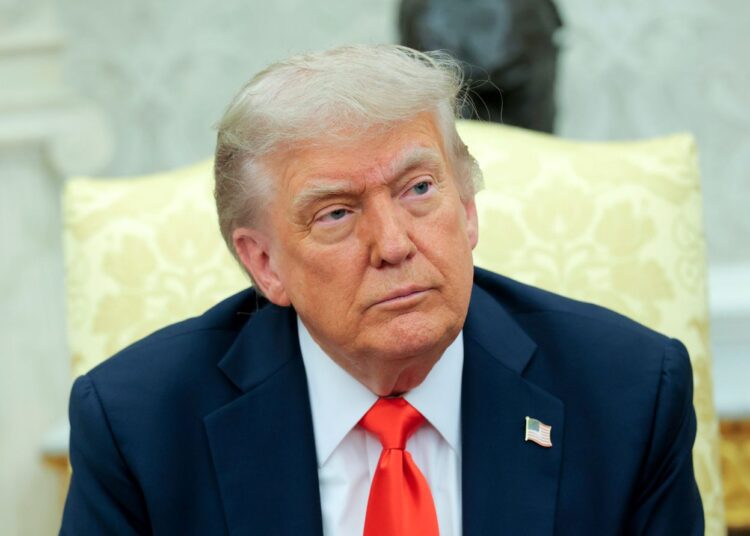
US President, Donald Trump has said that he expects to resume bombing Iran, as a fragile ceasefire approaches its deadline Wednesday with no deal in sight.
Speaking in an interview, Trump stated that he expects “to be bombing because I think that’s a better attitude to go in with.” “We’re ready to go,” he said, adding, “The military is raring to go.”
Trump said in an interview that he did not want to extend the ceasefire with Iran. “I don’t want to do that,” he said, adding, “We don’t have that much time.” Trump also said that the US was in a strong negotiating position with Iran and would end up with a “great deal.” He said that there is not “much time” to reach a deal, adding that Tehran can get themselves on “a very good footing” if they settle on one with Washington.
The US President previously threatened to bomb Iran’s water treatment facilities as well as its power plants and bridges if Tehran did not agree to abandon its nuclear weapons programme – a key sticking point between the two sides. Commenting on his threats to bomb Iranian bridges and the country’s electrical grid, Trump, without providing any evidence to support his comments, said, “It’s not my choice but it would also hurt them, it would hurt them militarily.”
“They use the bridges for their weapons, for their missile movements. They are trying to move the missiles because we have obliterated most of their missiles and they are trying to move their missiles around even during the ceasefire. We are totally loaded up. We have so much ammo, we have so much of everything… Much more powerful than it was four or five weeks ago. So we have used this to restock and they probably have done a little bit of restocking.”
Donald Trump
Also, Trump suggested that he suspects China may have helped Iran during the US-Israeli war against the country. “We caught a ship yesterday that had some things on it, which wasn’t very nice, a gift from China perhaps,” he said.
“I don’t know, but I’m sort of surprised, but because I have a very good relationship, and I thought I had an understanding with President Xi, but that’s all right. That’s the way war goes, right?”
Donald Trump
Trump’s statements follow the latest flashpoint between the US and Iran, who have been at war since the US-Israeli attacks on Iran on February 28. On Sunday, US naval forces fired on the Iranian-flagged cargo ship Touska in the Gulf of Oman and boarded it after it attempted to pass through a naval blockade that the US has enforced against Iran-linked ships trying to pass through the Strait of Hormuz since April 13.

Tehran called the incident a ceasefire violation and demanded the immediate release of the ship, its crew members and their families.
Iran’s Foreign Ministry described the seizure as “extremely dangerous” and “criminal,” warning that Tehran “will use all its capacities” to defend its national interests.
Trump’s Messaging To Affect Ceasefire Talks
Complicating Pakistan’s mediation efforts is Trump’s public messaging around the talks.
His posts on Truth Social and remarks to reporters, in which he claimed Iran had agreed to provisions that sources said had not been finalised, including the handover of enriched uranium, caused visible strain in diplomatic efforts during the first round.
Iranian officials publicly rejected the assertions, while US media reported that some Trump administration officials privately acknowledged his comments had been detrimental, given Tehran’s deep mistrust of Washington.
Umer Karim, an associate fellow at the Riyadh-based King Faisal Center for Research and Islamic Studies, however, said that Trump’s messaging was “more a form of posturing than a structural obstacle to the talks.”
Javad Heiran-Nia, a researcher specialising in Iranian affairs said how Islamabad frames the process will be critical, regardless of the outcome.“Pakistan is the only actor that has military and security ties with both Washington and Tehran,” he said, adding that its role in shaping the narrative around any agreement, allowing both sides to claim success, would be “of critical importance.”
A second round of talks, if they take place, is expected to begin on Wednesday. Whether Iran’s delegation attends remains the central question.
Heiran-Nia said that the consequences of failure in the planned talks would be stark.“The alternative, return to war, while unable to establish any sustainable balance, promises devastating destruction,” he said.
READ ALSO: Obuasi Prisons Launches Aquaculture Project To Boost Internal Food Production