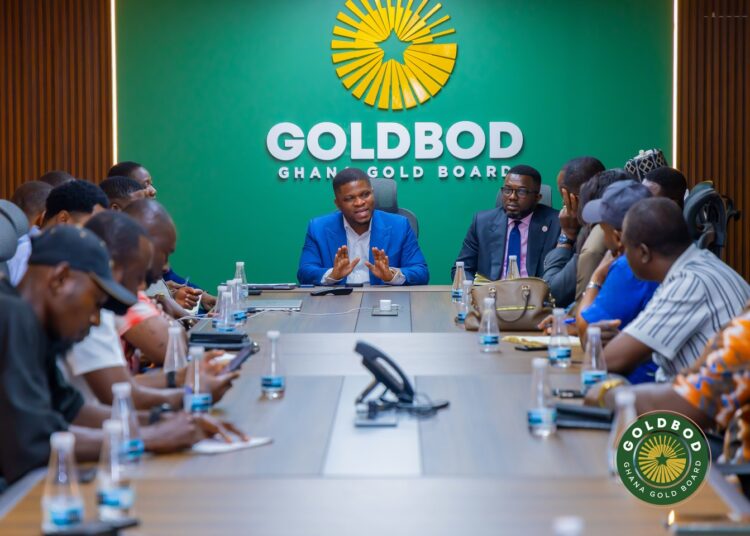
Ghana Gold Board (GoldBod) has initiated a strategic dialogue with the leadership of the Ghana National Association of Small-Scale Miners and the Concerned Small-Scale Miners Association of Ghana to address critical bottlenecks within the gold production value chain.
This engagement serves as a foundational step toward aligning the regulatory objectives of the Board with the practical operational needs of small-scale miners, aiming to foster a more transparent, efficient, and mutually beneficial mining ecosystem.
By bridging the gap between state regulation and grassroots mining activities, GoldBod intends to mitigate systemic inefficiencies that have historically hindered the sector’s contribution to the national economy.
“GoldBod remains committed to formalizing and strengthening the small-scale mining sector, with a focus on enhancing transparency, maximizing gold output and promoting responsible mining practices across the country.”
Ghana Gold Board (GoldBod)

The consultative session focused on rectifying purity losses a technical challenge that has negatively impacted the Board’s financial standing and broader industrial transparency.
Sammy Gyamfi, Esq., the Chief Executive Officer of GoldBod, articulated the necessity for a unified front, emphasizing that these purity discrepancies represent a significant hurdle to the integrity of the national gold trade.
To counteract these challenges, the Board is transitioning from purely regulatory oversight to a more participatory role.
Mr. Gyamfi reaffirmed the organization’s mandate to utilize up to 30% of its surplus to provide direct financial, technical, and equipment support to registered small-scale miners, provided these stakeholders deliver a structured and comprehensive working plan to guide the deployment of these resources.
Strengthening Industry Stability through Collaborative Governance
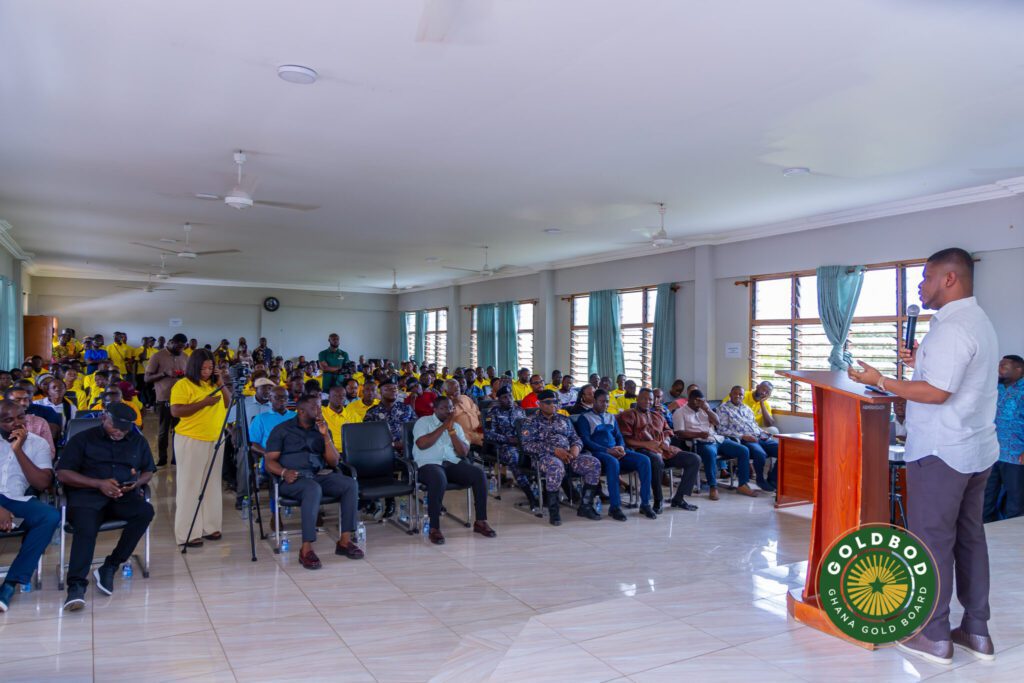
The strategic partnership between GoldBod and the small-scale mining associations marks a shift toward collaborative governance that is essential for long-term sustainability.
By involving miners in the decision-making process, GoldBod is not merely acting as a top-down regulator but as a facilitator of industry best practices.
This engagement is expected to enhance the mining sector by ensuring that state-allocated funds and technical support reach the practitioners most in need of modernization.
Furthermore, the introduction of advanced support systems—including the procurement of patrol boats for riverine protection directly addresses the proliferation of illegal mining activities.
According to industry analysts, “the integration of proactive enforcement with economic support for legal operators creates a disincentive for illicit practices.”
By formalizing these miners, the state gains better traceability of gold exports, which directly stabilizes the national currency by ensuring that a higher volume of produced gold enters the official reserve and export pipeline.
This structural reform is critical for transforming the sector from an informal, often volatile landscape into a significant, regulated engine of Ghana’s economic growth.
Targeted Support and Operational Transparency

The focus on a “comprehensive working plan” is a hallmark of the new administrative approach at GoldBod.
By requiring associations to submit detailed roadmaps for support implementation, the Board ensures that equipment and funding are not just disbursed, but are utilized effectively to improve output.
This mechanism creates accountability on both sides; the Board provides the necessary capital and tools, while the miners commit to higher production standards and verifiable refining processes.
Transparency is further bolstered through the rigorous assaying and valuation standards GoldBod is now enforcing.
When miners engage directly with the Board’s structured systems, they bypass intermediaries who historically extracted unfair rents or manipulated purity grades.
This direct line of trade ensures that miners receive fairer value for their yields, which in turn encourages more operators to register their activities.
As the sector becomes more formalized, the data gathered by the Board will facilitate more informed policymaking, allowing the government to tailor its support based on real-time production metrics, environmental impact assessments, and the evolving needs of the artisanal mining community.
Driving National Economic Transformation

The broader implications of this engagement extend well beyond individual mining sites. Gold is a primary pillar of Ghana’s macroeconomic stability, and the ability of the state to capture the full value of this mineral is paramount.
By providing technical assistance and modern equipment, GoldBod is effectively upgrading the technological threshold of the industry, moving miners away from rudimentary and environmentally destructive methods toward safer, more efficient extraction technologies.
This professionalization of the artisanal sector acts as a multiplier for the national economy. Increased, traceable output strengthens the country’s foreign exchange reserves and positions Ghana as a more reliable partner in the global bullion market.
Moreover, the focus on environmental remediation specifically the removal of illegal operators from water bodies demonstrates that the economic mandate of GoldBod is balanced with its environmental responsibilities.
As Sammy Gyamfi noted, the success of this reform will be measured by the “ability to foster a mining landscape that is not only productive but also legally sound and ecologically responsible,” ultimately ensuring that the nation’s precious mineral wealth yields lasting dividends for all Ghanaians.
READ ALSO: UKEF Announces Finance Partnership to Boost Veteran-Led Export Growth