Lebanon and Israel are set to begin a second session of direct talks in Washington today to discuss the possibility of extending a truce between Israel and the Hezbollah militant group and plans for future negotiations between the two neighbors with a long history of hostile relations.
The meeting between Lebanese Ambassador to the US, Nada Hamadeh Moawad and her Israeli counterpart Yechiel Leiter is the second between the two diplomats, days after they held the first of such direct talks between the two countries in three decades.
Last week’s talks were the first between Israel and Lebanon since 1993. Both countries have relied on indirect communication, often brokered by the US or UNIFIL, the United Nations peacekeeping mission in southern Lebanon.
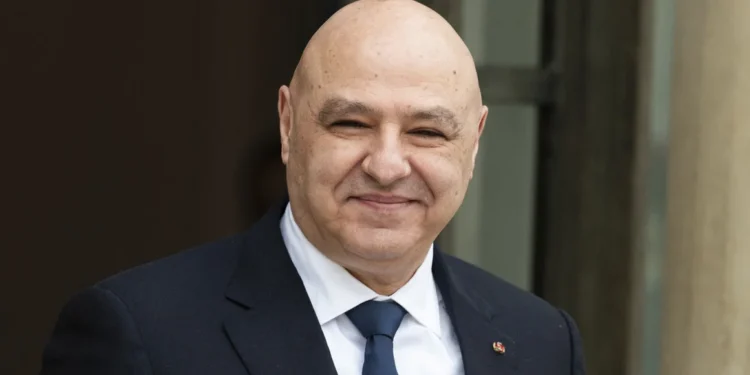
Lebanon’s President Joseph Aoun said that contacts are ongoing to extend the 10-day ceasefire between Israel and Hezbollah that went into effect last Friday. Aoun said in comments released by his office that Hamadeh will put forward an extension of the ceasefire during the meeting and ask for an end to ongoing Israeli home demolitions in villages and towns occupied by Israel after the latest war broke out on March 2.

The latest war started after Hezbollah fired rockets into northern Israel, two days after Israel and the US launched attacks on Iran. Israel responded with widespread bombardment of Lebanon and a ground invasion in which it captured dozens of towns and villages along the border. Israel’s military currently occupies a buffer zone stretching as much as 10 kilometers (6 miles) into southern Lebanon.
Israel says it aims to remove the threat of short-range rockets and anti-tank missiles towards northern Israel. Despite Hezbollah’s outright rejection, the talks are a major step for two countries with no diplomatic relations that officially have been at war since Israel’s inception in 1948.
Lebanon’s top political authorities, critical of Hezbollah’s decision to fire rockets toward Israel on March 2 in solidarity with Iran, quickly proposed direct talks in a bid to stop the escalation, hoping Israel would not launch its ground invasion.
The Lebanese government hopes the talks will pave the way to a permanent end to the war. While Iran has set ending the wars in Lebanon and the region as a condition for talks with the US, Lebanon insists on representing itself.
Ongoing Preparations For Wider-reaching Negotiations Between Lebanon, Israel
Preparations are ongoing for wider-reaching negotiations between Lebanon and Israel. Aoun said that the aim of the future talks is to “fully” stop Israeli attacks, withdrawal of Israeli troops from Lebanon, release of Lebanese prisoners held in Israel, deployment of Lebanese troops along the border and beginning the reconstruction process.
Ahead of negotiations in Washington, Israeli Foreign Minister Gideon Saar called on Lebanon to work with Israel to disarm the Iranian-backed militant group Hezbollah. “We don’t have any serious disagreements with Lebanon,” he said during Independence Day remarks to Israel’s ambassadors and diplomatic corps, adding, “There are a few minor border disputes that can be solved.”
Saar asserted that the obstacle to peace and normalization between the countries “is one: Hezbollah,” adding that Lebanon could have “a future of sovereignty, independence and freedom from the Iranian occupation.”
Since agreeing last week to a ceasefire with Hezbollah, the Israeli army has been leveling neighborhoods in towns and villages near the Lebanese-Israeli border. The military says that it destroys buildings that were used as outposts by the Iran-backed militant group.
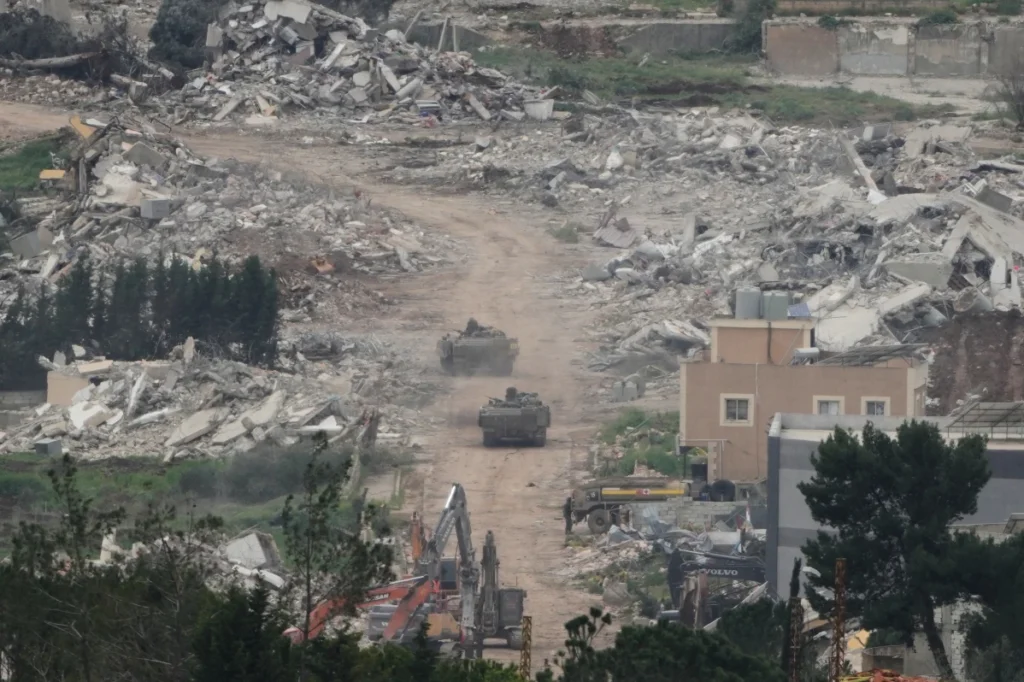
However in many cases, like the village of Beit Lif, the demolition is almost complete. The wide scale of destruction has Lebanese officials and residents increasingly worried that large numbers of people displaced by the latest war will have nowhere to return if the fragile truce holds.
Because of security concerns and limited access, neither UN peacekeepers nor Lebanese officials have been able to conduct a detailed survey of the villages where demolitions are taking place. However, observers have described entire residential neighborhoods in multiple villages being systematically destroyed.
The Israeli military said in a statement that the target of the demolition work is Hezbollah, not Lebanon or its civilians, and that it “operates in accordance with international law and does not destroy civilian property unless required by imperative military necessity.”
Tilak Pokharel, a Spokesperson for the UN peacekeeping force in southern Lebanon known as UNIFIL, said that peacekeepers “have observed demolitions taking place in several areas” since the truce
Lebanese officials plan to raise the issue of widespread demolitions today when they hold ceasefire talks with their Israeli counterparts in Washington.
READ ALSO: UK Moves to Harness Private Capital to Accelerate Defence Innovation