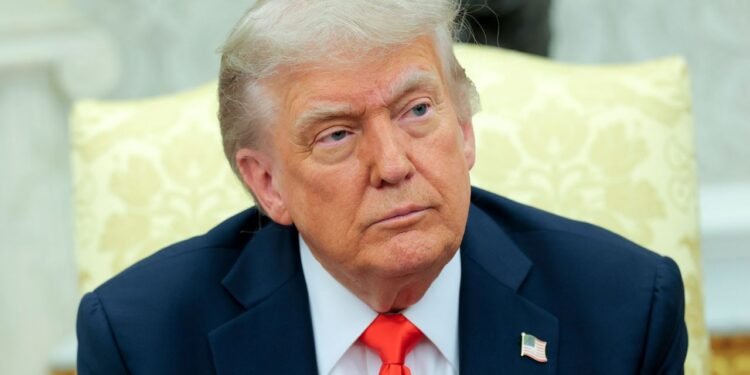
President Donald Trump has disclosed that Israel and Lebanon have agreed to extend a ceasefire between Israel and the Hezbollah militant group by three weeks after talks at the White House.
Trump said the meeting between the Israeli and Lebanese Ambassadors to the United States, the second in the past week, went “very well.” However, during an Oval Office gathering, he acknowledged that “they do have Hezbollah to think about.” The Iranian-backed group has opposed the talks, and since the initial ceasefire went into effect last Friday, there have been multiple violations by both sides.
Despite that, these were the first direct diplomatic talks in decades between Israel and Lebanon and represented a major step for neighboring countries that officially have been at war since Israel’s inception in 1948. The initial 10-day ceasefire had been due to expire Monday.
Trump told reporters, while surrounded by the Ambassadors as well as Vice President JD Vance and Secretary of State Marco Rubio, that Israel has a right to defend itself “if they’re shot at, and they will.”
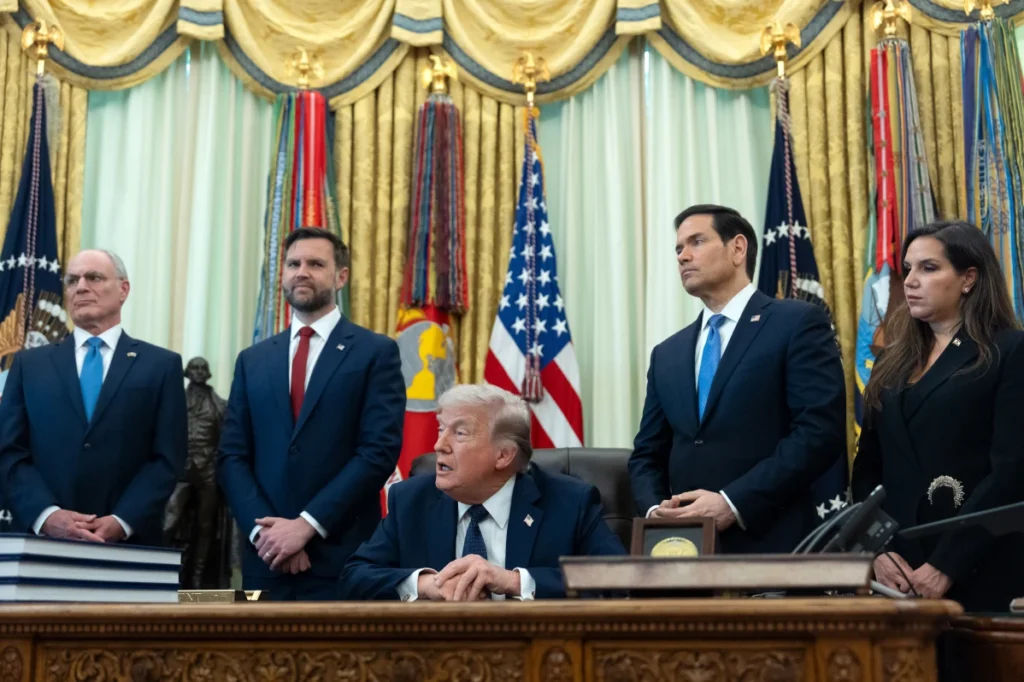
Trump said in a social media post that the United States is going to work with Lebanon in order to help it protect itself from Hezbollah. He added later in the Oval Office that he expects to meet in Washington with Israeli Prime Minister Benjamin Netanyahu and Lebanese President Joseph Aoun in the next couple of weeks.
Israeli Ambassador Yechiel Leiter expressed hope that together, under Trump’s leadership, peace between Israel and Lebanon can be formalized “in the very near future.”
Lebanese Ambassador Nada Hamadeh Moawad thanked Trump “for all your effort to help and to support Lebanon.” She referenced his “Make America Great Again” slogan when she said, “And I think with your help, with your support, we can make Lebanon great again.”
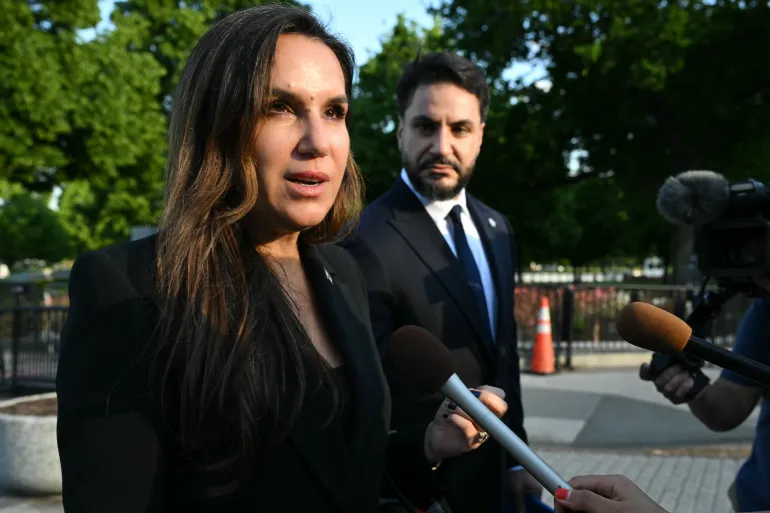
She spoke briefly spoken to reporters after leaving the meeting with Trump and the Israeli Ambassador to the US. “We expressed Lebanon’s position regarding stopping the Israeli violations and stopping the destruction in the south.”
Speaking to US media less than two hours after US President Donald Trump announced a three-week extension of the ceasefire between Israel and Lebanon, Israel’s Ambassador to the UN, Danny Danon, said that the ceasefire situation was “not 100 percent.” “Compare it to what happened before the ceasefire, you know it’s significantly better situation,” Danon said in the televised interview. Danon added that Israeli forces “have to retaliate” against Hezbollah sending rockets.
“Every time we see a threat, we take action. I think the main question is whether the Lebanese government is capable of enforcing a ceasefire or a peace agreement or actually applying sovereignty over southern Lebanon.”
Danny Danon
Israeli forces, which had invaded southern Lebanon since early March, have remained in place despite an initial 10-day ceasefire agreed earlier this month, with top Israeli officials repeatedly claiming Israel plans to occupy its northern neighbour up to the Litani River – deep inside Lebanese territory.
No Shame In Negotiating With Israel
Lebanon’s Foreign Minister, Youssef Raggi said that there is “no shame” negotiating with Israel if the goal is to “end the war” and “recover territory.”
In an interview, Raggi was unequivocal that Lebanon’s decision to negotiate “is not surrender, as some try to portray it, but a tool for defending national interests.” Raggi added that Lebanon is “not subordinate to anyone and is not a card in the hands of any axis.”
He also pushed back against those framing Lebanon as weakened in dealing with Israel, saying “it is a grave mistake to portray Lebanon as being in a position of absolute weakness, just as it is equally wrong to portray it as being in a position of surrender.”
On Hezbollah, Raggi was sharp in his criticism, accusing the group of gambling “with the fate of these villages and their residents in service of goals and agendas unrelated to the national interest or to the suffering of the people of the south.”
The Minister also drew a clear line between Lebanon and Iran, stating that “the Lebanese track is now separate from the Iranian track” and that Lebanon’s “interests are no longer hostage to the progress or deadlock of Iranian negotiations.”
READ ALSO: EU Formally Approves Ukraine Loan And 20th Sanctions Package Against Russia