The convergence of maritime security and economic governance has reached a new strategic peak, with the Ministry of Fisheries and Aquaculture Development (MoFAD) recently hosting a high-level delegation from Tanzania’s National Defence College (NDC) to stress-test the mechanical links between sovereign defense and the emerging blue economy.
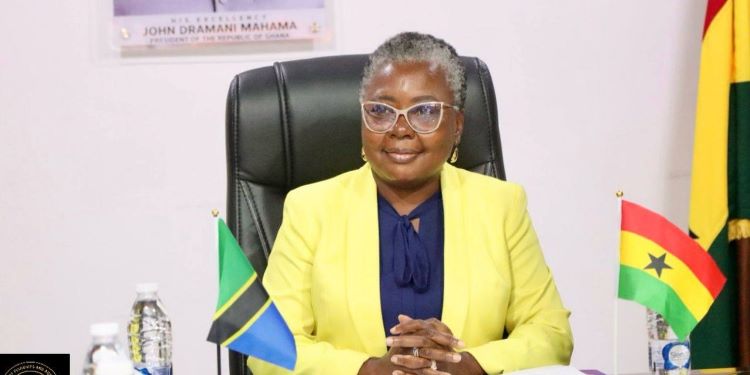
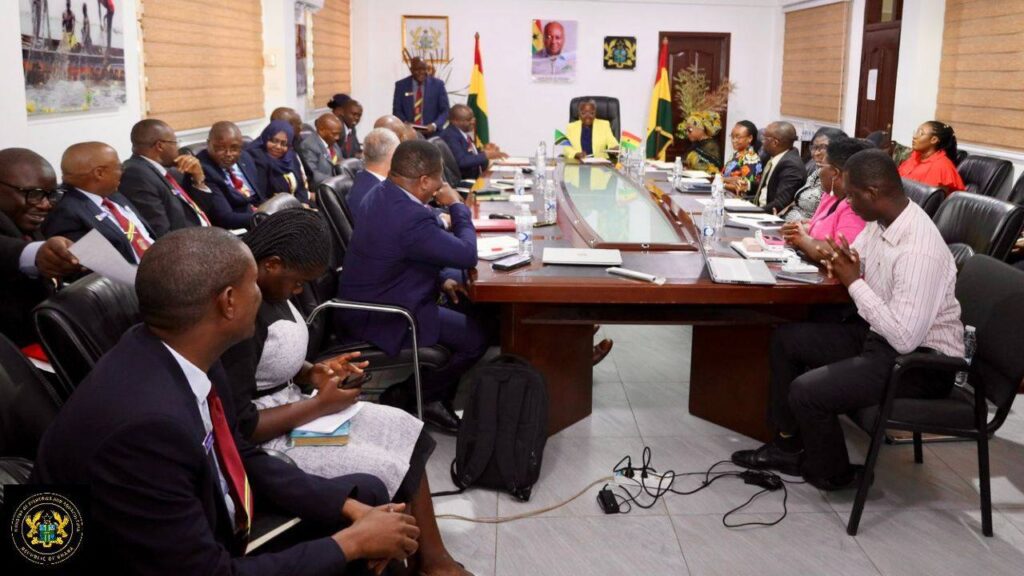
The engagement, led by Sector Minister Hon. Emelia Arthur and Major General Wilbert Augustin Ibuge from the NDC, represented a firm commitment to how Ghana views its territorial waters. According to MoFAD, the visit was a “neighborhood study tour,” signaling that the protection of marine resources is no longer just an environmental concern.
In her opening address to the Tanzanian delegation, Hon. Emelia Arthur underscored that the stability of the nation is inextricably linked to the health of its oceans, making the involvement of military strategists in the heart of fisheries management a frontline national security imperative.
“The Minister underscored the growing importance of safeguarding Africa’s marine resources, describing it as central to economic growth and sovereignty. A key highlight of the engagement was the shared concern over illegal, unreported, and unregulated (IUU) fishing, which she described as not only a fisheries challenge but also an economic crime and a threat to national sovereignty”
Ministry of Fisheries and Aquaculture Development
For a sector that supports over three million livelihoods and serves as the primary protein source for a significant portion of the population, any threat to the sea is a threat to the social fabric of the country.
The presence of the Ghana Armed Forces alongside the Fisheries Commission during these talks suggested a new, integrated approach to ocean governance where biological sustainability is enforced through military-grade surveillance and institutional coordination.
Hon. Arthur’s shift in terminology during the MoFAD-Tanzania dialogue, explicitly reclassifying Illegal, Unreported, and Unregulated fishing as a direct assault on national sovereignty, has profound implications for enforcement. It elevates the task of the Fisheries Commission from simple regulation to a counter-crime operation.
This requires a sophisticated technical apparatus, including Vessel Monitoring Systems (VMS) and enhanced maritime patrols, to reclaim the billions in lost revenue that drain out of the West African sub-region annually.
The collaboration with the Tanzanian National Defence College highlights the transboundary nature of these crimes, and because fish stocks and criminal networks do not respect maritime borders, Ghana is advocating for a regional defense posture.
The discussions explored how military intelligence can be leveraged to track rogue vessels and disrupt the illicit supply chains that facilitate overfishing.
Blue Economy Transition
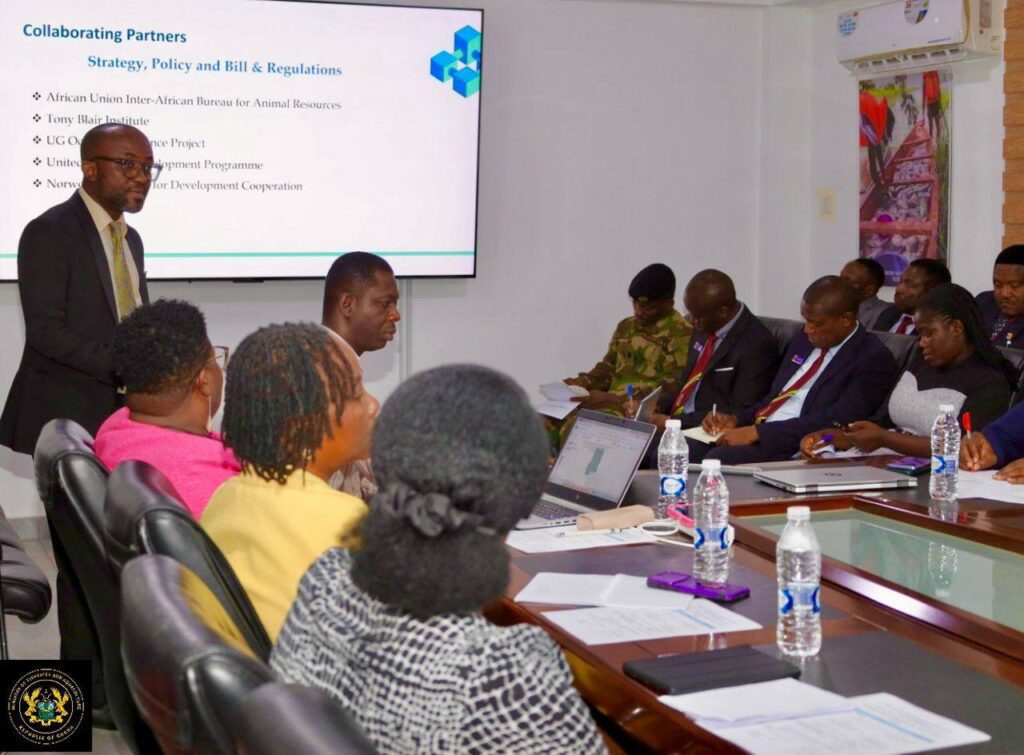
MoFAD noted that the study tour was anchored by presentations from Fred Antwi, Coordinator for the Blue Economy, and Dr. Angela Lamptey, Chair of the Scientific and Technical Committee of the Fisheries Commission. Their contributions provided the roadmap for Ghana’s deliberate shift toward a structured blue economy framework.
This transition is backed by the Medium-Term National Development Policy Framework (2026 – 2029), which aims to diversify the use of maritime space beyond traditional fishing. The strategy involves a multi-sectoral expansion into offshore energy, marine transport, and coastal tourism.
“She noted that Ghana is undertaking a deliberate shift toward a structured blue economy framework, backed by strengthened policies, legal reforms, and institutional coordination aimed at transforming the sector into a driver of sustainable economic growth”
Ministry of Fisheries and Aquaculture Development
This functional blue transition requires a delicate balance of spatial planning to ensure that oil and gas exploration does not destroy artisanal fishing grounds, and that tourism development does not compromise maritime security. Dr. Lamptey’s presentation emphasized that sustainable fisheries governance is the prerequisite for all other blue economy activities.
Without a stable and regulated biological foundation, the broader economic transformation agenda remains vulnerable to resource collapse and climate volatility. One of the most critical takeaways from the Tanzanian visit was the acknowledgment that “connected waters require connected responses.”
The Minister’s assertion that national efforts are insufficient reflects the realities of the Gulf of Guinea and the Indian Ocean, where both Ghana and Tanzania face similar challenges: climate change, increasing competition over dwindling stocks, and the rise of maritime piracy.
The study tour served as a functional laboratory for bilateral cooperation, moving beyond the high-level rhetoric of “South-South cooperation” into the mechanics of shared expertise and institutional strengthening.
The engagement also highlighted the role of closed fishing seasons and aquaculture investment as tools for stock restoration. Ghana positioned itself as a continental leader in maritime resource management, sharing these domestic successes with the Tanzanian delegation.

The goal is to create a unified African voice in global ocean governance, where the continent’s resources are managed strategically rather than exploited by external actors. The call for unified action was a pragmatic demand for a continental maritime shield that protects African interests from the high seas to the coastal communities.
“National efforts alone will not be sufficient.” Hon. Emelia Arthur said, highlighting the realization that the Blue Economy cannot exist without Maritime Security. Hosting the Tanzanian Defence College marks a pivotal moment in Ghana’s administrative history, as MoFAD and the Fisheries Commission continue to implement legal reforms and strengthen enforcement systems.
The partnership with regional peers will be the deciding factor in the success of the transition. As the meeting concluded, the optimism shared by both sides pointed toward a future where tangible outcomes – ranging from joint patrols to harmonized maritime laws – will define the relationship.
READ ALSO: NDC Suffers Grassroot Decline in Volta and Oti – Poll