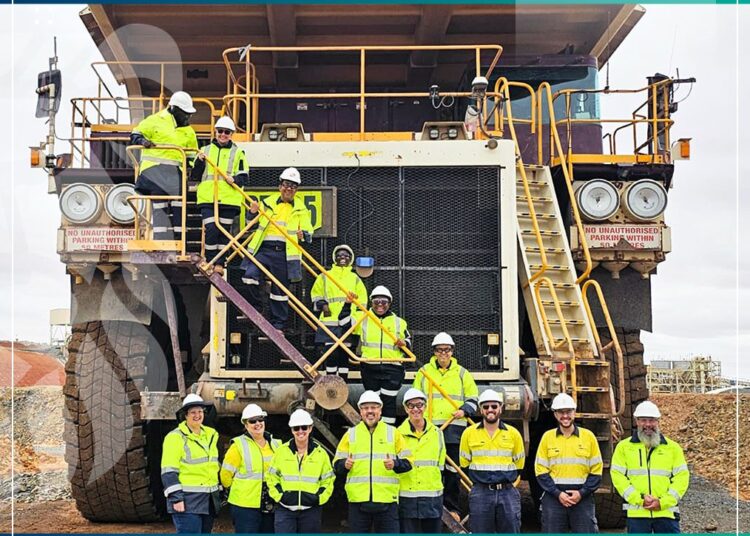
Gold Fields, the global gold mining giant, has reported a significant 25 percent year-on-year decline in gold production at its flagship Tarkwa Mine for the first quarter of 2026.
According to the company’s latest operational update, the mine’s output plummeted to 94,000 ounces (94koz) during the period, a sharp contrast to the 126,000 ounces (126koz) recorded during the same timeframe in 2025.
This downturn at one of West Africa’s largest surface mines underscores a challenging start to the year for the company’s Ghanaian operations, primarily driven by a combination of fluctuating ore quality and technical setbacks within the processing infrastructure.
“Tarkwa’s production decreased by 25% YoY to 94koz during the quarter driven by lower yield and lower tonnes milled. This was due to a lower average feed grade as the mill processed a higher proportion of low-grade stockpile material versus ex-pit ore.”
Gold Fields
The mining firm attributed this substantial production dip to a “lower average feed grade,” as the processing plant was forced to treat a higher proportion of low-grade stockpile material rather than the typically richer ex-pit ore.
This strategic shift in feed material resulted in reduced yields and a decrease in the total tonnes milled during the quarter. Beyond the geological challenges of lower ore grades, operational efficiency was severely hampered by “reduced plant availability following unplanned downtime,” which restricted the overall throughput of the facility.
These technical disruptions at Tarkwa mirrored broader difficulties across the Gold Fields portfolio, with the Gruyere and Agnew mines also facing distinct operational hurdles that contributed to a volatile quarterly performance for the group.
Economic Strains and Rising Operational Costs
While production volumes at Tarkwa receded, the financial landscape for Gold Fields was further complicated by escalating group costs.
The company reported that higher consumable prices and a “stronger gold price” paradoxically increased fiscal pressure through rising royalties.
In Ghana, where mineral royalties are often tied to the prevailing market value of gold, the stronger pricing environment reaching as high as $4,855 per ounce in some reports meant that Gold Fields faced a heavier payout burden despite lower output.
Furthermore, the company dealt with foreign exchange pressures and increased capital expenditure, leading to a 10% rise in the group’s All-in Costs (AIC) to $2,046 per ounce.

National Impact and Ghana’s Fiscal Outlook
The production slump at Tarkwa carries significant implications for Ghana’s national economy, given the mine’s role as a cornerstone of the country’s extractive sector.
Large-scale gold mines are the primary “anchor” for Ghana’s mineral revenue, with the Minerals Income Investment Fund (MIIF) reporting record royalty receipts of GH₵5.43 billion in the previous year.
A 25% decline in production at a major site like Tarkwa threatens the state’s projected revenue streams, particularly as the government relies on steady output to fund its national budget and support fiscal stability.
Although high global gold prices may partially offset the volume loss for the national treasury, the “unplanned downtime” and operational volatility signal a potential risk to the reliability of mineral income if recovery plans are not swiftly executed.
Recovery Strategies and Future Outlook
Despite the underwhelming start to 2026, Gold Fields maintains a posture of “confidence in achieving its full-year production guidance.”
The company’s management has emphasized that the current recovery plan at Tarkwa is specifically aimed at normalizing throughput and transitioning back to higher-grade ex-pit ore.
This optimistic outlook is bolstered by the group’s overall financial health, which saw a 34% year-on-year reduction in net debt to $1.3 billion by the end of March 2026.
As the mine moves past its first-quarter bottlenecks, both investors and Ghanaian fiscal authorities will be closely monitoring the “operational improvements” promised for the remainder of the year to ensure the Tarkwa mine returns to its historical performance benchmarks.
READ ALSO: BTS Receives Royal Welcome in Mexico