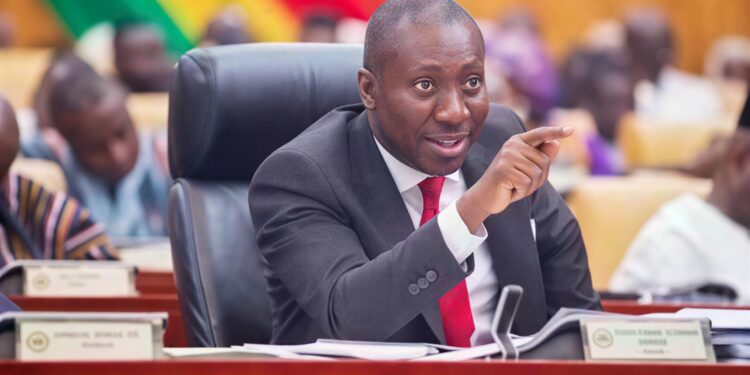
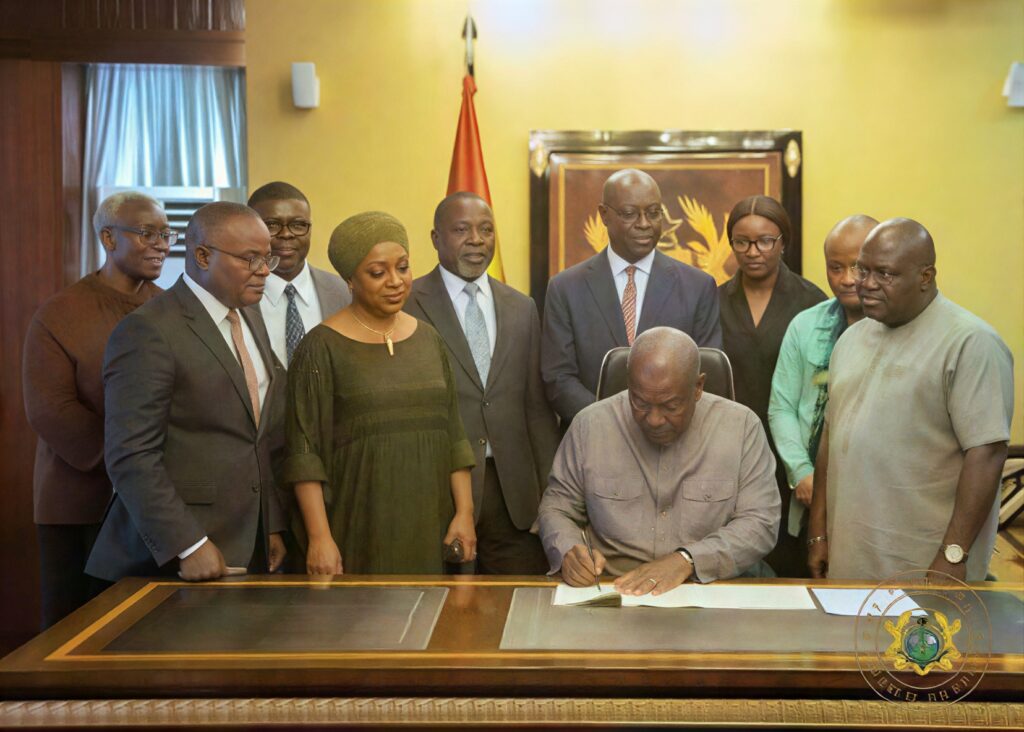
The Minority Leader in Parliament, Honourable Alexander Kwamena Afenyo-Markin has expressed reservations over the Value for Money Office Act, 2026, following its assent into law by President John Dramani Mahama on Monday, May 11..
Honourable Afenyo-Markin responded to the development in a social media post in which he questioned the effectiveness of the newly created institutional framework. He described the legislation as amounting to “much ado about nothing” in its current form.
The Act establishes a Value for Money Office intended to enhance oversight in public procurement. However, the ongoing discussion has centred on whether its design provides sufficient independence to ensure credible regulatory performance.
According to the Minority Leader, concerns arise from the composition of the governing board, which he believes reflects a strong influence of political appointments. He argued that this arrangement raises doubts about neutrality in decision making processes.



He further noted that the office reports directly to the Finance Ministry, a structure he says compromises institutional autonomy. In his view, such reporting lines weaken the ability of the body to function as an effective anti-corruption institution.
“There is no real independence. The board reports directly to the Minister. A regulatory body that lacks independence cannot fight corruption in public procurement.”
Hon. Alexander Afenyo-Markin
The Minority Leader argued that the governance structure places significant control within the executive arm of government. He suggested that this configuration limits the institution’s capacity to operate independently and effectively monitor procurement activities.
He added that such an arrangement, risks shaping procurement oversight in a way that is influenced by political considerations. This, he warned, could have implications for public confidence in the integrity of the system.
Scrutiny Grows Over Independence Of Value For Money Office
Honourable Alexander Afenyo-Markin recalled that during the Consideration Stage of the bill, he had cautioned Parliament about potential risks associated with the proposed framework.
He asserted that the law, instead of strengthening anti corruption efforts, introduces an additional layer of politically influenced oversight within procurement administration.
He stated that the concerns raised at the time were not accepted during parliamentary deliberations. He now argues that subsequent developments have reinforced the Minority’s earlier position on the matter.

The Minority Leader further described the Act as falling short of its intended reform objectives. He indicated that what is presented as a transparency initiative effectively expands administrative structures in a way that could serve political interests under the guise of accountability.
He stressed that in other jurisdictions, value for money institutions operate with clear safeguards that guarantee independence. These safeguards typically cover appointment processes, operational autonomy, and oversight authority, which collectively support public trust in such bodies.
“What is being presented as reform is simply another layer of bureaucracy designed to serve political interests under the guise of transparency.”
Hon. Alexander Afenyo-Markin
He added that Ghana already has a range of legal and institutional frameworks governing public financial management. These include the Public Financial Management Act, the Public Procurement Act, and internal audit mechanisms within state institutions.
From his perspective, the core challenge lies not in the absence of laws but in enforcement capacity. He argued that existing institutions require stronger resources and enhanced accountability systems to function effectively.
He also suggested that improving existing structures would be more beneficial than creating new bodies with overlapping mandates. According to him, institutional effectiveness depends on strengthening and properly enforcing current systems.
The Minority Leader urged the government to prioritise reinforcing established accountability institutions rather than introducing structures that may be exposed to political control. He cautioned that weaknesses in design could undermine procurement integrity.
He further noted that attention should be placed on how the new law is implemented. In his view, insufficient safeguards could allow the framework to be used in ways that justify questionable procurement decisions.
He concluded that the ultimate impact of the Act will depend on whether it strengthens accountability or becomes another layer within public financial management that complicates oversight processes.
READ ALSO: NPP Should Shut Up And Let’s Fix Galamsey — Wonder Mandilo