President John Dramani Mahama has called for a bold new era of African self-reliance in healthcare financing, pharmaceutical manufacturing, and public health innovation, declaring that the continent must take its destiny into its own hands if it hopes to meet future health challenges and achieve long-term development goals.
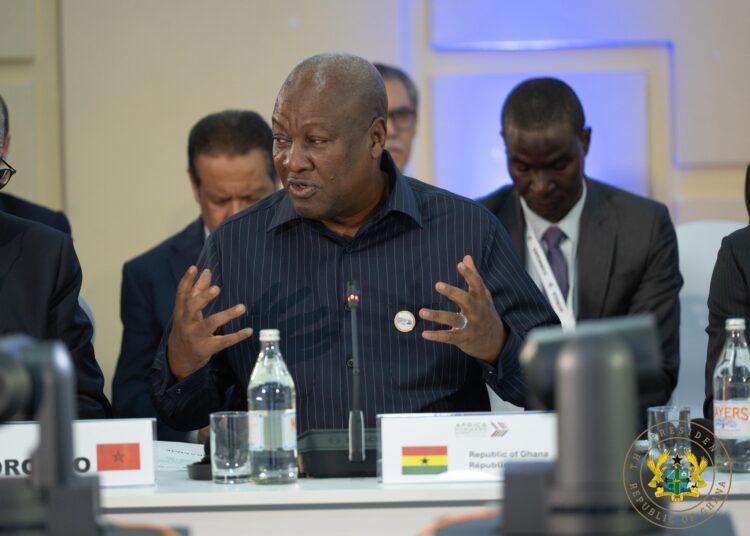
Speaking at the Rethinking Health roundtable during the Africa Forward Summit in Nairobi, President Mahama positioned Ghana’s Accra Reset initiative as a strategic continental partnership designed to reduce Africa’s dependence on external health systems and build sovereign capacity across the healthcare value chain.
The summit, co-hosted by President William Ruto and President Emmanuel Macron, brought together heads of state, global development institutions, health experts, private sector leaders, and multilateral partners to discuss Africa’s future in an era of changing global financing patterns.
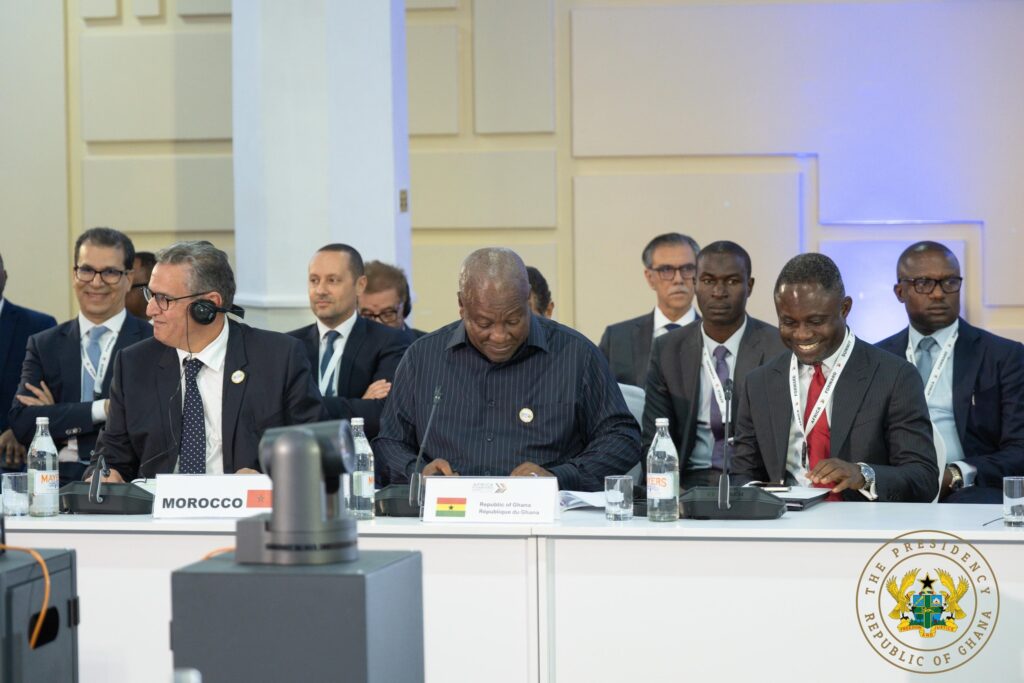
As co-chair of the health roundtable, President Mahama delivered both the opening and closing remarks, using the platform to issue one of his strongest calls yet for coordinated African leadership in health financing and manufacturing.
“I believe everybody is familiar with the Accra Reset. We were motivated to come together and take our destiny into our own hands based on global realities.”
President John Dramani Mahama
Global Funding Pressures Force New African Thinking
President Mahama explained that the Accra Reset was born out of growing concern over the decline in international funding for health interventions and humanitarian responses around the world.
According to him, African leaders recognized that traditional aid structures were becoming increasingly unreliable, forcing the continent to rethink how it finances its health systems and secures critical medical supplies.
“Finance for health interventions and humanitarian crisis response across the world was beginning to dwindle, and we needed to act in order that Africa could continue to meet its obligations and the Sustainable Development Goals”.
President John Dramani Mahama
The Ghanaian leader argued that Africa can no longer rely on external goodwill to guarantee the health of its citizens, particularly at a time when global crises are placing increasing pressure on donor countries and multilateral institutions.

Instead, President Mahama said, the continent must develop internal financing mechanisms and stronger industrial capabilities. President Mahama highlighted what he described as troubling structural weaknesses in Africa’s healthcare ecosystem.
Import Dependence Remains a Major Risk
According to him, the continent currently imports approximately 70 percent of its pharmaceutical products and nearly 90 percent of its vaccines, despite carrying a disproportionately high share of the global disease burden.
“Africa bears 25 percent of the global disease burden, yet only 3 percent of pharmaceuticals are produced on the continent,” he noted. For President Mahama, those figures represent not only a public health concern but also an economic vulnerability that must be urgently addressed.
He said the Accra Reset seeks to transform healthcare from a social expenditure into a strategic economic pillar capable of generating jobs, driving innovation, and strengthening national resilience.
“We realized that we needed to take our destiny into our own hands, increase our own financing, leverage domestic revenue, and invest in healthcare as a strong economic pillar”.
President John Dramani Mahama
Debt Burdens Threaten Health Investments
While advocating for greater domestic investment, President Mahama also acknowledged the difficult fiscal realities confronting many African economies. He pointed to the continent’s growing debt burden as one of the biggest obstacles to sustainable healthcare financing.
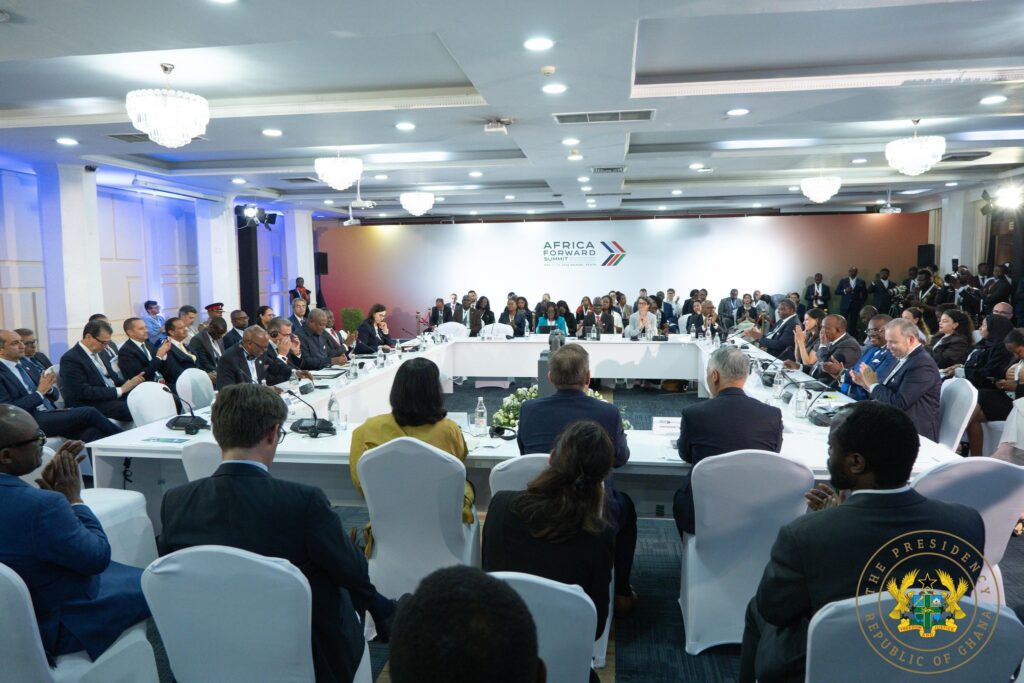
“One of the difficulties in leveraging domestic financing is debt. If you are spending 50 percent of your revenue to service debt, how much is left for education, health, agriculture, and all the things that create decent livelihoods for your people?”
President John Dramani Mahama
His remarks resonated strongly with participants from heavily indebted developing economies, many of whom continue to struggle with balancing debt obligations against urgent social spending needs. President Mahama argued that these realities make continental cooperation even more urgent.
From Dialogue to Action Through Accra Reset
The President stressed that the Accra Reset is not intended to become another policy declaration without implementation. He said the initiative is focused on building practical mechanisms that allow African countries to work collectively toward measurable health outcomes.
According to him, the next phase of the initiative will focus on building a continental compact that allows African states to pool resources, align policy priorities, and mobilize capital for strategic healthcare investments.
President Mahama disclosed that important institutions, including the Africa Centres for Disease Control and Prevention, are already aligned behind the initiative.
He also indicated that upcoming engagements, including discussions linked to the World Health Organization, would help consolidate the continent’s strategic priorities. “We should not be fragmented in the work that we are going to do. All of us need to pull together to achieve the outcomes we want,” he urged.
Public and Private Sectors Must Work Together
President Mahama made it clear that achieving Africa’s healthcare ambitions will require far more than government action alone. He called for stronger collaboration between public institutions, development finance partners, private investors, and international allies.
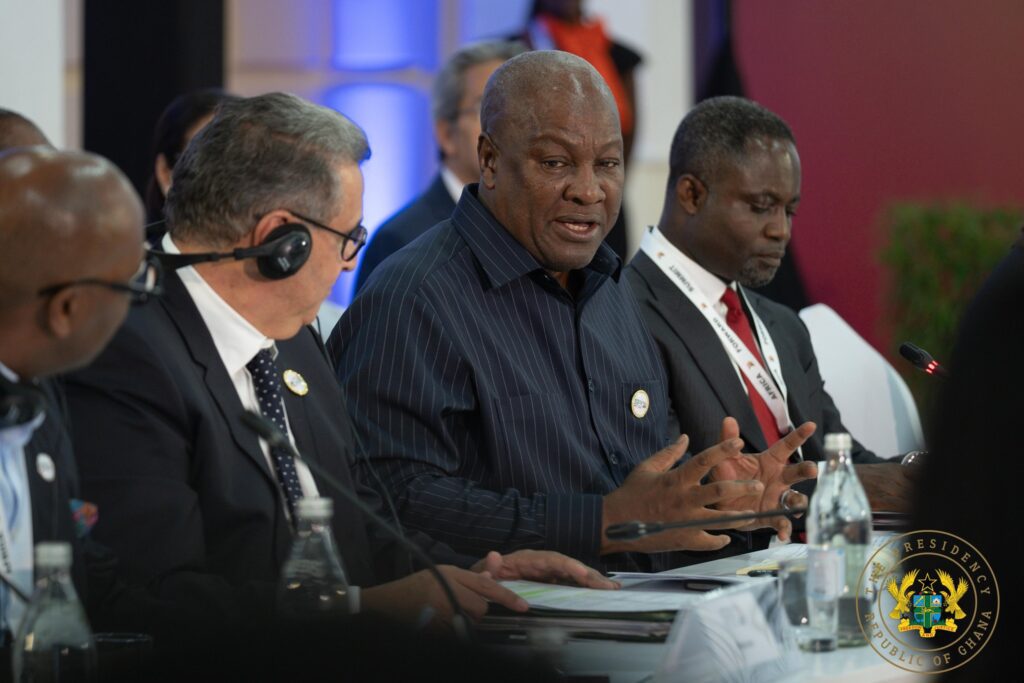
“Funding is available, but we need to bring the private sector, state parties, and our partners into the same boat. It is not about isolationism. It is about how we can work better with our partners in order to achieve outcomes that benefit our people.”
President John Dramani Mahama
In his closing remarks, President Mahama reflected on several initiatives presented during the roundtable, including vaccine manufacturing commitments, technology transfer programs, and new financing partnerships. However, he cautioned that ambition alone would not deliver results.
He then offered what may become the defining principle of the Accra Reset: “For us, the test in Accra Reset is simple. Whatever you do, does it build sovereign capacity or does it deepen dependence?”
That question, he suggested, must guide every partnership, every investment, and every policy decision if Africa is to truly lead its own health destiny.
READ ALSO: UK Military Advisor Flags Russia Ceasefires as Strategic Deception