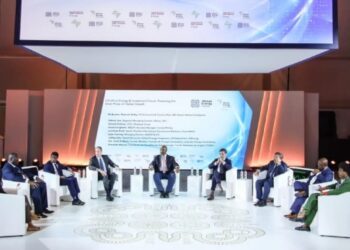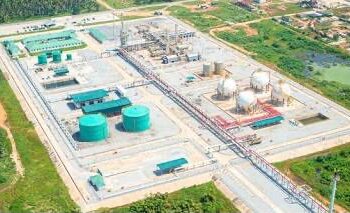

Petroleum Commission, Ghana National Petroleum Corporation (GNPC), and TGS are set to host an exclusive Data Show at the upcoming AOW:Energy 2026 summit to present highly prospective offshore and onshore oil blocks to international explorationists.
Scheduled to take place in Accra, Ghana, from 1–3 September 2026, this highly anticipated event is positioned as a premier venue “where deals begin” for global operators and technical teams.
Led by expert technical teams, the showcase aims to provide a dedicated platform for energy firms to screen high-potential acreage, evaluate future license positions, and secure direct negotiations for strategic portfolio growth in West Africa.
” Driven by the TGS, the Petroleum Commission and Ghana National Petroleum Corporation (GNPC), and their expert technical teams, this exclusive Data Show will present some of the most compelling subsurface insights across West Africa. This opportunity is specifically designed for G&G teams and operators looking to expand portfolios and unlock new licence opportunities in Ghana. Be part of the next major discovery.”
Petroleum Commission
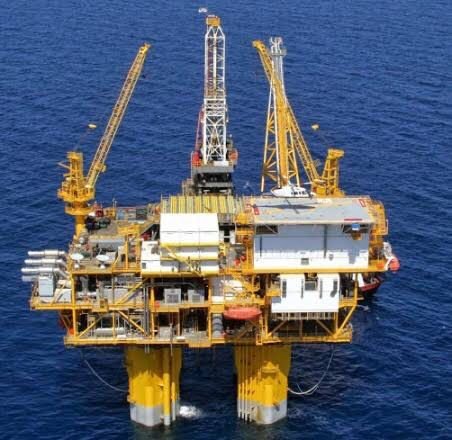
This exclusive operator opportunity is explicitly designed to give geology and geophysics (G&G) teams direct access to premium seismic data from some of Africa’s most exciting geological plays.
Attendees will be able to closely examine subsurface profiles from the West African Transform Margin, a renowned leading geological play with proven hydrocarbon systems and immense subsurface potential.
Additionally, the technical sessions will offer deep-seated insights into the Voltaian Basin, which remains a highly strategic asset for the government of Ghana as it seeks to diversify its resource mapping and unlock new domestic license opportunities.
Unlocking the West African Transform Margin and Voltaian Basin
The upcoming summit comes at a pivotal moment when the state is actively seeking to reverse production declines in mature fields by aggressively marketing its frontiers.
By bringing together the core technical brains behind the national subsurface data, the state is lowering the traditional barriers to entry for international oil companies (IOCs).
Rather than navigating protracted, opaque bureaucratic channels, operators can leverage this “focused environment to evaluate market entry” and initiate direct negotiations on the spot.

The immediate availability of high-resolution seismic lines reduces the initial risk capital usually required for early-stage exploration, making Ghana a far more competitive destination compared to regional rivals.
Furthermore, focusing on both the established West African Transform Margin and the frontier Voltaian Basin creates a dual-investment pathway that appeals to different corporate risk profiles.
Established mid-tier operators can target the proven systems of the offshore transform margin for faster monetization, while long-term players can invest in the massive, untapped onshore potential of the Voltaian Basin.
This balanced approach ensures that the country does not rely solely on its deepwater assets, but instead establishes a diversified pipeline of exploration projects that can sustain the local service industry for decades.
Catalyzing Foreign Direct Investment and Technological Exchange
Hosting an event of this magnitude directly within Accra signals a structural shift toward establishing Ghana as the central hub for energy diplomacy and deal-making across the sub-region.
The arrival of international G&G teams will inject significant capital into the local hospitality, logistics, and corporate services sectors, demonstrating the broader economic multiplying effect of a vibrant upstream industry.

More importantly, the direct interactions between local technocrats at the Petroleum Commission and foreign engineering teams will foster an environment of high-level technological exchange, exposing domestic engineers to cutting-edge cloud-based seismic processing and machine-learning interpretation techniques.
Successfully securing new operators through these direct negotiations will trigger substantial upstream investments, directly impacting state revenues through signature bonuses, surface rentals, and future royalty commitments.
As new exploration licenses are awarded, international firms will be bound by the strict local content frameworks enforced by the Petroleum Commission.
This guarantees that a significant portion of the incoming capital will be legally funneled into local joint ventures, fabrication yards, and specialized technical training institutions, thereby accelerating the development of indigenous capacity.
Driving Long-Term Energy Security and Economic Resilience
Securing new exploration campaigns is fundamentally tied to the long-term economic survival and industrialization goals of the nation.
As existing fields naturally decline, the discovery of new, commercially viable fields is the only way to safeguard domestic crude supply and ensure a steady stream of associated gas for thermal power generation.
Stable domestic gas production protects the country from volatile international liquified natural gas (LNG) prices, lowering the overall cost of electricity for local manufacturing companies and reducing the fiscal strain on the national grid.
Ultimately, the collaborative push by the regulatory body, the national oil company, and global data partners like TGS shows a unified front that reassures the global investment community of fiscal and regulatory stability.
READ ALSO: Ghana’s Economic Tide Has Arrived, Effah Declares