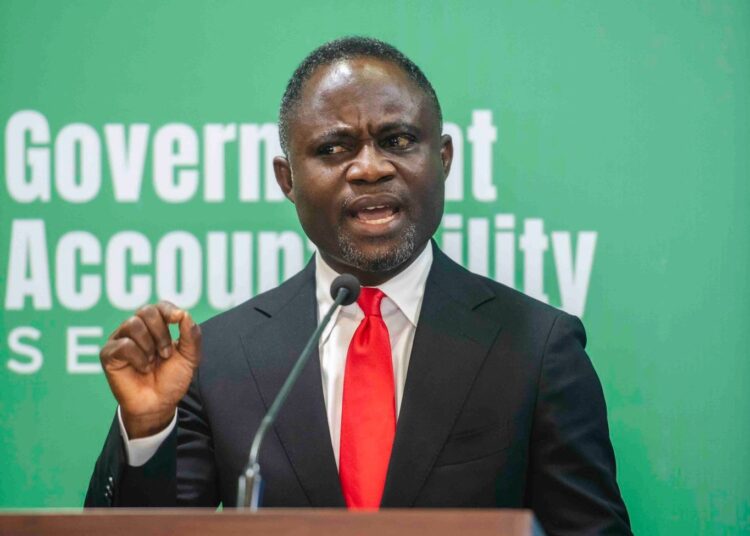
The Minister for Health, Hon. Kwabena Mintah Akandoh, has directed the Ghana Health Service (GHS) to take the lead in implementing the government’s Free Primary Healthcare Programme, stressing that the initiative must translate into practical improvements in healthcare delivery and guarantee access to essential health services for all Ghanaians without financial barriers.
Addressing the 2026 First Senior Managers’ Meeting of the Ghana Health Service, the Minister said the success of the flagship programme would depend on effective implementation, strong supervision, quality service delivery and a renewed commitment by health managers across the country to improve patient experiences.
He urged regional and district health directors to move beyond policy discussions and focus on ensuring that the programme delivers tangible benefits to communities, particularly at the primary healthcare level where many citizens first seek medical attention.

According to Hon. Akandoh, every Ghanaian, regardless of income level, geographical location or membership status under the National Health Insurance Scheme (NHIS), should be able to access essential primary healthcare services without making payments at the point of care.
“The commitment is clear; every Ghanaian regardless of income, location or national health insurance membership status must be able to access essential primary healthcare services without payment at the point of care”.
Minister for Health, Kwabena Mintah Akandoh
Free Primary Healthcare Programme not to Replace Existing Healthcare Intervention
The Health Minister emphasised that the Free Primary Healthcare Programme is not intended to replace existing healthcare interventions but rather complement them as part of a broader strategy to achieve Universal Health Coverage.
He explained that the programme would work alongside the NHIS and the government’s Mahama Cares initiative to create a comprehensive healthcare protection system that caters for patients at different levels of care.
“Of all the three health policies — Free Primary Healthcare, Mahama Cares and NHIS — none will replace the other; each complements the other”.
Minister for Health, Kwabena Mintah Akandoh
The Minister described the three interventions as interconnected layers of protection designed to support patients throughout the healthcare system, from basic community-level services to specialist and catastrophic care.

“Together, these three instruments create a layered system of protection from primary, secondary and specialist care to catastrophic care. Every manager or frontline worker must understand how these layers connect so that patients are not lost between the programmes”.
Minister for Health, Kwabena Mintah Akandoh
Hon .Akandoh observed that cost remains one of the most significant barriers preventing many citizens from seeking timely medical attention, especially at the primary healthcare level.
He said the Free Primary Healthcare Programme was specifically designed to address this challenge by removing the financial obstacles that often discourage people from visiting health facilities early.
“In many communities, people delay treatment because they fear the cost of consultation, medicine, diagnosis or referral. Free Primary Health Care is designed to close that gap”.
Minister for Health, Kwabena Mintah Akandoh
The Minister further explained that strengthening primary healthcare services would not only improve access to care but also reduce pressure on secondary and tertiary health facilities by ensuring that diseases are detected and managed early.
The programme would help accelerate Ghana’s progress toward Universal Health Coverage by eliminating what he described as the most common barrier to healthcare access the cost of obtaining services at the primary level.
Undertake a Comprehensive Assessment of GHS’S Readiness
The Health Minister therefore instructed health managers to undertake a comprehensive assessment of their readiness to implement the programme and identify operational gaps that could undermine its effectiveness.
He also highlighted strengthening referral systems, improving patient safety, addressing service delivery challenges, eliminating informal charges and ensuring that healthcare decisions are guided by reliable data and evidence.
He mentioned accountability mechanisms must be strengthened across all levels of the health system to ensure that resources allocated to the programme produce measurable outcomes for patients and communities.
Hon. Akandoh cautioned that the initiative should not be viewed merely as a political promise or public slogan but as a practical implementation programme requiring commitment, discipline and measurable results.
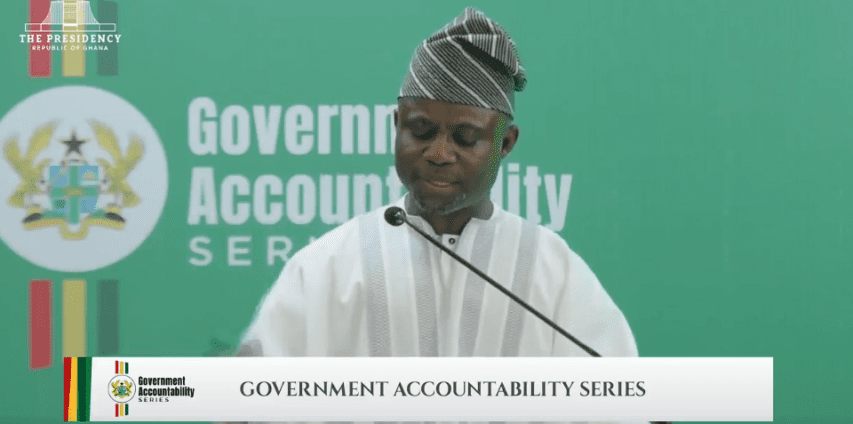
“Free Primary Health Care must be approached as an implementation programme, not as a slogan. The Ghana Health Service is central to this reform. You are the institution that must convert this national commitment into a daily reality for the Ghanaian people,”
Minister for Health, Kwabena Mintah Akandoh
He urged participants at the meeting to leave with a renewed sense of purpose and a collective commitment to ensure the programme succeeds across all regions and districts.
Hon Akandoh concluded by calling on health managers to implement the government’s healthcare agenda with urgency, discipline and accountability.
He expressed confidence that the Ghana Health Service possesses the expertise and institutional capacity required to deliver on Ghana’s ambition of achieving Universal Health Coverage while improving healthcare outcomes for millions of citizens.
READ ALSO: GFA Sets August 20 for 32nd Ordinary Congress in Prampram