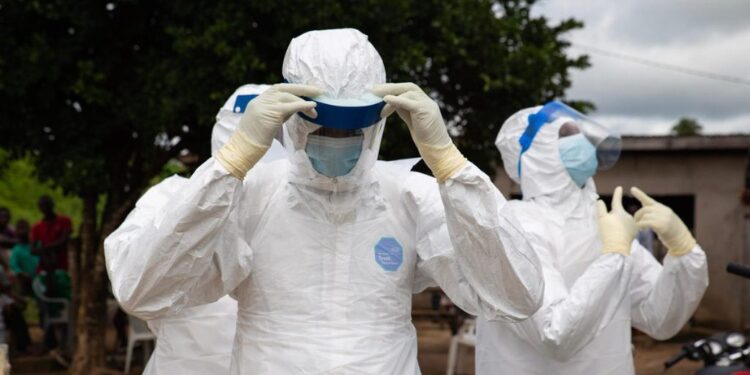
The Democratic Republic of Congo (DRC) has expanded emergency measures to contain a fast-growing Ebola outbreak by banning mass gatherings in the capital, Kinshasa, and three additional provinces, a decision that has ignited a political storm as opposition groups accuse the government of using the health crisis to suppress planned anti-government protests.
The directive, announced by Interior Minister Jacquemain Shabani, extends restrictions beyond the three eastern provinces where Ebola infections have already been confirmed.
While Kinshasa has not recorded a single confirmed case of the virus, authorities indicated that preventive measures are necessary to stop the disease from reaching the densely populated capital, home to an estimated 18 million people.
The ban also applies to Tshopo, Haut-Uele and Bas-Uele provinces, all of which border areas where infections have been detected. Health officials fear that population movement between the affected eastern regions and other parts of the country could accelerate the spread of one of the world’s deadliest viral diseases.
The move comes as the latest Ebola outbreak continues to worsen. According to Congolese health authorities, confirmed infections surged by 47 over the weekend, bringing the total number of recorded cases to 1,274, while the death toll climbed to 360. The outbreak remains concentrated in Ituri, North Kivu and South Kivu provinces, with Ituri accounting for more than 90 percent of all confirmed infections.
Government officials insist the expanded restrictions are purely preventive and designed to reduce opportunities for the virus to spread through large public gatherings.
Concerns over the capital’s vulnerability intensified after a Congolese doctor who later tested positive for Ebola in France travelled through Kinshasa while returning from one of the outbreak’s epicentres, where he had been working at an Ebola treatment centre.
Although no transmission linked to the journey has been confirmed, the incident heightened fears that the virus could be introduced into the capital through domestic travel.
The day after the doctor’s infection became public, the government imposed a mandatory 21-day quarantine for travellers leaving Ebola-affected areas for other parts of the country, adding another layer to its containment strategy.
Despite the government’s public health justification, opposition politicians argue that the timing of the restrictions is politically motivated.
The ban comes just days before a major protest scheduled for 8 July by the C64 coalition, an alliance opposing a proposed law that critics believe could enable President Félix Tshisekedi to remain in office beyond the constitutional two-term limit.
Opposition leaders contend that because Kinshasa has no confirmed Ebola infections, there is little scientific basis for prohibiting demonstrations in the capital.
Prince Epenge, spokesperson for the Lamuka opposition coalition, dismissed the measure as politically driven stating, “it is not legitimate. We cannot accept this decision.”
Moreover, Rodrigue Ramazani, Secretary-General of the opposition Envol party, went further by urging demonstrators to ignore the government’s directive altogether.
He argued that the restriction “reeks of a political manoeuvre rather than a public health measure” and encouraged supporters to participate in the planned march despite the official ban.
Regional Alarm Grows Over Expanding Disease Outbreak
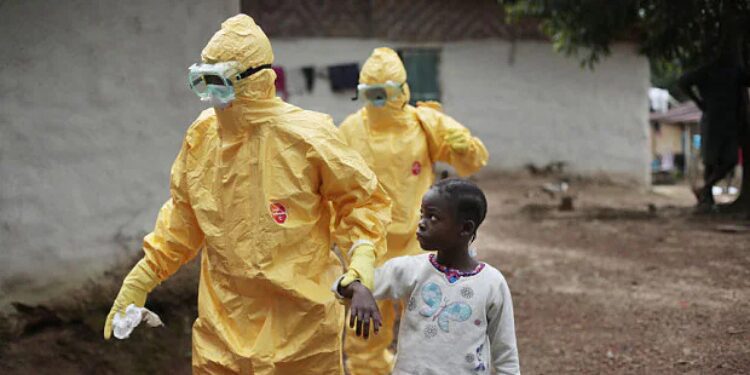
The Ebola outbreak has increasingly become a regional concern, with neighbouring Uganda also reporting confirmed infections linked to the current wave of transmission.
According to the World Health Organization (WHO), Uganda has confirmed 20 Ebola cases and two deaths, underscoring fears that the outbreak is no longer confined to the Democratic Republic of Congo.
Health experts have warned that this particular outbreak may become one of the largest ever recorded because the virus circulated undetected for several weeks before laboratory testing confirmed Ebola as the cause of the illnesses.
The outbreak has been attributed to the Bundibugyo strain of the Ebola virus, for which there is currently no approved vaccine, making containment efforts especially challenging.
However, there is cautious optimism among health officials after the head of the Africa Centres for Disease Control and Prevention (Africa CDC) revealed that clinical trials of new antiviral treatments could begin as early as this week.
Researchers hope the experimental therapies could improve survival rates if they prove effective against the Bundibugyo species.
Meanwhile, international health organisations continue to warn that the security situation in eastern Congo is severely hampering response efforts.
World Health Organization has repeatedly highlighted the impact of ongoing conflict in North Kivu and South Kivu, where the M23 rebel movement controls significant territory.
The insecurity has complicated access for health workers, delayed surveillance operations and made it difficult to trace contacts of infected individuals—one of the most critical steps in breaking chains of transmission.
Public health professionals added that without sustained access to affected communities, the virus could continue spreading silently, increasing the likelihood of additional outbreaks in neighbouring provinces and countries.
READ ALSO: US Supreme Court Rejects Trump Appeal In E. Jean Carroll Sexual Abuse Case