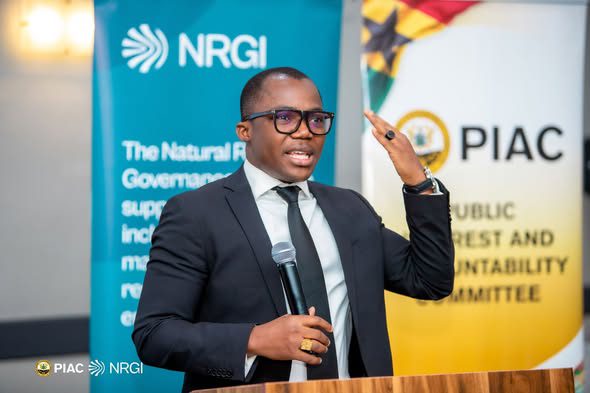
Patrick Stevenson, the Country Manager for the Natural Resource Governance Institute (NRGI), has warned that systemic vulnerabilities within Ghana’s mineral licensing regimes and revenue management frameworks are exposing the nation’s emerging lithium value chain to severe anti-corruption risks.
Commenting on the shifting dynamics of the sector, Stevenson raised critical concerns over the transparency of asset transfers and foreign acquisitions within the extractive industry.
He emphasized that without stringent regulatory oversight, early-stage loopholes in how mining leases are granted and monitored could allow valuable public assets to be traded with minimal accountability, ultimately depriving the state of its rightful economic returns.
“And you’d be interested to know that two fundamental areas are risk exposures. One, the licencing regime. Two, revenue management. And this sits right in the middle of the licencing regime and the decisions we’ve made there too.”
Patrick Stevenson, the Country Manager for the Natural Resource Governance Institute (NRGI),
Stevenson indicated that the immediate danger lies not merely in the physical transfer or “flipping” of mining assets to third parties, but in the potential erosion of negotiated conditions designed to benefit the domestic economy.

The ongoing discourse surrounding the transition of Ghanaian lithium concessions to foreign entities, particularly Chinese mining firms, highlights a lack of clarity regarding whether foundational prerequisites such as mandatory downstream processing and local value addition remain legally binding.
Furthermore, the ambiguity regarding the active involvement of state vehicles like the Minerals Income Investment Fund (MIIF), which already holds equity in these ventures, complicates the governance landscape.
This lack of transparency between corporate boardroom deals and state regulatory approvals threatens to undermine public trust and weaken the state’s leverage in securing optimal fiscal terms.
The Mechanics of Asset Flipping and Value Loss
The core threat to Ghana’s optimization of its lithium reserves rests on the exact terms undergirding asset transfers.
When a primary concessionaire transfers operational control or equity to a third party, the state risks losing the strategic components of the original covenant.

Initial agreements for lithium exploitation in Ghana were heavily predicated on establishing domestic refining capabilities, an industrial milestone estimated to require close to $1.5 billion in capital expenditure.
If subsequent transfers bypass these commitments, Ghana risks being relegated to a mere exporter of raw lithium concentrates, retaining low-value extraction while offshoring the highly lucrative chemical processing stages.
Moreover, when foreign entities publicly announce development plans for local concessions before formal regulatory disclosures are made by the state, it signals a breakdown in administrative protocols.
Such gaps invite speculative trading where corporate actors capture massive windfalls from the appreciation of mineral rights, while the public treasury receives nothing from the transactional value generated.
The Minister for Lands and Natural Resources maintain the ultimate statutory authority to veto or approve these structural transitions, and highly complex deals must face parliamentary ratification to ensure they align with national economic interests.
Institutional Stakes and the Role of MIIF
The financial exposure of the state is deeply intertwined with the actions of the Minerals Income Investment Fund (MIIF), which has already committed public capital putting “skin in the game” to anchor national stakes in the lithium sector.
MIIF’s mandate requires it to secure long-term value for Ghanaians through strategic equity acquisitions and managed royalty streams.

If the fund is sidelined or lacks broad representation during high-level negotiations that hand over asset operationality to foreign conglomerates, the financial architecture designed to protect public revenue collapses.
Safeguarding Ghana’s Green Mineral Sovereignty
To prevent the total subversion of the lithium deal’s intended benefits, Ghana must aggressively tighten its regulatory stance on resource governance.
The intersection of licensing vulnerabilities and revenue leakages demands that the state enforce absolute transparency regarding corporate registry changes and beneficial ownership disclosures.
The Ministry must proactively step forward to clarify whether incoming multinational partners are legally bound to the $1.5 billion downstream processing targets or if the country’s green industrialization agenda has been quietly compromised.
Ultimately, maximizing the benefits of the lithium value chain requires moving beyond static revenue collection to dynamic enforcement of state rights.
If parliamentary ratification and ministerial oversight are treated as mere rubber-stamping exercises rather than rigorous anti-corruption checkpoints, the country will lose substantial macroeconomic value.
Ensuring that public institutions act as robust gatekeepers is the only definitive mechanism to guarantee that Ghana’s strategic transition minerals fund sustainable national development rather than foreign corporate portfolios.
READ ALSO: Upper West Records Just 26.75% UHC Coverage at Mid-Year