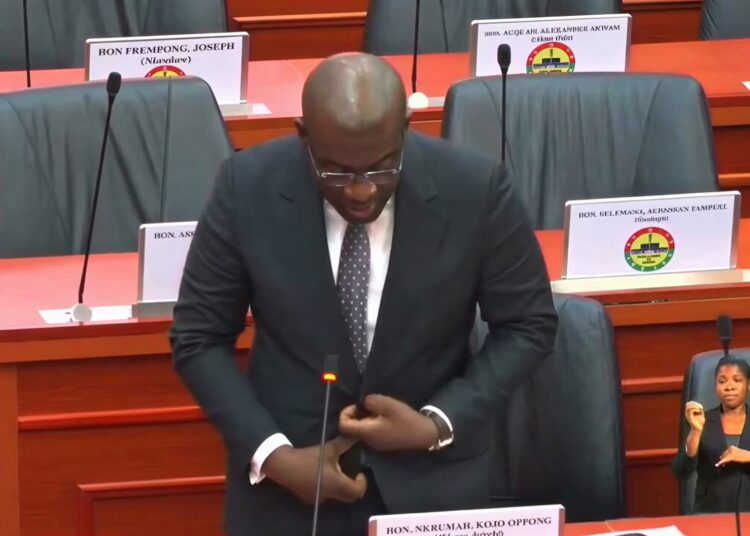
The Member of Parliament for Ofoase Ayirebi and Ranking Member for Economy and Development Committee, Honourable Kojo Oppong Nkrumah has argued that recent economic growth figures must be assessed alongside their impact on employment creation. He emphasised that data from the National Development Planning Commission’s Annual Progress Report shows a gap between economic expansion and the ability of businesses to create jobs.
Honourable Nkrumah explained that while Ghana recorded growth in 2025, much of the increase came from the services sector, which he said has limited capacity to absorb large numbers of job seekers. The Ranking Member noted that sectors such as manufacturing, which traditionally provide significant employment opportunities, recorded weaker performance during the period.
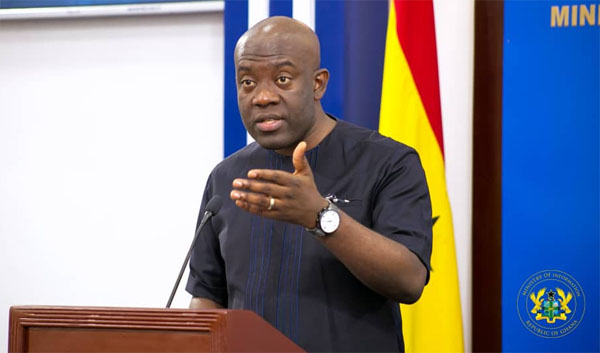
According to him, Information and Communications contributed significantly to services sector growth, while industrial activities continue to struggle. He argued that the imbalance between sectors has made it difficult for economic growth to translate into employment opportunities for young people.
“Economic growth figures must be examined alongside employment creation because growth without jobs does not solve the challenges facing citizens. If I have a business and nobody is buying, why would I employ somebody?”
Honourable Kojo Oppong Nkrumah
Furthermore, the Ofoase Ayirebi MP linked the unemployment situation to economic policies that have reduced purchasing power within the economy. He explained that businesses require strong demand for goods and services before expanding operations and employing additional workers.
The Ranking Member added that traders and manufacturers have reported difficulties caused by reduced consumer demand and rising production costs. He stated that when businesses struggle to sell products or manage expenses, their ability to recruit more workers becomes limited.
Addressing the findings from state institutions, Honourable Nkrumah commended organisations such as the NDPC and the Ghana Statistical Service for publishing economic data for public discussion. He urged policymakers to carefully consider the information provided by these institutions when designing economic interventions.
Moreover, he argued that transparency from public institutions remains important in helping citizens understand the condition of the economy. The former Minister of Information said economic decisions must focus on creating conditions that encourage businesses to grow and generate employment.
Economic Policies Face Scrutiny Over Rising Youth Unemployment
The Ranking Member for Economy and Development Committee also raised questions about policies aimed at reducing unemployment among young people following reports of increasing joblessness across the country. Honourable Kojo Oppong Nkrumah stated that recent figures from the Ghana Statistical Service showed youth unemployment reaching significant levels.
He explained that the latest labour market statistics indicated youth unemployment had risen to 32.4 percent, with Greater Accra recording a situation where about one out of every two young people is without work. The Ofoase Ayirebi MP argued that the situation requires urgent attention through policies that support industrial expansion.

According to him, job creation depends heavily on strengthening local production and building industries capable of employing large numbers of people. He stated that economic measures focused mainly on stabilising key indicators must also consider their effect on businesses and employment.
Furthermore, Honourable Nkrumah criticised changes to previous industrial initiatives, particularly the One District One Factory programme. He said the National Development Planning Commission had reported that about 150 factories under the initiative were operational by the end of 2024.
The Ranking Member argued that replacing industrial incentives without introducing stronger alternatives could affect the growth of local manufacturing. He explained that industries require supportive policies to encourage investment and expand employment opportunities.
“The economy needs a strong industrial policy that gives businesses the confidence to invest, produce and create jobs for young people.”
Honourable Kojo Oppong Nkrumah
Additionally, he questioned the effectiveness of the 24 Hour Economy policy, arguing that expanding trading hours alone would not address the production challenges facing the country. He suggested that sustainable employment depends on increasing local manufacturing capacity and supporting businesses that produce goods.
The MP also raised issues concerning changes within the automobile assembly sector, stating that the removal of incentives had affected companies that invested in local production facilities. He urged authorities to strengthen policies that encourage high value manufacturing and export development.
In light of the unemployment figures, Honourable Nkrumah stressed that economic growth must be connected to productive sectors capable of absorbing workers. He argued that countries such as Morocco have developed stronger industrial bases through manufacturing and export focused strategies.
READ ALSO: Legendary South African Actor Seputla Sebogodi Passes Away at 63