Ghana’s battle against inflation has entered a new and more uncertain phase after the Bank of Ghana (BoG) warned that fresh inflationary pressures are beginning to emerge, raising questions about the country’s recent success in restoring price stability.
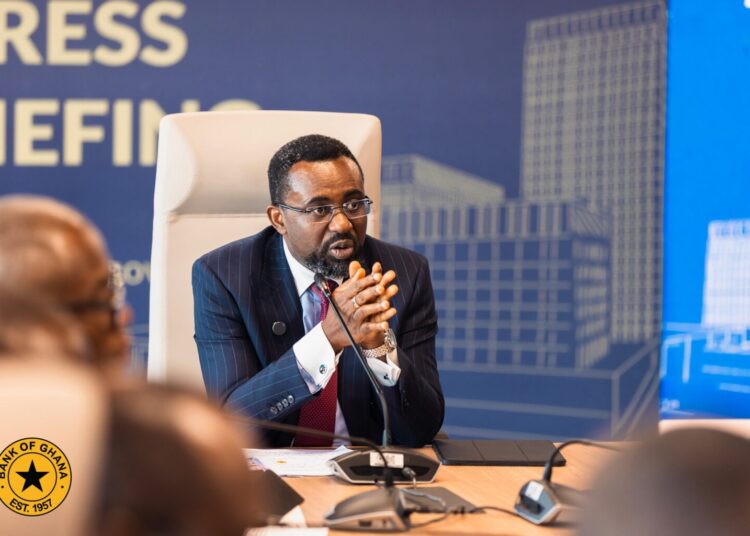
Speaking at the opening of the 131st Monetary Policy Committee (MPC) meeting in Accra, Governor Dr. Johnson Asiama indicated that the country’s prolonged period of falling inflation has officially come to an end. While inflation remains comfortably below the central bank’s target ceiling, policymakers are now carefully assessing whether recent price increases represent a temporary adjustment or the beginning of a more persistent inflation cycle.
The remarks have heightened expectations ahead of the MPC’s latest policy decision, which will determine whether the central bank maintains its current monetary policy stance or responds to the changing inflation outlook.
Three Consecutive Months of Rising Inflation
According to Dr. Asiama, headline inflation has increased steadily over the past three months, climbing from 3.2 percent in March to 3.4 percent in April, 3.7 percent in May, and 5.3 percent in June.
The Governor attributed much of the latest increase to higher transport and haulage costs, which have filtered through the economy and contributed to rising consumer prices.
Despite the recent acceleration, inflation remains significantly below the Bank of Ghana’s medium term target range of 8 percent, plus or minus two percentage points. It is also far lower than the 13.7 percent recorded during the same period last year, highlighting the remarkable progress made in stabilising prices over the past year.
However, central bank officials believe the recent trend deserves careful attention.
“Headline inflation has risen for three consecutive months from 3.2 percent in March to 5.3 percent in June, driven largely by transport and haulage prices,” Dr. Asiama told members of the committee.
End of the Disinflation Era
One of the most striking messages from the Governor was his declaration that Ghana’s prolonged disinflation phase has ended.
For months, the country experienced a steady decline in inflation as tighter monetary policy, exchange rate stability and improving macroeconomic conditions helped ease price pressures across the economy. That period now appears to have given way to a phase of gradual inflation normalisation.
Dr. Asiama explained that the committee’s primary responsibility during this week’s deliberations is to determine whether the latest increase represents a healthy return toward the central bank’s inflation target or the beginning of a more sustained inflationary trend.
“The prolonged disinflation phase has ended indeed, and inflation is now returning towards the target band. Whether that return reflects orderly normalisation or the beginning of a more persistent change in the outlook is a central question for our meeting this week.”
Dr. Asiama
His comments suggest that policymakers are looking beyond the latest inflation figures and focusing on broader signals that could shape inflation over the coming months.

Inflation Expectations Under Close Watch
The Governor stressed that the committee’s attention extends beyond current inflation numbers.
Instead, policymakers are increasingly concerned about inflation expectations, which often influence future price behaviour among businesses and consumers.
If households begin expecting higher prices, spending patterns may change. Likewise, businesses anticipating higher production costs could adjust prices upward, creating a self reinforcing cycle that becomes increasingly difficult to reverse.
“The central judgement in this is not whether inflation has moved but whether it is beginning to influence the expectations that shape price behaviour,” Dr. Asiama explained.
This focus on inflation expectations reflects the Bank of Ghana’s commitment to preventing temporary price increases from evolving into a broader inflation problem.
External Pressures Add to Uncertainty
Beyond domestic transport costs, the MPC is also examining several external factors that could influence Ghana’s inflation outlook.
Among the risks under consideration are movements in global commodity prices, which can significantly affect import costs and domestic production expenses. The committee is also evaluating the possible effects of future utility tariff adjustments and transport fare increases, both of which have the potential to push inflation higher.
These factors could complicate the central bank’s efforts to maintain price stability, especially if multiple cost pressures emerge simultaneously.
With global economic conditions remaining uncertain, policymakers are expected to weigh both domestic and international developments before reaching their final decision.
Markets Await the Next Policy Signal
Attention is now firmly focused on the outcome of the 131st MPC meeting later this week.
Financial markets, businesses and investors are closely watching whether the Bank of Ghana maintains its current policy rate or signals a shift in response to the changing inflation environment.
The Governor’s remarks suggest that while Ghana’s inflation performance remains encouraging, the central bank is not prepared to become complacent.
Instead, policymakers are adopting a cautious approach that balances the need to support economic growth with the responsibility of preserving hard won gains in price stability.
The coming policy announcement is therefore expected to provide important guidance on how the Bank of Ghana intends to respond to emerging inflation risks and whether the country can sustain its progress toward long term macroeconomic stability.
As inflation gradually moves closer to the central bank’s target range, the decisions made during this week’s MPC meeting could shape Ghana’s economic direction for the remainder of the year.
READ ALSO: Government Accepts GH¢9.98 Billion in Oversubscribed T-Bill Sale