Ghana’s energy governance framework has come under renewed scrutiny after the Centre for Environmental Management and Sustainable Energy (CEMSE) urged the State Interests and Governance Authority (SIGA) to strictly enforce financial reporting obligations among state-owned enterprises (SOEs), warning that persistent delays in publishing audited financial statements are weakening transparency, investor confidence and public accountability.
The call comes at a time when Ghana is pursuing sweeping reforms across its energy sector to improve operational efficiency, restore financial sustainability and attract greater private investment.
While government has repeatedly emphasised stronger corporate governance within public institutions, CEMSE argues that delayed audited accounts continue to undermine those efforts by limiting public access to reliable financial information on some of the country’s most strategic enterprises.
According to the policy think tank, audited financial statements should not be viewed merely as statutory compliance documents but as critical instruments for evaluating how public institutions manage national resources, deliver public services and safeguard taxpayer interests.
The latest concerns also coincide with increasing scrutiny of state-owned enterprises operating in electricity, petroleum and natural gas, sectors that collectively influence Ghana’s fiscal position, industrial competitiveness, energy security and broader macroeconomic stability.
According to Norvan Reports, the organisation believes stronger regulatory enforcement is necessary if Ghana is to improve governance standards within the state enterprise landscape and rebuild confidence in public institutions.
CEMSE calls for stronger regulatory enforcement
CEMSE says the State Interests and Governance Authority must take a more proactive role in ensuring energy sector SOEs meet their corporate governance obligations, particularly regarding the timely publication of audited financial statements.
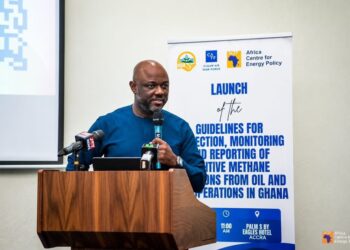
Executive Director Benjamin Nsiah argued that consistent financial disclosure is fundamental to strengthening accountability across institutions responsible for managing strategic national assets.

Stronger enforcement by SIGA is needed to ensure that energy sector SOEs comply fully with corporate governance obligations and provide stakeholders with a clear picture of their financial position.
Benjamin Nsiah, Executive Director, CEMSE
According to the organisation, delayed financial reporting reduces the ability of citizens, Parliament, regulators, investors and development partners to accurately assess the financial health and operational performance of state enterprises.
Without timely audited accounts, stakeholders are left with limited visibility into how public resources are being utilised, whether institutions remain financially sustainable and how effectively management is addressing operational challenges.
CEMSE maintains that improved disclosure standards would strengthen oversight while encouraging greater discipline in financial management across the public sector.
Governance concerns extend beyond compliance
Although publishing audited financial statements is a statutory requirement, CEMSE argues that the issue goes beyond legal compliance.
Rather, timely financial reporting serves as one of the most important indicators of institutional transparency and corporate governance.
The organisation notes that audited accounts provide an independent assessment of an institution’s financial position, operational efficiency and internal controls, enabling stakeholders to identify risks before they develop into broader fiscal challenges.

This is particularly significant for Ghana’s energy sector, where several state-owned enterprises continue to play central roles in electricity generation, transmission, fuel supply, petroleum management and infrastructure development.
Collectively, these institutions manage billions of cedis in public assets while supporting sectors that remain critical to national economic growth.
When financial reporting is delayed, the ability of policymakers to make informed decisions also becomes more difficult.
Budget planning, fiscal risk assessment, debt management and investment decisions increasingly depend on accurate and up-to-date financial information.
Delayed disclosure therefore affects not only corporate governance but also broader economic planning.
Energy SOEs remain central to Ghana’s economy
The importance of stronger governance within energy SOEs has become even more pronounced as government intensifies reforms aimed at improving the sector’s financial viability.
Recent efforts have focused on reducing operational losses, strengthening electricity distribution companies, improving revenue mobilisation and attracting new investment into petroleum and renewable energy projects.
Many of these reforms require investor confidence.
Financial transparency remains one of the most important factors influencing both domestic and international investment decisions.
Potential investors, lenders and development partners often rely on audited financial statements to evaluate institutional performance before committing financing.
Where disclosure becomes inconsistent or delayed, uncertainty increases, potentially affecting financing opportunities and partnerships.
The issue is particularly relevant as Ghana seeks greater private participation in energy infrastructure, domestic refining, renewable energy deployment and gas processing investments.
Market confidence depends not only on government policy but also on the governance standards demonstrated by institutions responsible for implementing those policies.
Public confidence tied to transparency
CEMSE argues that delayed publication of audited accounts also weakens public confidence in state institutions.
State-owned enterprises occupy a unique position within Ghana’s economy because they manage public assets while delivering essential services.
As a result, citizens have a legitimate interest in understanding how these institutions perform financially and operationally.
Audited financial statements provide one of the few objective mechanisms through which the public can assess institutional performance independently of official commentary.

They allow Parliament, civil society organisations, researchers and oversight institutions to evaluate whether public enterprises are operating efficiently and meeting their mandates.
According to CEMSE, weakening this accountability framework ultimately affects trust in public institutions.
The organisation believes transparency should become an institutional culture rather than an administrative obligation fulfilled only after prolonged delays.
Oversight under renewed focus
The latest intervention places renewed attention on the oversight responsibilities of the State Interests and Governance Authority.
SIGA was established to improve governance standards, enhance operational efficiency and strengthen accountability across state-owned enterprises.
Its mandate includes monitoring financial performance, enforcing governance standards and ensuring public enterprises operate sustainably.

As Ghana continues implementing broader economic reforms, analysts believe the effectiveness of SIGA’s oversight will increasingly influence confidence in the public sector.
Strengthening compliance with financial reporting obligations could therefore become an important component of wider efforts to improve governance across state enterprises.
Industry observers note that improved reporting standards would also complement ongoing reforms within Ghana’s energy sector, where transparency, operational efficiency and financial sustainability have become recurring policy priorities.
Accountability essential for future reforms
The debate surrounding delayed audited financial statements comes at a time when Ghana is pursuing ambitious reforms across both the electricity and petroleum industries.
Government has announced plans to expand domestic refining, strengthen electricity infrastructure, improve renewable energy deployment and attract greater investment into the country’s energy value chain.
Delivering those objectives will require institutions capable of demonstrating strong governance and financial credibility.

For CEMSE, achieving that objective begins with something fundamental: ensuring state-owned enterprises consistently publish their audited financial statements on time.
The organisation argues that accountability should not be treated as a procedural exercise but as an essential pillar supporting investor confidence, regulatory oversight and public trust.
According to Norvan Reports, the think tank believes stronger enforcement by SIGA would help reinforce these governance standards while ensuring energy sector SOEs provide stakeholders with the financial transparency expected of institutions entrusted with managing some of Ghana’s most strategic national assets.
As reforms continue across the sector, the call serves as another reminder that strengthening Ghana’s energy industry will depend not only on new investments and infrastructure, but equally on the quality of governance supporting the institutions responsible for delivering them.
READ ALSO: Education Minister Unveils Revised Curriculum For Digital Learning