
The Minister of Education, Hon. Haruna Iddrisu, has announced plans to construct 50,000 housing units for teachers across the country under a new government initiative dubbed Teacher Dabr3 describing it as a bold intervention by President John Dramani Mahama to address long-standing accommodation challenges facing the teaching profession.
Delivering a national brief on education sector priorities, the Minister paired the housing announcement with updates on sanitary pad distribution for girls and continued welfare support for teachers, presenting the measures as part of a broader push to strengthen both the learning environment and the workforce that sustains it.
Outlining the housing initiative, Hon. Iddrisu said government intends to construct 50,000 housing units for teachers nationwide, with implementation led through the District Assembly Common Fund to decentralise delivery at the regional and district level. He said the approach is designed to ensure that accommodation projects are rolled out closer to where teachers are actually posted, rather than being managed solely from the centre.
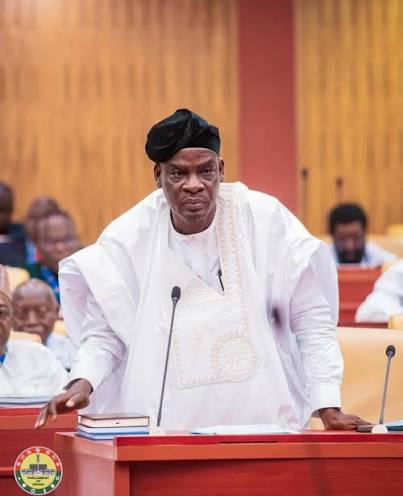
“We intend to construct 50,000 housing units for teachers all across the country, led by the District Assembly Common Fund, in order that we want to decentralize it at the regional and district level.”
Haruna Iddrisu, Minister of Education
To back the financing of the programme, the Minister said the Ministry of Education will provide collateral support using GESOPS, the sector’s pension fund, a mechanism he said is intended to help make the ambitious housing target achievable.

Rural Posting Allowance Remains Part of Wider Teacher Welfare Push
Before turning to the housing plan, Hon. Iddrisu stressed that teachers remain central to the functioning of the school environment and to school management more broadly, and said government continues to place priority on their motivation and welfare.
He pointed to the existing 20 percent allowance paid to teachers who accept postings to rural areas as one strand of that welfare support, framing the new housing programme as an extension of efforts already under way to make teaching postings, particularly in underserved areas, more attractive.
Sanitary Pad Distribution Targets 2.5 Million Female Students
Earlier in his remarks, the Minister disclosed that government is distributing sanitary pads to an estimated 2.5 million female students across the country, describing the intervention as necessary to sustain and improve girls’ retention in school. He said a full regional breakdown of the distribution would be made available to the media as and when needed, but did not provide district-level figures during the brief.
Taken together, the sanitary pad distribution and the Teacher Dabr3 housing programme point to a strategy that treats retention, of both students and teachers, as directly tied to welfare support rather than academic policy alone.
For girls, the Minister’s framing suggests sanitary provisions are being positioned as a practical barrier to school attendance that government wants removed. For teachers, the housing initiative appears aimed at easing one of the most commonly cited obstacles to accepting and remaining in rural postings: the lack of decent accommodation.
Decentralised Funding Model Puts Districts at the Centre of Delivery
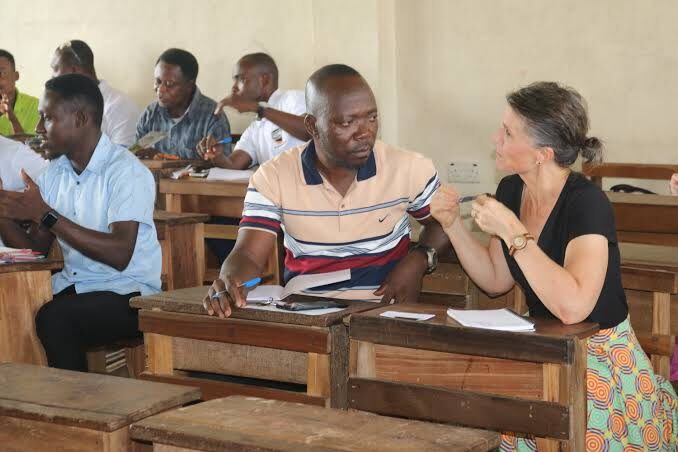
By channelling the housing programme through the District Assembly Common Fund, the Minister signalled that individual districts and regions will play a central role in how the 50,000 units are eventually distributed and built, rather than the programme being executed as a single centralised construction drive.
Combined with the pension-backed collateral support from GESOPS, the funding structure suggests government is relying on a mix of decentralised implementation and sector-specific financing to carry the ambitious target through to completion.
With no timeline given for the completion of the 50,000 units, attention will now turn to how quickly the District Assembly Common Fund-led rollout gathers pace, and whether the GESOPS-backed financing arrangement proves sufficient to sustain construction at the scale the Minister has promised for teachers nationwide.
READ MORE: Education Minister Unveils Revised Curriculum For Digital Learning