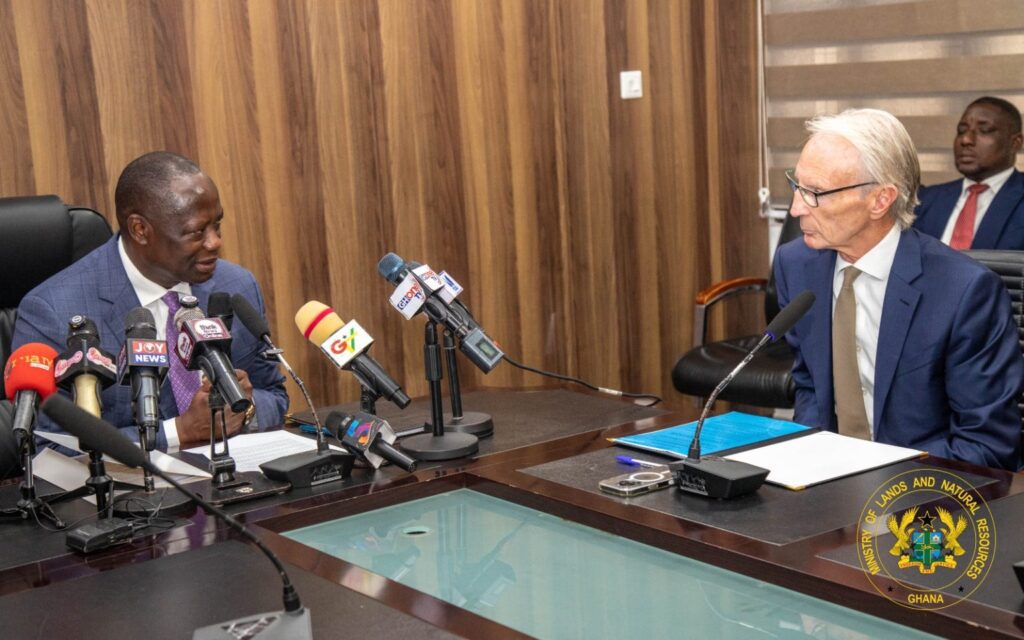
The Government of Ghana has successfully secured an initial $250,000 development grant from the World Gold Council, marking the first tranche of a comprehensive $1 million funding package aimed at supporting responsible artisanal and small-scale gold mining across the nation.
This significant financial injection is structured to bolster state efforts in curbing the rampant illegal gold trade while accelerating the formalization of small-scale mining operators into well-regulated structures.
Designed as a strategic intervention, the facility directly supports national initiatives that protect environmental ecosystems while enhancing the economic viability of local extraction communities.
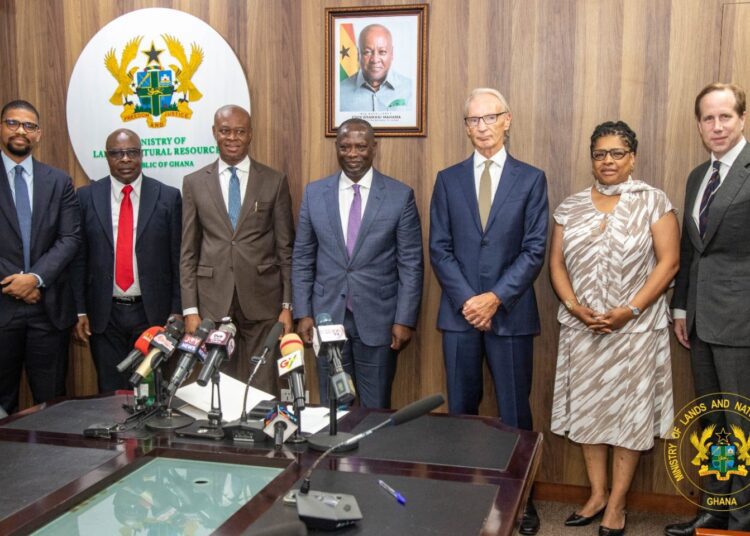
“The funding forms part of a strategic Memorandum of Understanding (MoU) signed between Ghana and the World Gold Board through the Ministry of Lands and Natural Resources to improve supply chain integrity and promote environmentally sustainable mining practices.”
Ministry of Lands and Natural Resources

Expanding on the scope of this financial framework, the grant was formalized through a strategic Memorandum of Understanding signed between Ghana and the World Gold Council via the Ministry of Lands and Natural Resources.
This overarching agreement establishes a collaborative foundation to elevate supply chain integrity, eliminate harmful extraction techniques, and institute environmentally sustainable practices across mining enclaves.
Minister for Lands and Natural Resources, Honourable Emmanuel Armah-Kofi Buah, emphasized that this partnership acts as a pivotal catalyst toward enforcing legal compliance, ensuring that “any time you hear gold from Ghana, you must be very sure that it is coming from very legal sources.”
Chief Executive Officer of the World Gold Council, Mr. David Tait, echoed this optimism, noting that Ghana’s comprehensive framework is poised to “serve as a model for other gold-producing countries facing challenges with artisanal and small-scale mining.”
Modernizing Processing Infrastructure and Boosting Yields
The integration of advanced processing facilities enabled by this agreement addresses a long-standing technological deficit within the artisanal sector.
Currently, conventional and rudimentary extraction methods cause small-scale operators to suffer severe inefficiencies, frequently recovering less than 20 per cent of the actual value contained within harvested ore.
By introducing modern processing technologies, the initiative creates an operational shift that allows miners to recover upward of 80 per cent of their ore value, fundamentally altering the economic return on small-scale operations.
Central to this operational overhaul is the establishment of a centralized national network of trusted gold processing plants.
These state-backed hubs provide small-scale miners with direct access to high-yield, environmentally conscious processing machinery that bypasses traditional, hazardous chemical practices.
By delivering superior recovery rates, these facilities naturally incentivize local miners to bring their raw ore to formal, state-approved processing hubs, simultaneously reducing toxic land degradation and eliminating illegal chemical runoff into vital river bodies.
Supply Chain Integrity and Digital Verification Systems
Beyond physical processing, the strategic agreement heavily prioritizes supply chain transparency through the deployment of cutting-edge verification technology.

By incorporating state-of-the-art tracking systems into official gold-buying channels, the framework ensures full traceability from extraction points directly to final export markets.
This digital layer removes opaque middleman networks that historically diverted legally mined resources into black-market trading avenues.
This robust verification ecosystem substantially strengthens Ghana’s broader mining operations across several key operational dimensions.
First, it validates that artisanal gold meets stringent international ethical sourcing standards, enabling local miners to command premium prices on global bullion markets.
Second, the automated tracking mechanisms provide crucial fiscal protection by preventing revenue leakage and gold smuggling, ensuring that all processed bullion flows into transparent, official state purchasing channels.
Third, real-time digital monitoring affords regulatory bodies unprecedented operational oversight, ensuring that active mining cooperatives operate strictly within designated, environmentally safe boundaries.
De-politicization and Sector Formalization
The strategic partnership establishes a structured path toward the complete formalization of Ghana’s small-scale mining workforce.

By organizing informal miners into registered cooperatives and providing them with structured access to financial capital, advanced machinery, and official buyers, the initiative transforms fragmented, vulnerable operations into sustainable commercial enterprises.
This structured transition provides local communities with lasting economic security while insulating the sector from illicit influences.
Crucially, the success of this national transformation relies on widespread institutional alignment and bipartisan support.
As Mr. David Tait highlighted during the announcement, illegal mining remains a pressing “national challenge that should not be politicised,” requiring unified multi-stakeholder collaboration.
Through the convergence of international grant funding, modern processing infrastructure, and rigid supply-chain traceability, Ghana is solidifying a resilient operational model that safeguards its natural environment while maximizing the economic potential of its precious mineral wealth.
READ ALSO: Fidesz Party’s Data Center Raided In Embezzlement Probe