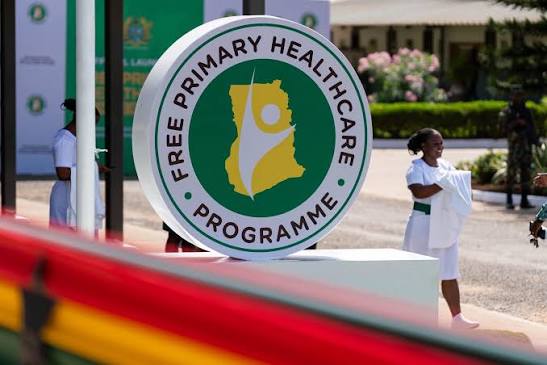
Government has rolled out the first phase of its Free Primary Health Care Policy to 150 underserved sub-districts across the country, backed by the distribution of more than 24,000 pieces of medical equipment and the construction of health kiosks and container-based health posts in hard-to-reach communities.
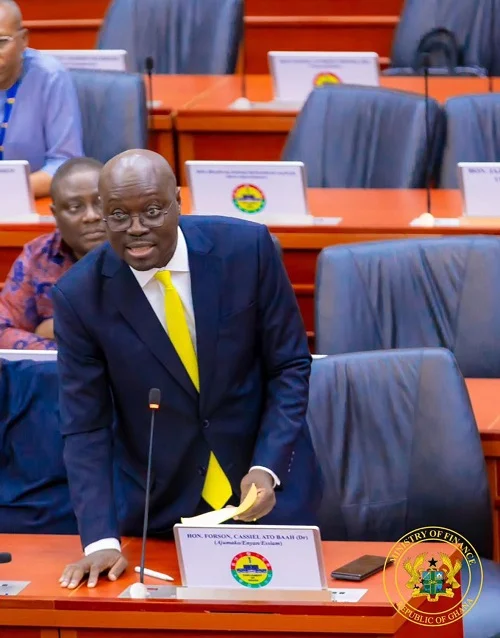
The disclosure was made by the Finance Minister, Dr. Cassiel Ato Baah Forson during the 2026 Mid-Year Budget Review presented to Parliament, as government provided an update on progress made since the policy’s launch in April 2026, a scheme designed to guarantee every Ghanaian access to primary health care regardless of income or location.
The Minister told Parliament that since the policy’s launch, implementation had moved beyond planning into active rollout, with the initial phase deliberately targeted at sub-districts that have historically lagged in access to basic health services.
“Government remains committed to ensuring that every Ghanaian has access to quality primary health care regardless of income or location. Following the launch of the Free Primary Health Care Policy in April 2026, the first phase of implementation is targeting 150 underserved sub-districts across the country.”
Finance Minister, Dr. Cassiel Ato Baah Forson
The policy to prioritise 150 underserved sub-districts reflects a broader government strategy of directing early resources toward communities that have long faced the widest gaps in healthcare access, rather than concentrating investment in already well-served urban centres.
Over 24,000 Pieces of Medical Equipment Distributed
To support the expanded rollout, government disclosed that more than 24,000 pieces of medical equipment have already been distributed nationwide, aimed at strengthening capacity across several critical areas of care. The equipment is intended to bolster diagnostics, emergency response, and maternal and neonatal services, areas that have traditionally suffered from resource shortages in many rural and peri-urban facilities.
The scale of the distribution signals an attempt to move quickly from policy announcement to tangible impact on the ground, equipping frontline health workers with tools needed to handle a wider range of cases without requiring patients to travel to distant, better-equipped facilities.
Motorbikes and Mobile Units Reach Remote Communities
Recognising that equipment alone cannot bridge Ghana’s healthcare access gap, government also detailed efforts to improve mobility for health workers serving hard-to-reach areas.
Motorbikes, tricycles and mobile outreach equipment have been deployed to help health personnel physically reach communities that remain cut off from conventional health infrastructure due to poor roads or long distances to the nearest facility.
This mobility push is expected to be particularly significant for communities in the country’s more remote northern and coastal districts, where distance to the nearest health facility has historically been a major barrier to timely care, especially in emergencies involving mothers and newborns.
Health Kiosks and Container-Based Posts Take Shape
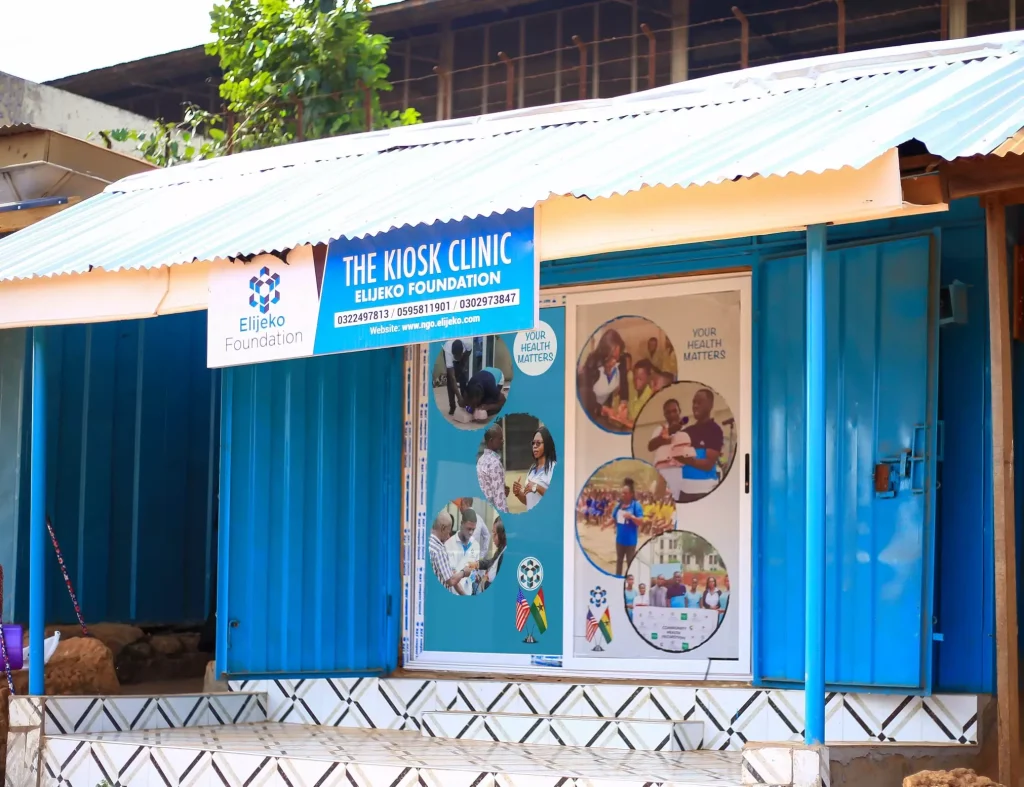
Beyond equipment and mobility support, government confirmed that physical infrastructure expansion is actively underway, with health kiosks and container-based health posts being established in underserved areas alongside upgrades to existing primary health care facilities.
These smaller, faster-to-deploy structures are designed to extend basic health services into communities that may not yet warrant a full-scale clinic but still require a reliable point of care.
The container-based model, increasingly used in low-resource settings, allows government to establish functional health posts more quickly and at lower cost than traditional brick-and-mortar construction, potentially accelerating the pace at which the 150 targeted sub-districts gain access to consistent primary care services.

Expanded Screening for Non-Communicable Diseases
Alongside infrastructure and equipment gains, government reported that community screening programmes for hypertension, diabetes, cancer and other non-communicable diseases have been scaled up as part of the Free Primary Health Care rollout.
The expanded screening reflects growing recognition of the rising burden of non-communicable diseases in Ghana, conditions that often go undetected until they reach advanced, more costly and harder-to-treat stages.
By integrating preventive screening into the primary care rollout from the outset, government appears to be positioning the policy not only as a response to acute illness but as a tool for early detection and long-term disease management within underserved populations.
A Policy Still in Its Early Stages
While the figures presented to Parliament point to significant early activity, the Minister’s update makes clear that the Free Primary Health Care Policy remains in its first phase of implementation, with the current focus confined to 150 sub-districts rather than a nationwide rollout.
Questions remain over the timeline for expanding coverage beyond this initial cohort, as well as how quickly the ongoing construction of health kiosks and container-based posts will be completed across the targeted areas.
For now, government’s presentation to Parliament signals a policy moving from announcement into visible, measurable action, with equipment distribution, mobility support and infrastructure development all reported as actively underway less than four months after the policy’s official launch.
Further details on phase two of the rollout are expected in subsequent budget updates as implementation continues.
READ MORE: Government Reallocates GH¢226 Million to Emergency Flood Mitigation Measures