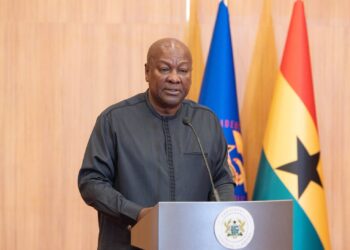
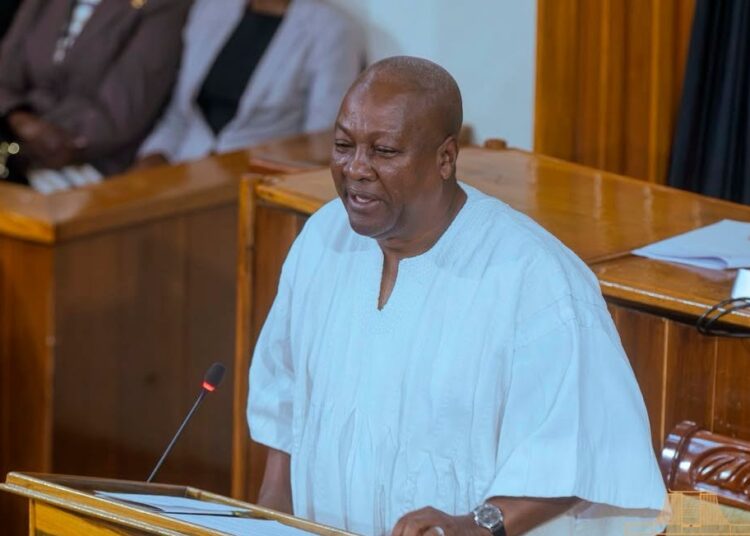
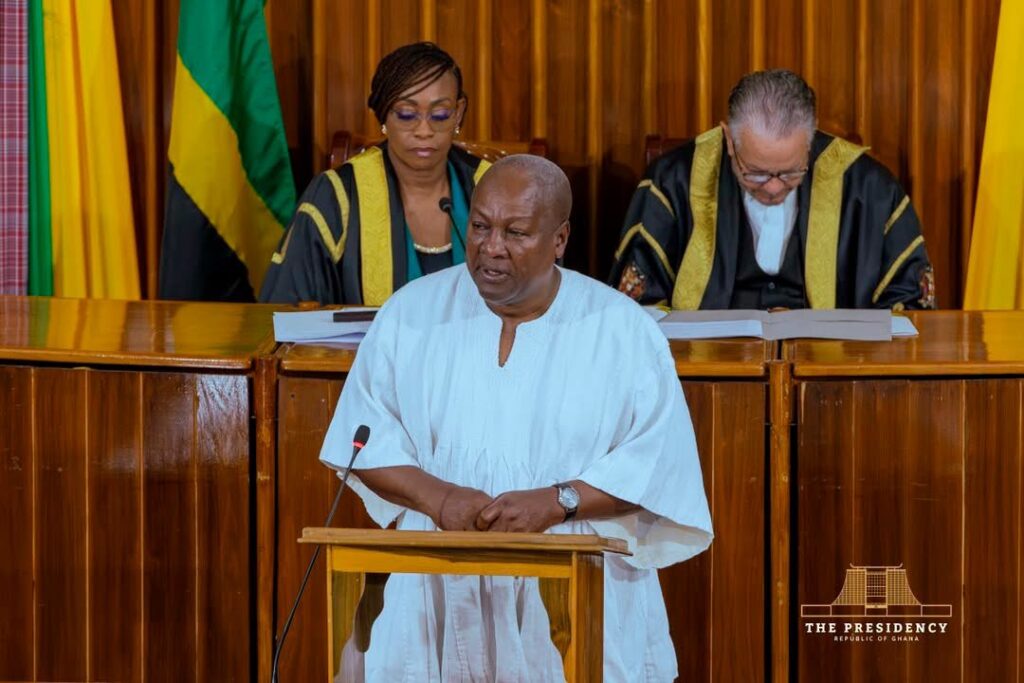
President John Dramani Mahama pledged Ghana’s full support for Jamaica’s planned petition on slavery to King Charles III, addressing the Joint Session of the Jamaican Parliament during the country’s 64th Independence Day commemoration, where he also reaffirmed Ghana’s commitment to advancing the global conversation on reparatory justice.
President Mahama opened his remarks on reparatory justice by referencing recent affirmations made at the United Nations General Assembly regarding the historical weight of the transatlantic slave trade.
“The consequences of this grave crime did not end with abolition. The consequences continue even today to shape the patterns of inequality and exclusion that have persisted across our world”.
President John Dramani Mahama
He argued that these ongoing consequences make it essential for nations to remain committed to advancing dialogue around reparatory justice on the global stage. “For this reason, we must remain steadfast in advancing the global conversation on reparatory justice,” he said.
Reparations Rooted in Truth and Reconciliation
President Mahama was careful to frame Ghana’s advocacy for reparatory justice as rooted in constructive values rather than hostility or resentment toward former colonial powers.
“It is inspired by our commitment to the truth, to accountability, to reconciliation, and to healing. It seeks recognition of historical wrongs, acknowledgement of their enduring consequences, and a collective determination to build a more just and equitable global order”.
President John Dramani Mahama
Gratitude for Jamaica’s Role in UN Resolution
President Mahama expressed appreciation to Jamaica for its support of Ghana’s initiative at the United Nations, which led to the adoption of a significant resolution on reparatory justice, as well as Jamaica’s contribution to a related conference held in Accra.
“Permit me to express Ghana’s profound appreciation to the government and people of Jamaica for your unwavering support to Ghana’s initiative at the United Nations, which culminated in the adoption of Resolution ARES 80/250, and for your invaluable contribution to the Accra Next Steps Conference on Reparatory Justice”.
President John Dramani Mahama
He credited Jamaica with long-standing leadership on the reparations issue, describing the partnership between the two nations as instrumental in keeping the descendants of enslaved people central to global justice discussions.
“Jamaica has provided principled leadership on this important issue for many years. Together, our two nations are ensuring that the descendants of those who suffered history’s greatest injustice are neither forgotten nor denied a voice in shaping a fairer world”.
President John Dramani Mahama
A Vision Built on Hope
President Mahama described the broader purpose behind Ghana and Jamaica’s joint advocacy on reparations, framing it as fundamentally forward-looking despite its grounding in historical injustice.
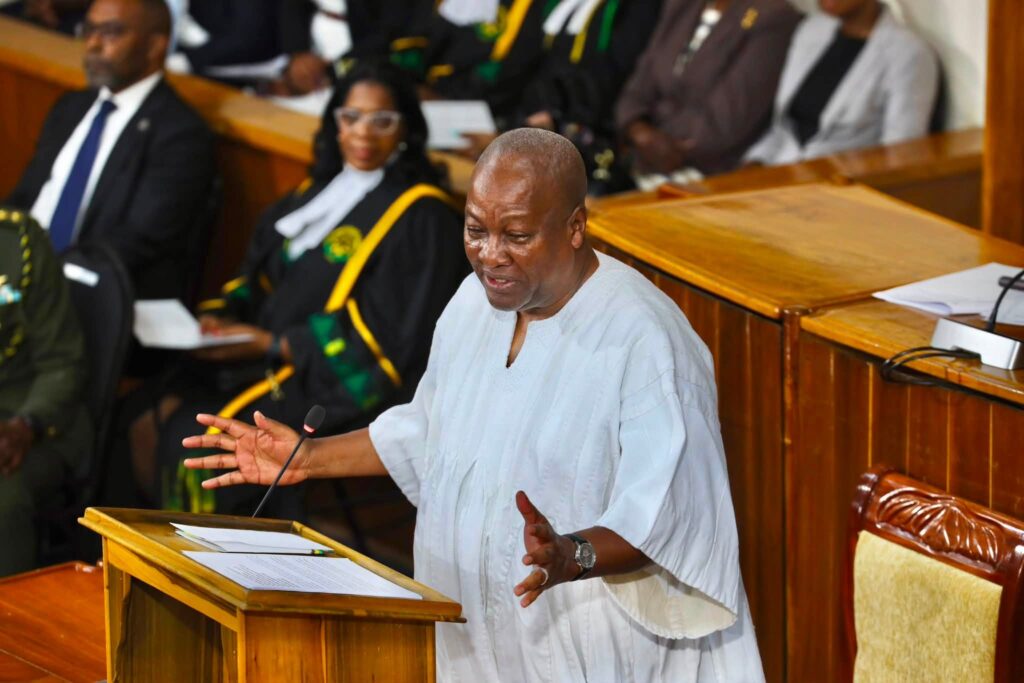
“Our advocacy is ultimately about hope. Hope that our future generations will inherit a world in which historical truth is acknowledged, human dignity is upheld, and justice becomes the foundation for lasting reconciliation. And that is the vision that continues to unite Ghana and Jamaica”.
President John Dramani Mahama
He described this shared vision as both a tribute to the past and an ongoing commitment to the future. “It is a vision worthy of our ancestors. It is a vision to which we remain unwaveringly committed.
Ghana Supports Jamaica’s Petition to the British Crown
President Mahama used the address to publicly reaffirm a commitment he had made privately to Prime Minister Andrew Holness the previous day, pledging Ghana’s support for Jamaica’s forthcoming petition on slavery.
President Mahama’s remarks on reparatory justice extend a theme that has run throughout his State Visit to Jamaica, having already participated in a Special High-Level Reparations Dialogue at the University of the West Indies earlier in the trip.
His public endorsement of Jamaica’s petition to King Charles III adds a concrete diplomatic commitment to what has otherwise remained a broader philosophical and historical conversation during his visit.
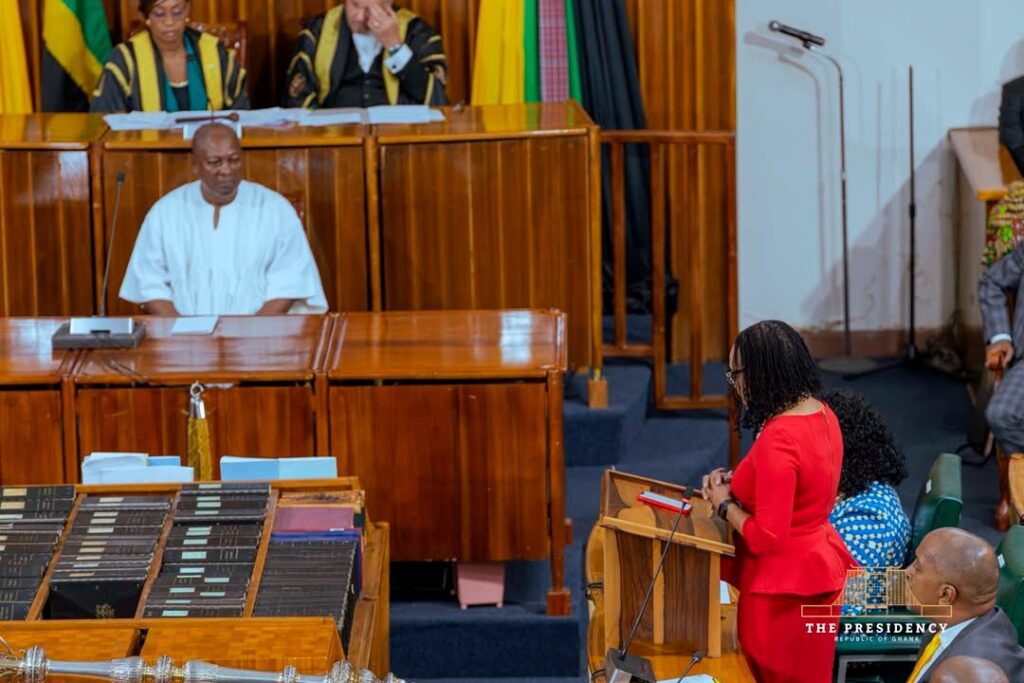
By tying Ghana’s support directly to Jamaica’s planned petition, President Mahama’s remarks signal an intent to translate shared advocacy into coordinated diplomatic action targeting Britain’s monarchy directly.
This commitment builds on the resolution both countries helped advance at the United Nations, suggesting a sustained partnership between the two nations as they continue pressing the international community, and specifically the British Crown, to engage more directly with the legacy of the transatlantic slave trade.
As Jamaica prepares to formally submit its petition, Ghana’s public backing adds diplomatic weight to the initiative, reinforcing the broader Africa-Caribbean coalition that has emerged around the reparatory justice movement in recent years.
READ ALSO: Senate Committee Advances Blanche’s Nomination For Attorney General