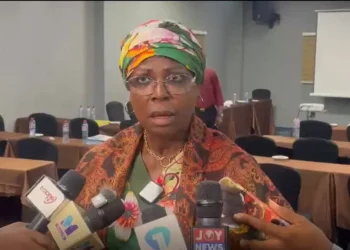
The Ministry of Youth Development and Empowerment has entered a formal partnership with the Christian Council of Ghana (CCG) and the Design and Technology Institute (DTI) aimed at expanding skills development opportunities for young Ghanaians, as government moves to confront persistent unemployment and widening skills gaps within the country’s youth population
Speaking at the signing event, Minister for Youth Development and Empowerment, Hon. George Opare Addo, described the partnership as far more than a routine administrative agreement, framing it instead as a shared national commitment to invest in what he called Ghana’s greatest resource, its young people.
Hon. Opare Addo situated the partnership within the broader founding vision of his Ministry, explaining that it was established specifically to coordinate a vibrant youth ecosystem capable of helping every young Ghanaian become healthy, skilled, innovative and globally competitive.
He stressed that the Ministry’s mandate extends well beyond simply implementing standalone programmes, describing its role instead as one of bringing together government institutions, faith-based organisations, academia, development partners, civil society and the private sector to construct an ecosystem in which every young person has a genuine opportunity to succeed.
No Single Institution Can Solve Youth Challenges Alone
Central to the Minister’s remarks was an acknowledgement that the scale and complexity of challenges facing Ghana’s youth cannot realistically be addressed by any one institution acting in isolation, a point he used to underscore the significance of the new partnership.
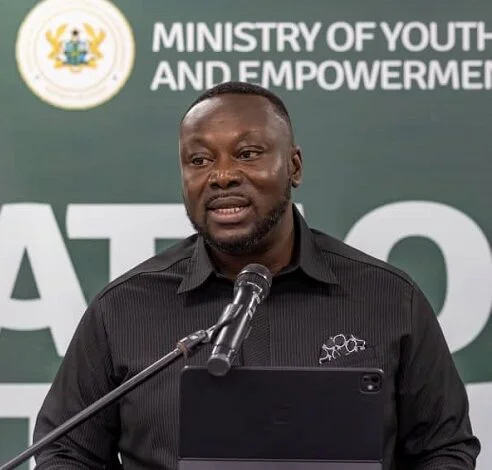
“No single institution can address the complex challenges facing the youth of today, whether it is unemployment, skills mismatch, mental health, substance abuse, digital transformation, entrepreneurship, migration, climate resilience or civic responsibility. The solutions require collaboration between partners.”
Minister for Youth Development and Empowerment, Hon. George Opare Addo
This framing positioned the CCG and DTI partnership as a direct response to that need for cross-sector collaboration, rather than an isolated initiative operating independently of the Ministry’s broader strategic approach to youth development.
Hon. Opare Addo laid out a detailed list of critical challenges the Ministry has identified as confronting young Ghanaians since its establishment, including a persistent skills mismatch against the evolving demands of the labour market, limited access to quality information and opportunities, and barriers restricting access to technology, innovation and entrepreneurship.
He also pointed to difficulties in school-to-work transition programmes, ongoing concerns around youth mental health and substance abuse, and vulnerabilities linked to climate change and migration, presenting these as the interconnected set of issues the Ministry’s various partnerships, including the one signed today, are ultimately designed to address.
Framing Youth Investment as Economic Strategy
Despite the breadth of challenges outlined, Hon. Opare Addo struck an optimistic tone, arguing that these difficulties simultaneously present significant opportunities when approached with the right kind of institutional support.
“Our young people are creative, resilient and ambitious. When we provide them with the right support, they become innovators, entrepreneurs, skilled professionals, community leaders and, most importantly, nation builders.”
Minister for Youth Development and Empowerment, Hon. George Opare Addo

He went further to argue that investing in young people should not be understood merely as a matter of social responsibility, but as one of the most sound economic investments any nation can make, a framing that positions youth development policy as central to Ghana’s broader national transformation agenda rather than a peripheral social programme.
Turning specifically to the Christian Council of Ghana’s role within the new partnership, Opare Addo highlighted the organisation’s decades-long standing as one of the country’s most respected institutions, credited with promoting peace, social cohesion, ethical leadership and national development through its extensive nationwide network.
He explained that the Ministry’s engagement with the Council reflects a recognition that youth empowerment extends beyond the acquisition of technical skills and employment opportunities alone, encompassing equally important dimensions such as values formation, character development, responsible citizenship and a broader sense of purpose among young people.
Leveraging Nationwide Reach for Civic Engagement
Through the partnership, Hon. Opare Addo indicated that the Ministry intends to draw on the Christian Council’s extensive nationwide network to roll out programmes specifically designed to promote volunteerism and active citizenship among Ghana’s youth, extending the partnership’s impact beyond skills training alone into broader civic and community engagement initiatives.
This dimension of the collaboration suggests that alongside the more technical skills development expected from the Design and Technology Institute’s involvement, the partnership is also intended to cultivate a stronger sense of civic responsibility and community leadership among young beneficiaries.
Multi-Pronged Approach to Youth Empowerment
Taken together, the partnership between the Ministry of Youth Development and Empowerment, the Christian Council of Ghana and the Design and Technology Institute reflects a deliberate strategy to combine technical skills training with values-based civic formation, addressing both the practical and character-related dimensions of youth unemployment and underemployment simultaneously.

With the partnership now formally signed, attention turns to how quickly concrete programmes emerge from the collaboration, particularly around entrepreneurship training, skills development and civic engagement initiatives designed to reach young Ghanaians through the Christian Council’s nationwide network.
As government continues to position youth development as central to its national transformation agenda, the success of this partnership may serve as an early indicator of how effectively cross-sector collaboration can translate into tangible outcomes for the country’s young population in the months ahead.
READ MORE: Ministry of Education Directs GETFund Scholarships Through Ghana Scholarship Authority