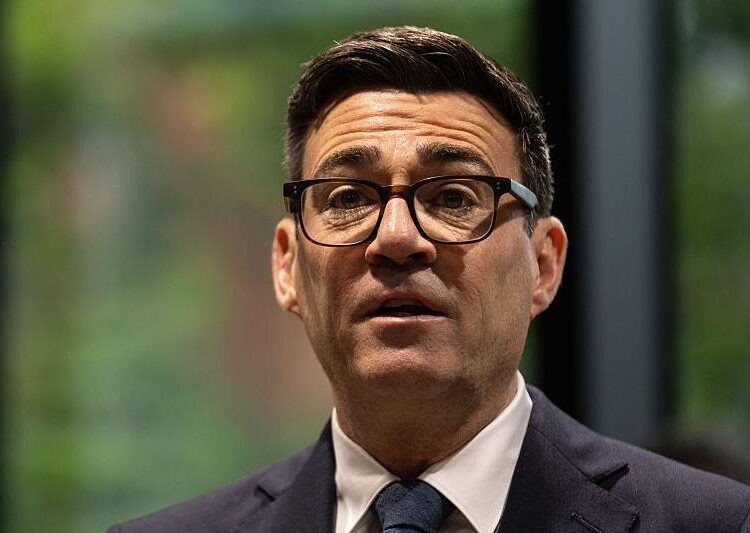
UK Prime Minister, Andy Burnham, has opened up about one of the most difficult moments in his recent political career, revealing that being prevented from contesting the Gorton and Denton by-election earlier this year was personally painful but ultimately reinforced the resilience that has defined his journey to the country’s highest office.
According to the Prime Minister, setbacks and defeats often provide politicians with valuable lessons that success alone cannot offer.
Burnham also acknowledged that politics inevitably places strain on personal relationships. However, he insisted that disagreements should not always be viewed through a personal lens, arguing that political decisions are often influenced more by circumstances than individual animosity.
“People in politics have to recognise that when things happen, they are not necessarily personal. They happen because the political moods of the times are shaping things, and people have to accept that.”
Andy Burnham
The remarks come months after Burnham sought permission to contest the Gorton and Denton by-election in January, a move that would have marked his return to Parliament after serving as Mayor of Greater Manchester since 2017. His request, however, was rejected after members of Labour’s National Executive Committee, including then Prime Minister Sir Keir Starmer, voted against allowing him to stand.
At the time, the decision fuelled widespread speculation about tensions within Labour and raised questions over Burnham’s future role in national politics. Yet events unfolded rapidly after Labour suffered significant electoral setbacks, prompting Starmer’s resignation and paving the way for Burnham’s emergence as the party’s leadeer and Prime Minister.
Reflecting on that period, Burnham admitted the experience had been emotionally challenging but stated it did not prevent him from maintaining a professional working relationship with Starmer.
“It was hard earlier this year when I was blocked in terms of standing for the Gorton and Denton by-election. I will always say what I thought about that, but then I carried on working and did events with Keir Starmer after that.”
Andy Burnham
The Prime Minister suggested that navigating disappointment without allowing it to become personal is an essential part of political life. While acknowledging that rivalries and disagreements are unavoidable, he argued that leaders must remain focused on broader public responsibilities rather than internal party conflicts.
Burnham Credits Defeats Outside Westminster for Shaping His Leadership
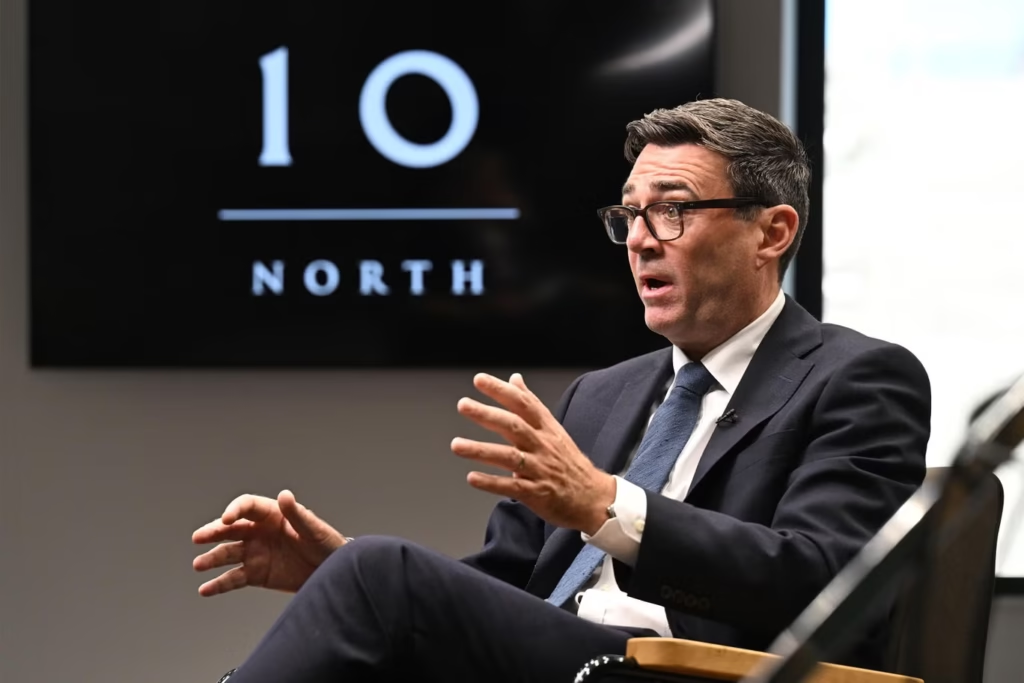
UK Prime Minister, Andy Burnham also revisited two of his career’s most defining disappointments his failed Labour leadership attempts in 2010 and 2015 arguing that those defeats eventually made him a more effective politician.
“Probably because of them. I became a much better politician in the end for not getting the position at that time because I probably hadn’t really thought things through enough.”
Andy Burnham
His comments reflect a broader theme that has increasingly defined Burnham’s political identity: the belief that leaving Westminster enabled him to reconnect with communities and develop a style of leadership rooted more in local priorities than party politics.
Following his defeat in the 2015 Labour leadership contest, Burnham left frontline parliamentary politics to contest the newly created position of Mayor of Greater Manchester. The decision, initially viewed by many as a step away from national influence, instead became the foundation of his political revival.
As Mayor, Burnham built a reputation as one of Britain’s most recognisable regional leaders, frequently challenging successive governments on issues including transport, housing, policing and local government funding. His outspoken advocacy during the COVID-19 pandemic further elevated his national profile, earning him support well beyond Labour’s traditional voter base.
In retrospective analysis, Burnham indicated that leaving Westminster changed his perspective on politics.
“It took me to lose in 2015 decide to come back home here and stand to be the first mayor of Greater Manchester, and then really challenge myself about when I’m thinking and speaking for myself without any party line, because I was quite clear when I left, I was going to do this myself, place first, not party first. Do what’s right for here. It really strengthened me as a politician.”
Andy Burnham
Burnham also pondered on the difficulties of sustaining friendships in a career fraught with severe competition. Referring to his clashes with previous Labour leader Ed Miliband and his subsequent political differences with Starmer, he noted that leadership battles always have an impact on personal ties.
Yet despite those challenges, Burnham argued that politicians must recognise when changing political circumstances, rather than personal motives, drive major decisions.
READ ALSO: International Self-Interest Undermines Response to Ebola Outbreaks