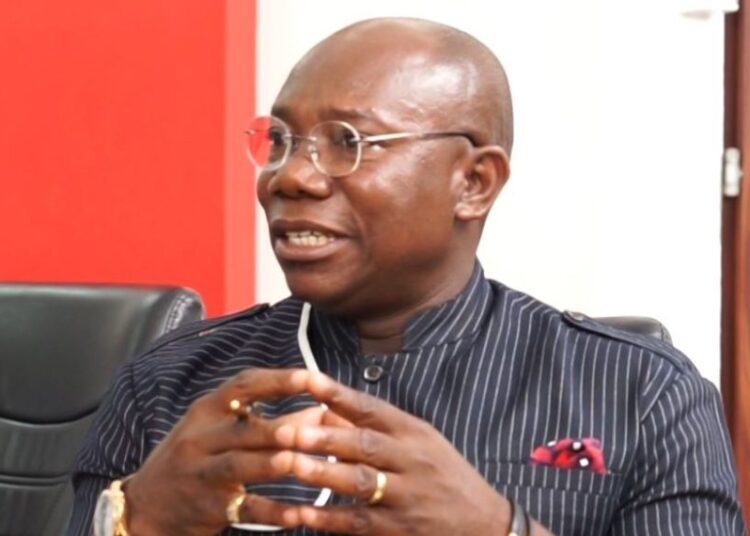
Director of Elections of the New Patriotic Party, Evans Nimako, has cautioned that the Supreme Court’s decision striking down the delegate system for internal political party elections could substantially increase the cost of organising party primaries across the country. He argued that the ruling places a significant financial responsibility on political parties, particularly those with large memberships and nationwide structures.
Discussing the implications of the judgement, Mr Nimako indicated that expanding participation in internal elections would require parties to organise larger and more complex electoral exercises. According to him, the logistical arrangements alone would demand far greater financial resources than the delegate system previously required.
He observed that while many stakeholders continue to advocate wider participation in internal party elections, every reform carries financial consequences that deserve equal consideration. Consequently, political parties would have to mobilise additional resources to organise credible and transparent elections under the new arrangement.

“In the face of it, this is going to be a huge burden on political parties,” Mr Nimako remarked, adding that the financial implications of the judgment should not be underestimated.
From his perspective, the ruling presents an opportunity for policymakers to revisit the longstanding debate over public financing for political parties. He noted that discussions surrounding state support have remained unresolved for years despite repeated engagements among political stakeholders and governance institutions.
“The issue of state funding has been on the table for a long time. However, without the appropriate legal framework, you could open the floodgates for the creation of parties whose only interest may be access to public funds.”
Evans Nimako
Making reference to earlier national discussions, the NPP Election Director recalled that political parties represented in Parliament, together with the Institute of Economic Affairs, had previously examined proposals aimed at introducing some form of state funding. He suggested that the latest ruling provides fresh justification for reopening those conversations.
The renewed debate follows recent remarks by National Democratic Congress Chairman Johnson Asiedu Nketiah, who disclosed that the party spent about GH¢40 million to organise its 2014 internal elections. Mr Nimako acknowledged that such expenditure illustrates the growing financial demands associated with internal democratic processes.
Nevertheless, he stressed that any proposal to finance political parties with public funds must rest on a carefully designed legal framework. Without clear safeguards, he argued, such a policy could unintentionally encourage the formation of numerous political parties solely to access public resources.
Internal Election Reforms Should Target Electoral Offences
Evans Nimako also argued that efforts to reform internal political party elections should concentrate on enforcing existing electoral laws instead of abolishing the delegate system. He indicated that addressing vote buying and other election related offences would strengthen democracy without dismantling a structure that has long guided party organisation.
Discussing the implications of the Supreme Court’s ruling, Mr Nimako observed that public attention should move beyond the outcome of the case to examine the reasoning behind the decision. From his perspective, the central question is whether the judgment resolves the challenges associated with internal party elections or simply replaces one system with another.
According to the NPP Elections Director, the delegate system has played an important role in Ghana’s democratic development by enabling recognised representatives of party members to participate in internal decision making. He therefore argued that any assessment of the ruling should consider the practical contribution the system has made to strengthening political parties over the years.

“The question we must ask is what exactly the judgment seeks to cure. It is important that we carefully examine the reasoning behind the Supreme Court’s decision.”
Evans Nimako
While acknowledging that the issue deserves serious attention, he contended that eliminating the delegate system alone would not necessarily remove the financial pressures associated with political competition.
He further advocated stricter enforcement of the country’s electoral laws, particularly provisions dealing with bribery, treating and other offences committed during internal elections. He argued that Ghana already possesses the legal instruments required to deal with electoral misconduct if the institutions responsible for enforcement apply them consistently.
In his assessment, improving compliance with existing laws offers a more sustainable solution than introducing structural changes whose long term effects remain uncertain. Such an approach, he explained, would strengthen accountability while preserving internal democratic processes that political parties have relied upon for decades.
READ ALSO: Government Urged to Invest in Digital Infrastructure to Transform Healthcare