The United Nations International Maritime Organization (IMO) has warned that renewed attacks on commercial shipping in the Red Sea and Gulf of Aden are escalating regional tensions and placing international supply chains at growing risk, after another cargo ship came under attack and innocent seafarers lost their lives.
The latest incident, involving the Tanzania-flagged cargo ship Tihamah, has intensified concerns over the safety of vessels and their crews navigating one of the world’s most strategically important maritime corridors.
The International Maritime Organization (IMO) has condemned the strike, describing attacks on civilian shipping as unacceptable and warning that continued violence could have consequences far beyond the immediate conflict zone.
Arsenio Dominguez, head of the IMO, stated that “it is with sadness and regret to know that, once again, innocent seafarers have lost their lives in an indefensible attack on international shipping. I offer my deepest condolences to the families of those involved.”
The Red Sea and Gulf of Aden have already experienced repeated attacks on commercial vessels, forcing some operators to reconsider routes and increasing the cost and complexity of transporting goods between Asia, Europe and other major markets.

Arsenio Dominguez revealed that the latest attack was particularly troubling because it occurred in the Red Sea and Gulf of Aden region, where years of conflict and maritime threats have already placed considerable pressure on international shipping.
He added that continuing attacks on shipping “only serve to escalate tensions and threaten global supply chains on which everyone depends.”
The Tihamah, according to online marine registries, sails under the Tanzanian flag and measures approximately 62.8 metres in length and 11 metres in width. Its attack comes against the backdrop of a prolonged conflict in Yemen and a wider regional confrontation that has increasingly spilled into critical maritime routes.
The Houthi movement, formally known as Ansar Allah and backed by Iran, has fought Yemeni government forces for more than a decade. The government has received support from a Saudi Arabia-led coalition, while the Houthis have maintained control over significant parts of Yemen.
The group has also repeatedly threatened maritime traffic around the Bab al-Mandab Strait, a narrow but strategically vital waterway connecting the Red Sea with the Gulf of Aden and the wider Indian Ocean.
Houthi attacks on shipping intensified following the outbreak of the Israel-Hamas war, with the group stating that its actions were intended to support Palestinians in Gaza.
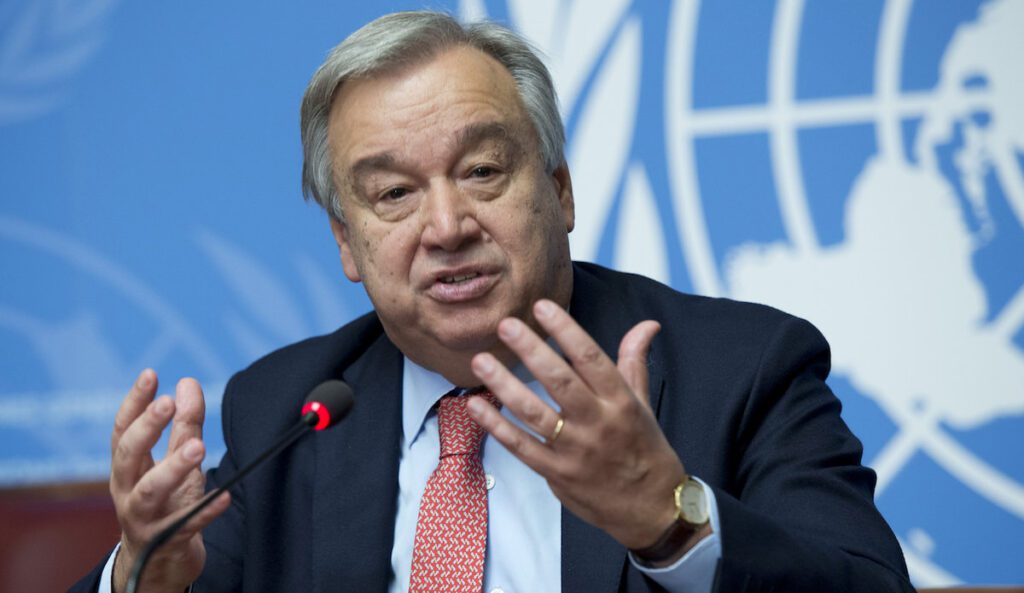
The latest escalation has also prompted concern from UN Secretary-General António Guterres. Following reported Houthi attacks on two Saudi oil tankers on 23 July, Guterres expressed deep alarm over the renewed targeting of commercial vessels and threats to maritime navigation in the Red Sea.
The maritime crisis, however, extends beyond the Red Sea. A near-total reduction in shipping through the Strait of Hormuz has created another major pressure point for global trade.
The waterway, which connects the Gulf to the wider world, is particularly important to energy markets because it provides a crucial route for the movement of oil and other commodities from major Gulf producers.
Recent disruptions have sharply reduced vessel traffic through the strait. The decline has coincided with escalating hostilities involving Iran, Israel and the United States, with strikes and retaliatory attacks spreading across parts of the region.
The resulting uncertainty has affected the movement of commodities including oil, gas and fertiliser inputs, contributing to concerns about supply shortages and higher prices.
For countries heavily dependent on imported energy, food and industrial materials, prolonged disruption to the region’s shipping routes could translate into higher transportation costs, increased commodity prices and further pressure on already vulnerable economies.
Thousands of Seafarers Remain Stranded as Maritime Crisis Deepens
While the disruption to international commerce has become a central concern, International Maritime Organization has continued to highlight the human cost of the maritime crisis.
Thousands of seafarers have been caught in the wider disruption around the Strait of Hormuz, leaving crews stranded aboard vessels or unable to safely leave the region. The IMO-coordinated evacuation programme for affected seafarers has been placed on hold as the conflict continues.
The agency estimates that about 6,000 crew members and 500 vessels remain stranded in or around the strait, while approximately 2,900 people have been evacuated so far.
The IMO’s tracker has also recorded 65 confirmed incidents and 17 seafarers killed since early March, highlighting the growing human toll associated with attacks and disruptions across the region.
The IMO Chief has therefore called for stronger international action to protect crews and ensure that maritime workers are not treated as participants in regional conflicts.
Dominguez also demanded the immediate release of seafarers being held captive following piracy attacks in the Red Sea and Gulf of Aden.
UN and IMO are now urging governments and armed groups to respect international maritime law and protect civilian shipping from the wider geopolitical conflicts engulfing the region.
READ ALSO: Ghana’s Private Sector Credit Explodes 41.2% in June