Ghana’s electricity system has undergone a major structural shift over the past two decades, with thermal generation emerging as the dominant source of power while hydropower’s contribution has steadily declined and other renewables remain marginal.
Data contained in Ghana’s 2026 Energy Statistics show that total electricity generation reached 27,945 gigawatt-hours (GWh) in 2025, up from 7,224 GWh in 2000.
While the expansion reflects a much larger electricity system, the composition of that generation has changed sharply.
Hydropower accounted for 92% of Ghana’s electricity generation in 2000.
By 2025, its contribution had fallen to 31%, despite hydro generation itself increasing to 8,752 GWh.
Over the same period, thermal generation expanded dramatically, reaching 18,996 GWh and accounting for 68% of total electricity generation in 2025.
The figures point to a fundamental reality for Ghana’s energy transition: the country has not simply added more generation capacity.
It has progressively built a power system in which thermal generation now carries most of the electricity burden.
“Hydro, which accounted for 92% of the generation mix in 2000,” had fallen to a 31% share by 2025.
Ministry of Energy and Energy Commission, 2026 Energy Statistics
The Hydro Question
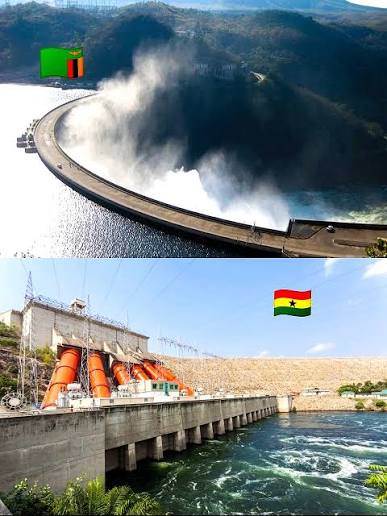
Ghana’s hydroelectric system remains substantial.
As of the end of 2025, Akosombo had an installed capacity of 1,020 MW and dependable capacity of 900 MW, while Kpong had 160 MW installed and 140 MW dependable.
Bui added 404 MW of installed capacity and 371 MW of dependable capacity.
Together, the three major hydro facilities accounted for 1,584 MW of installed capacity and 1,411 MW of dependable capacity.
The problem is not that hydro has become irrelevant.
Rather, Ghana’s dependence on hydro as a proportion of the electricity system has weakened as demand has expanded and thermal generation has grown much faster.
That shift has consequences for energy security.
The ASEC Sustainable Renewable Energy Framework identifies climate vulnerability as an emerging threat to electricity systems, particularly where countries depend significantly on hydropower.
For Ghana, the report notes that changing rainfall patterns, rising temperatures and extreme weather events can directly threaten hydropower generation.
That makes diversification more than a climate-policy argument. It is also a reliability strategy.
Ghana’s experience demonstrates why a power system built around a single renewable resource can become vulnerable when the resource is exposed to climatic conditions.
Hydropower provides relatively stable generation when reservoir conditions are favourable, but its performance ultimately depends on water availability.
The strategic question, therefore, is not whether Ghana should replace hydro with solar or other technologies.
It is whether the country can build a sufficiently diversified system in which hydro, gas-fired generation, solar and other renewable technologies complement rather than compete with one another.
Solar Is Growing, But From A Low Base
Solar power presents perhaps the clearest example of Ghana’s transition challenge.
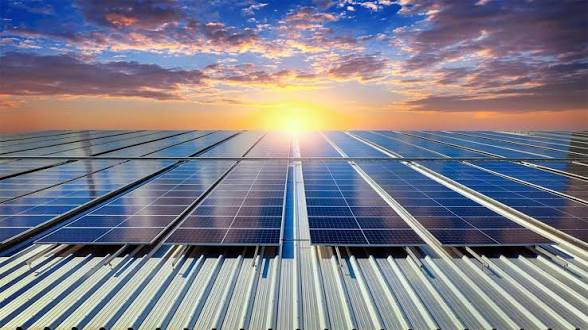
Other renewable generation, mainly solar photovoltaic power, grew at an average annual rate of 41.7% after its introduction into the electricity system in 2013.
Yet generation from these sources reached only 197 GWh in 2025, representing 0.71% of total electricity generation.
The contrast is striking.
Solar is growing rapidly in percentage terms, but its actual contribution remains small relative to thermal generation.
Ghana therefore cannot claim a meaningful transformation of its electricity mix simply because renewable generation is recording high growth rates from a very low starting point.
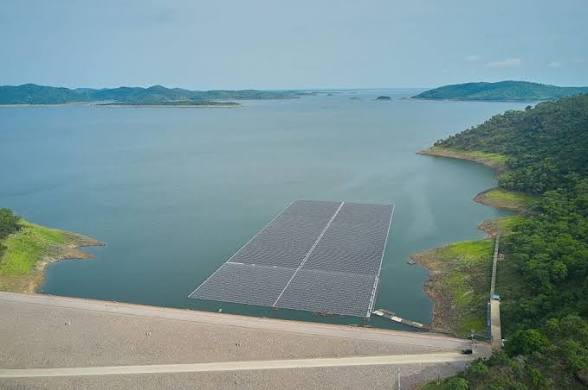
The 2026 Energy Statistics list 183 MW of installed capacity under other renewables, including 105 MW from the Bui Solar facility, alongside solar installations at Navrongo, Lawra, Kaleo, BXC and Meinergy, as well as a small biogas facility operated by Safisana.
The more important issue is what happens next.
If Ghana wants solar to move from a supplementary source to a meaningful component of electricity supply, generation investment will have to be matched by transmission, distribution, system balancing and appropriate storage.
ASEC makes precisely this point, identifying grid investment as a prerequisite for integrating variable renewable generation at scale.
For Ghana, that means the renewable-energy debate cannot stop at solar panels.
A solar plant produces electricity when the sun is available.
The electricity system, however, must serve consumers continuously.
That gap between generation availability and system demand is where transmission investment, storage, flexible generation and better system planning become critical.
Ghana’s changing power mix therefore offers a clear warning: expanding generation capacity alone is not the same as building a resilient electricity system.
The next phase of the transition should be judged not simply by how many megawatts of solar or hydro are added, but by whether those assets can be integrated into a system capable of delivering reliable power at a sustainable cost
READ ALSO: Ghana’s Banks Cash In as Profits Hit GH¢23bn