The Ghana Meteorological Agency (GMet) has revealed that outstanding statutory payments from the Ghana Civil Aviation Authority continue to undermine its ability to finance critical weather and climate services that support aviation safety and national development.
Director-General of the Ghana Meteorological Agency, Dr Eric Asuman disclosed that the prolonged non-payment dates back more than a decade despite a legal framework requiring portions of aviation revenue to be transferred to GMet. The Director-General indicated that the agency continues to deliver round the clock meteorological services while struggling with limited financial resources.
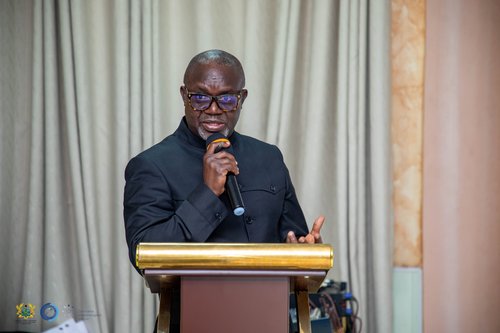
Addressing the historical background, Dr Asuman recounted that GMet signed a Memorandum of Understanding with the Ghana Civil Aviation Authority in 2008 to receive 10 percent of landing fees for aviation weather services. According to him, the arrangement later gained legal backing after Parliament amended the GMet Act in 2019 to make the revenue transfers mandatory.
The legislation, he explained, requires the Civil Aviation Authority to cede 10 percent of landing charges and overflight fees to GMet. Similarly, the Ghana Airports Company is required to transfer 5 percent of passenger service charges to sustain the agency’s operations.
From his perspective, the legal amendment was designed to guarantee stable funding for specialised meteorological services provided to pilots and airlines. Every aircraft taking off, landing or flying through Ghana’s airspace relies on weather information generated by GMet to ensure safe navigation.
Despite the statutory provisions, the Director-General revealed that GMet has received only one payment of GH¢1 million from the Civil Aviation Authority this year. That single tranche, transferred in March, represents the only payment made between January and August.
“Every thirty minutes and every hour we provide aviation weather services, yet this year we have received only one tranche of one million cedis.”
Dr Eric Asuman
He also to repeated efforts aimed at resolving the impasse through institutional dialogue. Dr Asuman outlined that successive sector ministers, parliamentary committees and agency leadership have engaged Civil Aviation officials in pursuit of an amicable settlement.
A significant breakthrough appeared imminent during a reconciliation meeting held on 28th March at Aqua Safari. The engagement brought together the Parliamentary Select Committees on Information and Communication and Transport, alongside officials from GMet, the Civil Aviation Authority and legal facilitators led by Professor Raymond Atuguba and Associates.
During those deliberations, Civil Aviation proposed reconciling all outstanding revenue from 2019 before settling the debt in nine equal instalments. The proposal further included directing the International Air Transport Association to remit GMet’s statutory share directly into its Bank of Ghana account.
Nevertheless, the Director-General intimated that neither the reconciliation exercise nor the promised authorisation to IATA has materialised. Consequently, GMet remains without the predictable funding mechanism envisaged under the law.
The emphasis rests on the agency’s operational resilience as it continues delivering aviation weather services despite mounting financial limitations. Dr Asuman reiterated that GMet remains committed to protecting lives and supporting safe air travel while awaiting compliance with the statutory revenue arrangement.
Statutory Debt Delays Modernisation of National Weather Infrastructure
The Ghana Meteorological Agency also estimated that the Ghana Civil Aviation Authority owes the institution approximately GH¢59 million in statutory aviation revenue, with the figure continuing to rise as reconciliation remains outstanding.
Discussing the financial implications, Director-General Dr Eric Asuman explained that the estimate covers arrears calculated up to March this year. The Director-General clarified that the final amount depends on official flight records controlled by the Civil Aviation Authority, making reconciliation essential.
According to GMet’s assessment, the outstanding obligation continues accumulating every month through landing fees and aircraft overflight charges. The agency therefore believes the current liability has already exceeded the March estimate because additional aviation revenue has accrued over recent months.
Focusing on access to operational data needed to verify the exact amount owed, flight movements, landing records and overflight charges remain under the custody of the Civil Aviation Authority, limiting GMet’s ability to complete an independent verification.
Dr Asuman observed that repeated requests for joint reconciliation have yielded little progress despite earlier commitments. GMET looks at securing the data through the agreed institutional process before determining the definitive outstanding balance.
The operational consequences extend beyond accounting figures. Automatic weather stations, rainfall monitoring systems and Doppler radar installations all require substantial investment to improve forecasting accuracy and strengthen disaster preparedness across Ghana.

“Fifty nine million cedis could transform our forecasting network with weather stations, rainfall systems and radar for disaster risk reduction.”
Dr Eric Asuman
Referencing the objectives of the 2019 legislative amendment, the Director-General noted that Parliament deliberately created a sustainable financing model for meteorological services. The law recognised that aviation weather information is commercial in nature and therefore deserves dedicated revenue support.
GMet contrasted its experience with that of the Ghana Airports Company. Since 2023, the Airports Company has authorised IATA to transfer the agency’s statutory 5 percent share of passenger service charges directly into GMet’s account.
This arrangement, he explained, has provided modest operational relief and enabled improvements in the agency’s daily activities. Consequently, the Director-General believes the same direct remittance mechanism should be adopted by the Civil Aviation Authority to eliminate payment delays.
Another issue highlighted is the institutional accountability between state agencies operating under different ministries. Dr Asuman argued that public institutions should honour statutory obligations promptly because delayed payments ultimately weaken services relied upon by citizens and the aviation industry alike.
“Civil Aviation only needs to authorise IATA to pay our statutory share directly from source.”
Dr Eric Asuman
Looking ahead, GMet hopes the reconciliation process agreed earlier this year will finally commence and pave the way for structured repayment. The Director-General affirmed that a predictable revenue stream is essential for expanding weather infrastructure and strengthening Ghana’s capacity to deliver timely forecasts for aviation, agriculture and disaster management.
READ ALSO: BoG Launches Powerful Council for Non-Interest Finance