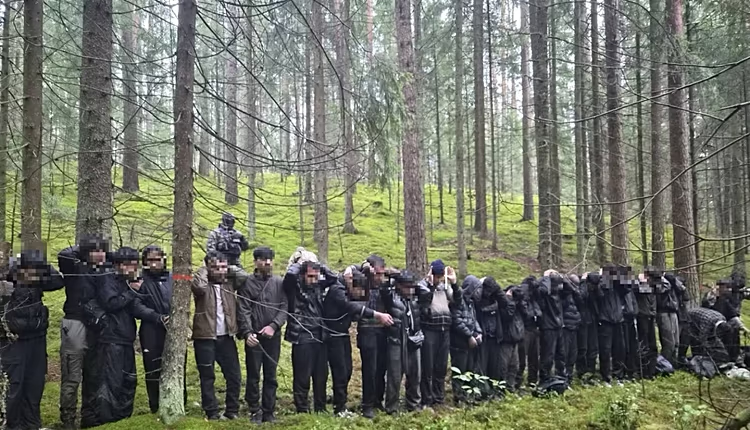
Latvian border guards have stopped 28 migrants who entered the country from Belarus through a concealed underground tunnel, highlighting the increasingly sophisticated methods being used to cross the European Union’s eastern border.
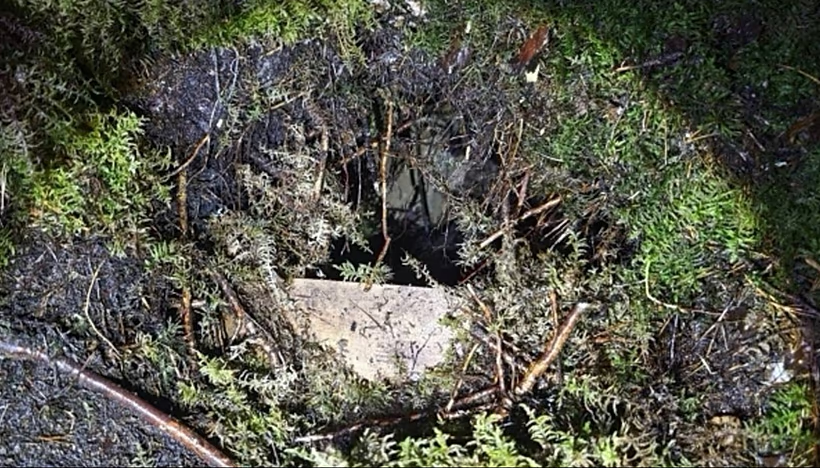
The passage, discovered about 20 metres from the border, had been hidden with moss to avoid detection. It is the second tunnel uncovered by Latvian authorities in recent weeks. On August 10, border guards discovered another underground passage that had reportedly been used by 15 migrants to enter Latvia from Belarus.
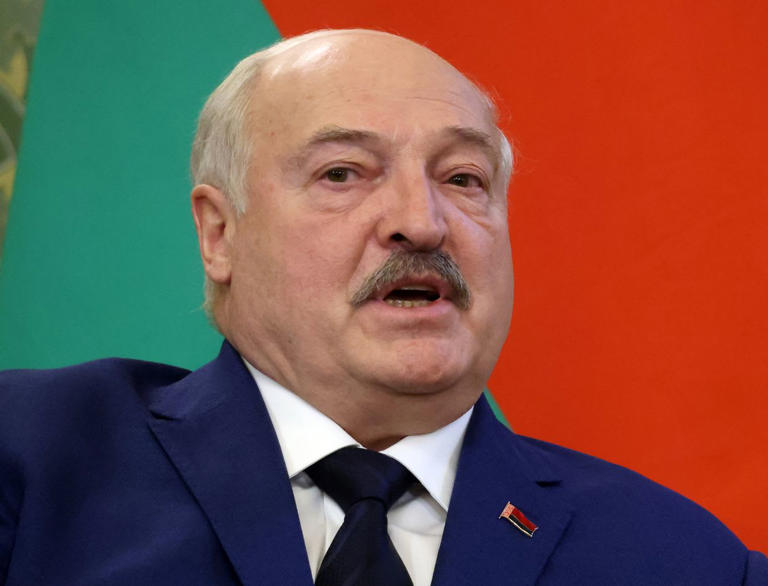
The discoveries come as Latvia faces a sharp rise in irregular migration along its eastern frontier, which European leaders have described as part of a broader campaign of “hybrid” pressure linked to the government of Belarusian leader Alexander Lukashenko.
Latvia, a Baltic nation of around two million people, has stopped nearly 10,000 attempts to cross its border illegally during the first eight months of 2026. That figure is approaching the approximately 12,000 attempted crossings recorded during the whole of 2025.
On some days, Latvian border guards have recorded more than 100 attempts to cross the country’s 173-kilometre border with Belarus. Latvian authorities say that the migrants are using increasingly varied methods to bypass the country’s border infrastructure, including tunnels and other concealed routes.
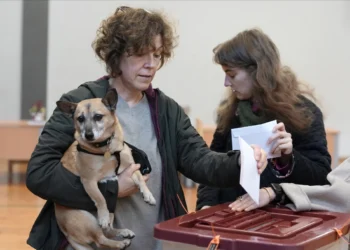
The rise in migration pressure comes as Latvia prepares for parliamentary elections scheduled for October 3
Latvia Seen As Transit Route
According to Latvian officials, many of the migrants crossing from Belarus do not intend to remain in Latvia. Guntis Pujāts, Chief of Latvia’s State Border Guard, said the country is largely being used as a transit point for migrants seeking to reach other parts of Europe. “Latvia is not a target country,” Pujāts told a news agency.
He said that Latvia’s border guards are effectively helping protect countries further west, including Germany, Belgium and the Netherlands. A rise in secondary migration in neighbouring Lithuania appears to support that assessment. Lithuanian authorities have recorded a fourfold increase in migrants arriving from Latvia, according to the report.
Pujāts said that more European countries needed to recognise the pressure facing Latvia and other countries along the EU’s eastern border. “Unfortunately, there is not enough understanding about the current situation,” he said.
The movement of migrants from countries outside Europe through Belarus became a major issue in 2021. The crisis began after Lukashenka threatened to facilitate the movement of migrants and drugs into the European Union following sanctions imposed by the bloc against his government.
Latvian officials say that the country had not experienced similar levels of irregular migration before 2021. “We haven’t had such problems before 2021,” Pujāts said. He stressed that Latvia’s official border crossing points remain open to people seeking asylum, but said the migrants currently arriving through Belarus are largely attempting to bypass legal entry routes. “This is not a legal migration flow,” he said.
According to Pujāts, the migration routes involve people travelling from Africa, Asia and other regions before reaching Belarus and attempting to enter the European Union.
Latvia has received assistance from neighbouring countries as it attempts to manage the increased pressure on its border.Estonia, Lithuania and Finland have deployed additional border guard personnel to Latvia under bilateral cooperation agreements. A similar agreement with Poland is also expected to be signed this month.
Growing Recognition In Europe
Latvian President Edgars Rinkēvičs said there is growing recognition within Europe that the borders of the Baltic states and Poland with Belarus and Russia also serve as external borders of the European Union. “That understanding is increasing,” he said.
Despite the additional support, Latvian officials say the country continues to face staffing shortages.The State Border Guard is currently short of around 200 personnel, according to Pujāts. “One is technologies, the other is human resources,” he said, referring to the country’s main border security challenges. He added, “We are working to improve our human capacities, to recruit more border guards.”
Latvia has stepped up efforts to reinforce its border with Belarus in response to the continued migration pressure. The country completed construction of a fence along its 173-kilometre border with Belarus last year.
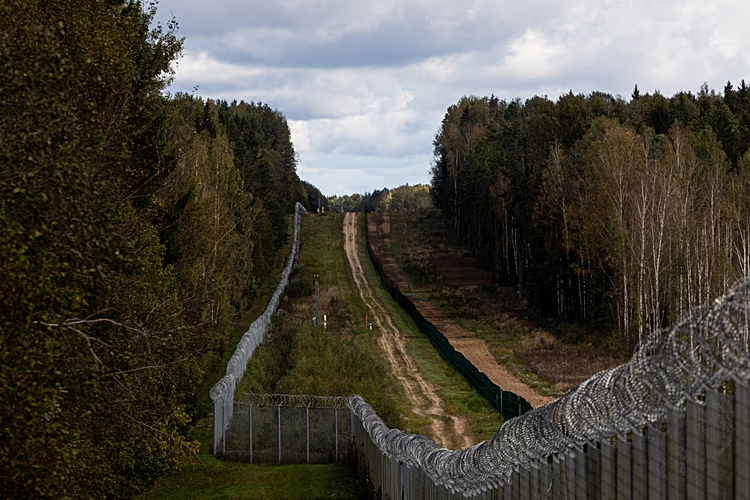
Work is continuing to equip the border with additional surveillance and security technology, with the project expected to be completed by the end of 2026. In mid-August, Latvian authorities also launched a security operation known as “Vilkatis,” or “Werewolf,” targeting what the government describes as instrumentalised illegal migration from Belarus.
The discovery of two underground tunnels within weeks has added a new dimension to Latvia’s border security concerns, demonstrating the challenges authorities face in monitoring a long and heavily wooded frontier. Latvian officials say technology, additional infrastructure and increased staffing will all be needed to manage the continued pressure.
For now, border guards remain on heightened alert as Latvia seeks to prevent irregular crossings while working with neighbouring countries to strengthen the protection of the European Union’s eastern border.
READ ALSO: Xabi Alonso Downplays Fernandez’s Exit Speculations, Says He’s a Chelsea Player