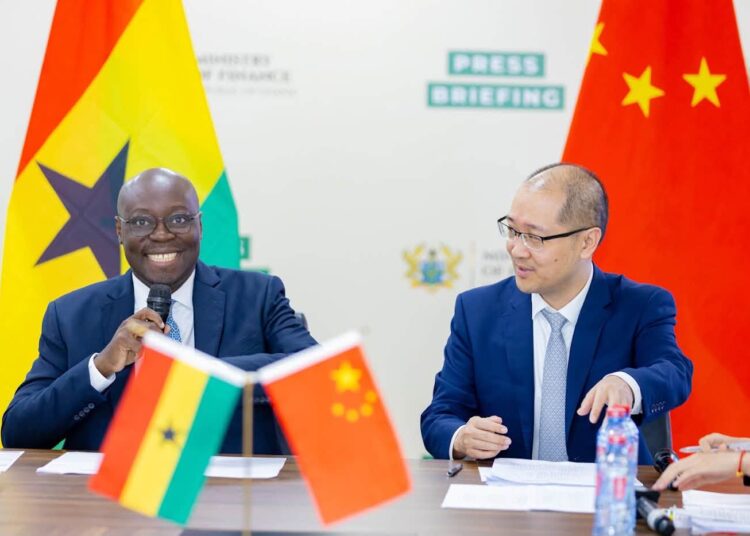
Ghana is pushing for a major transformation in its economic relationship with China, with Finance Minister Dr Cassiel Ato Forson calling for a decisive shift from the export of raw materials towards value-added trade, local processing, manufacturing and technology transfer.
The Finance Minister made the call as Ghana opened the Fifth Session of the Ghana-China Joint Commission on Economic, Trade and Technical Cooperation, where officials from both countries discussed ways to deepen their economic partnership.
Dr Forson acknowledged China’s position as Ghana’s largest trading partner but warned that the sheer volume of trade should no longer be the primary measure of success.
According to him, Ghana must restructure the relationship to ensure that greater economic value remains within the country.
Ghana Wants More Value From China Trade
Dr Forson said Ghana’s trade relationship with China must evolve beyond the traditional model in which the country exports largely unprocessed commodities and imports manufactured products.
“China is now Ghana’s largest trading partner, but the structure must improve,” he said.
The Finance Minister argued that Ghana’s long-term economic interests would be better served if the country’s abundant natural resources were processed locally before being exported to international markets.
This, he indicated, would enable Ghana to capture more value from its commodities while creating opportunities for businesses, workers and investors.
The proposed shift comes at a time when Ghana is seeking to strengthen domestic production and build a more resilient industrial base.
Rather than simply increasing trade volumes, the government wants future investments to contribute directly to industrialisation, employment and technology development.

Processed Cocoa Takes Centre Stage
One of the major areas highlighted by Dr Forson is cocoa processing.
Ghana remains one of the world’s leading cocoa-producing countries, yet a significant portion of its cocoa is exported in raw or semi-processed form.
The Finance Minister said Ghana wants to significantly increase exports of processed cocoa and other value-added products to the Chinese market.
Such a move could create new opportunities for local manufacturers while increasing the foreign exchange earnings generated from Ghana’s commodities.
Instead of exporting raw cocoa beans and importing finished chocolate products, Ghana hopes to strengthen its capacity to process cocoa locally and gain a larger share of the international value chain.
The strategy could also encourage investment in factories, packaging facilities, logistics and related industries.
Government Targets Factories, Jobs and Technology
Dr Forson made it clear that Ghana’s investment ambitions extend beyond securing additional capital.
He said the country is seeking investments capable of strengthening local production and creating sustainable employment.
“We seek investments that build processing plants and manufacturing lines, transfer technology, procure from Ghanaian businesses, train our people and create sustainable jobs,” he stressed.
The statement highlights the government’s desire for Chinese investment to generate broader economic benefits rather than operate as isolated commercial ventures.
Under the proposed approach, Chinese investors could become partners in Ghana’s industrialisation drive by establishing production facilities, developing local supply chains and training Ghanaian workers.
The transfer of technology is particularly significant because Ghana’s industrial ambitions depend not only on capital but also on access to modern production techniques, expertise and skills.
A New Test for Ghana-China Relations
The renewed focus on value addition could represent an important test for Ghana-China economic relations.
China has become a major destination for Ghanaian commodities and an important source of manufactured goods, machinery, technology and investment.
However, the government now wants the relationship to deliver stronger benefits for Ghanaian businesses and workers.
Dr Forson said the economic partnership must go beyond trade volumes and translate into tangible opportunities for local businesses, employees and the wider economy.
That approach could reshape how Ghana evaluates future trade agreements and investment partnerships.
The emphasis may increasingly move towards how many jobs are created, how much technology is transferred, how much local procurement takes place and how much domestic production is strengthened.
China Signals Stronger Economic Support
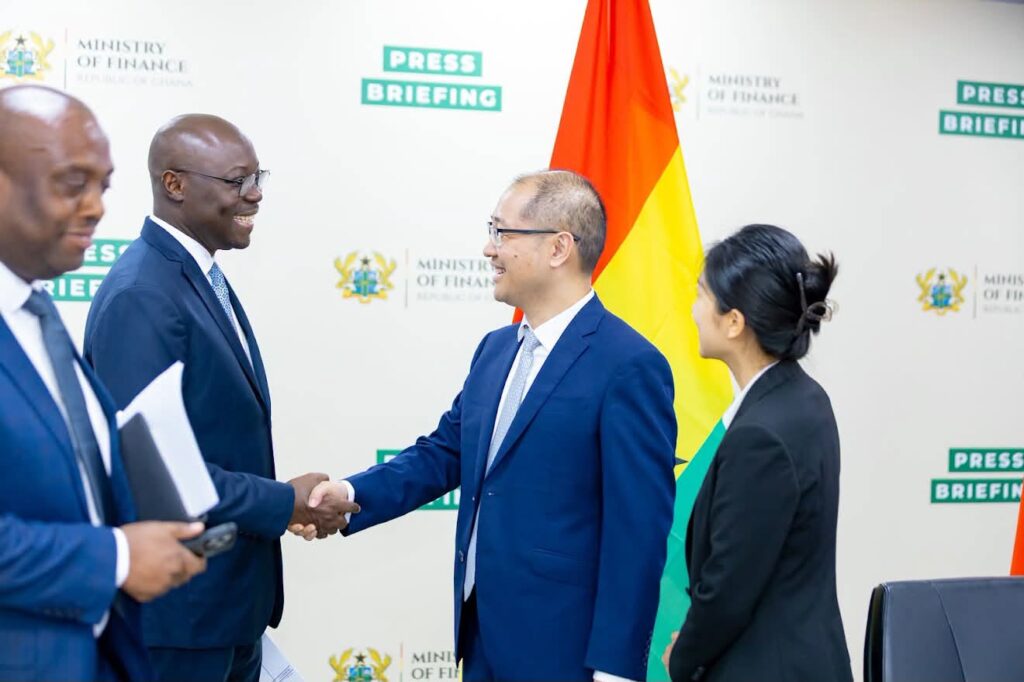
China’s Assistant Minister for Commerce, Zhang Li, who is visiting Ghana for the first time, welcomed what he described as recent improvements in Ghana’s economy.
He reaffirmed China’s commitment to deepening economic and commercial cooperation between the two countries.
Mr Zhang also indicated China’s readiness to support the government’s Big Push Programme and other priority initiatives designed to accelerate Ghana’s economic development.
The pledge could open the door to deeper cooperation in infrastructure, manufacturing, technology, trade and other strategic sectors.
For Ghana, the opportunity will be to translate China’s renewed commitment into investments that expand productive capacity and create sustainable economic opportunities.
Ghana’s Industrialisation Gamble
The government’s push for value-added trade comes with a clear economic objective: Ghana wants to earn more from what it produces.
Local processing can create additional layers of economic activity, including manufacturing, transportation, packaging, marketing and distribution.
It can also create new opportunities for small and medium-sized enterprises that supply larger manufacturing companies.
If successfully implemented, the strategy could reduce Ghana’s dependence on exporting raw commodities while strengthening domestic industrial capacity.
The Ghana-China partnership therefore enters a potentially important new phase.
The challenge will be converting commitments into factories, technology transfers, local procurement, skilled jobs and competitive Ghanaian products capable of penetrating the Chinese market.
READ ALSO: Regional Trade Ambition Puts Ghana’s Generation And Transmission Capacity Under Scrutiny