
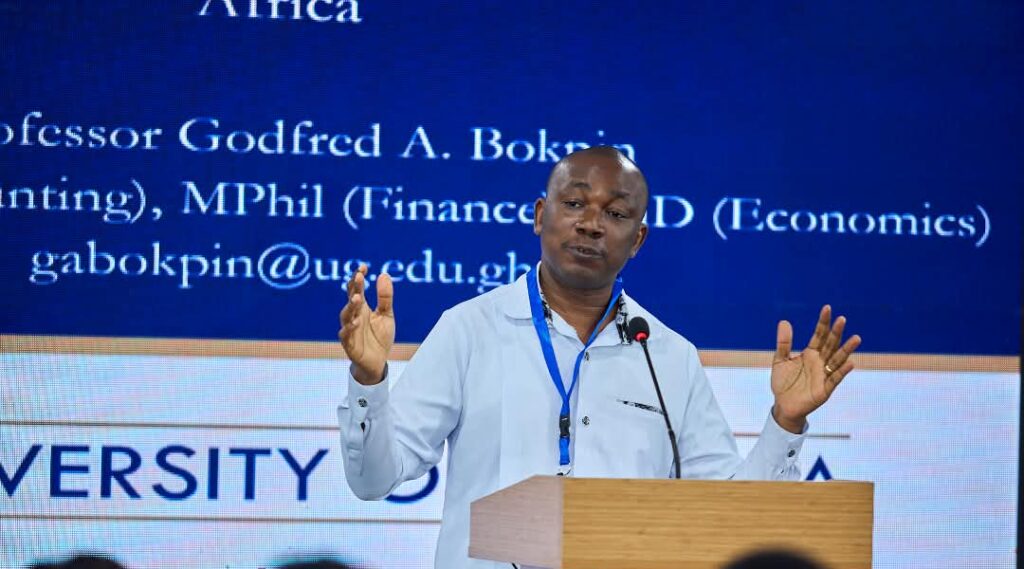
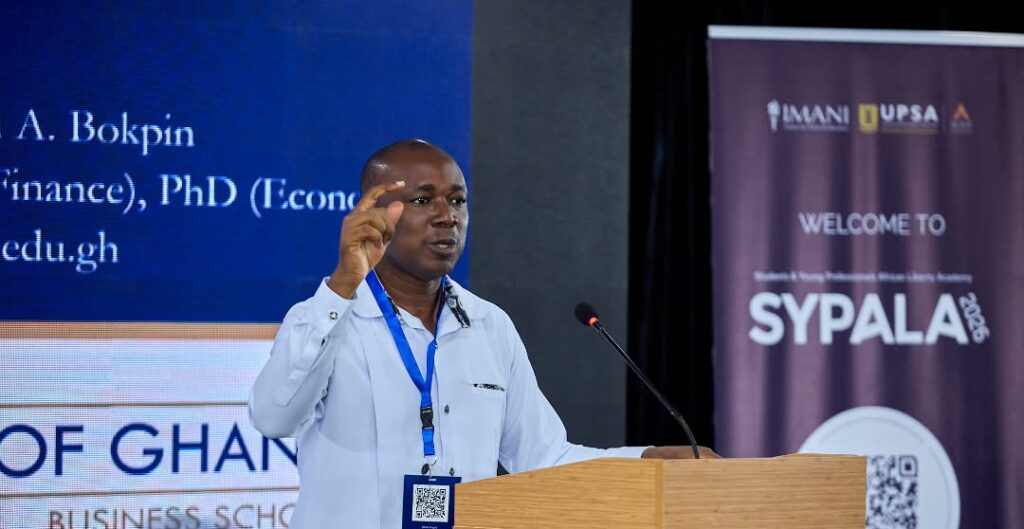
Professor Godfred A. Bokpin of the University of Ghana Business School has called on Ghana to abandon its focus on headline GDP growth in favour of what he termed job-rich growth, arguing that expanding the economy without expanding formal employment leaves the country’s fast-growing youth population without a stake in its own development.
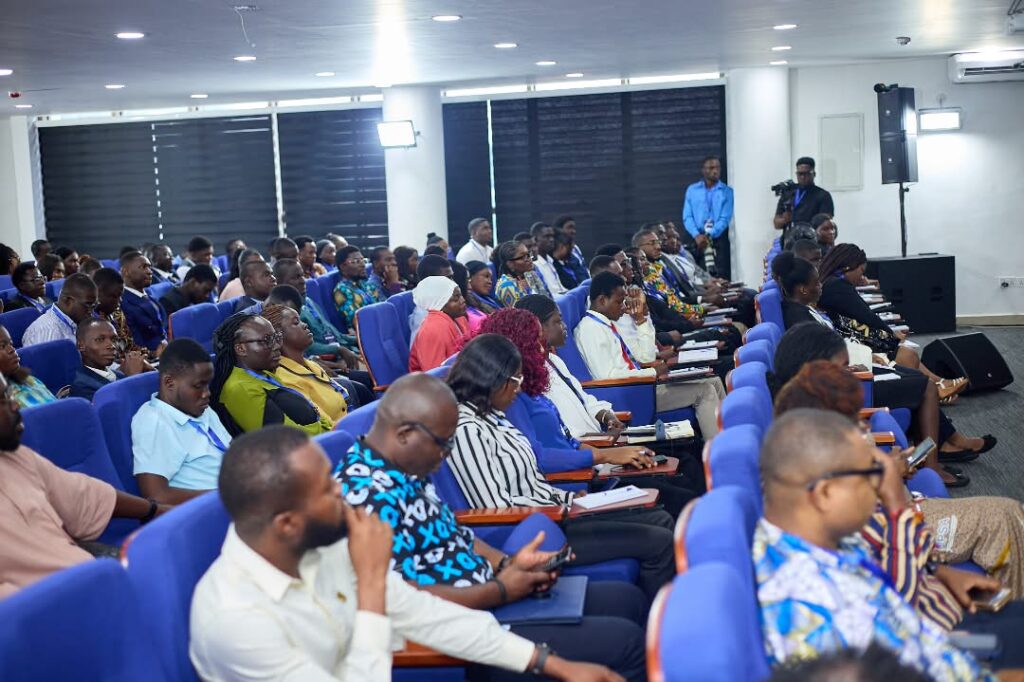
Speaking at SYPALA 2026 in Accra, Professor Bokpin said Africa’s demographic profile, with an average age of 19 across the continent, represents a genuine opportunity only if matched by investment in quality education and digital literacy capable of turning young people into productive economic participants rather than simply counting them among the population.
Professor Bokpin challenged the audience to rethink what growth figures actually measure. “The days where we earned it and treasured it and elevated GDP growth, it’s over,” he said, arguing that Ghana has celebrated rising GDP even as employment generation stagnated.
He said the country’s own record since a 2010 pension reform shows formal employment growth slumping even as headline growth continued. He went further, invoking a critique some countries apply to the GDP measure itself.
“Other countries believe that GDP is not gross domestic product, but it’s rather gross domestic problem,” he said, arguing that environmental destruction associated with generating growth is poorly captured, or not captured at all, in standard GDP calculations.
He said Ghana currently pursues macroeconomic stability at the expense of the environment, compromising ecological integrity in the name of currency stability that does not, on its own, deliver jobs.
Being Alive Is Not a Factor of Production
Professor Bokpin drew a sharp distinction between simply belonging to a youthful population and being economically productive within it. “Merely being alive does not qualify you to be a factor of production,” he said, arguing that raw labour itself is no longer sufficient in a modern economy.
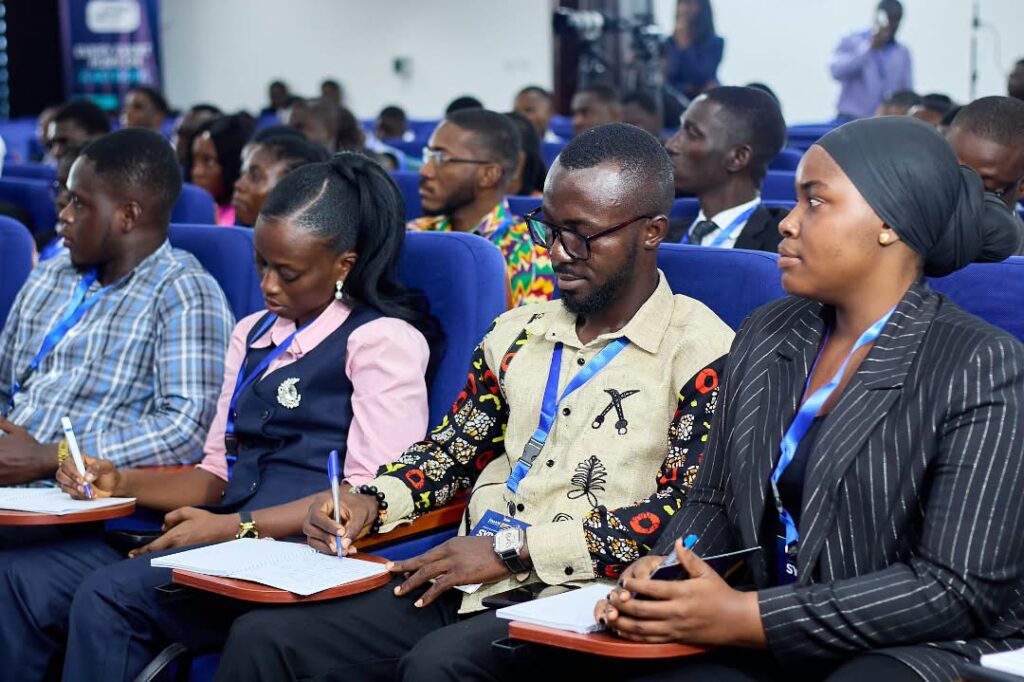
He said even skilled labour now falls short of what employers and economies require, pointing to digital literacy as an increasingly non-negotiable qualification. “You can be an economist, an accountant, and if you are not digitally literate, you will not be successful,” he said.
He argued that Africa’s education systems must shift from a quantity-driven model, focused on producing certificate holders, toward a quality-driven one built around genuine competition and debate.
He contrasted this with what he described as Ghana’s current university culture, where seminars attract attendance only when tied to an exam incentive or a political networking opportunity rather than genuine intellectual engagement.
The Scale of the Employment Gap
Professor Bokpin set out figures illustrating how far Ghana’s labour market sits from the outcome he described as necessary. He said the country’s labour force stands at close to 14 million people, of whom only around 2.8 million hold formal wage employment.
The remainder, he said, are largely in vulnerable employment without formal contracts, exposed to displacement from even a modest economic shock.
He projected that Ghana will add roughly 712,000 people to its population annually through 2030, more than 500,000 of whom will pass through the education system and enter the labour market each year.
He argued this trajectory makes an economic model focused narrowly on growth, without a corresponding jobs strategy, unsustainable regardless of how strong headline figures appear.
Exporting Skilled Labour as an Asset, Not a Loss
Professor Bokpin offered labour export as one deliberate strategy rather than an admission of failure, provided it is paired with the right domestic investment.
He suggested Ghana could position itself to export skilled labour to other countries while structuring interventions so that a portion of the earnings sent home helps repay the country’s investment in educating those workers in the first place.
He framed this as a way of converting the country’s young population into what he called cash flow generation capacity, rather than treating labour migration purely as a drain on national capability.
He closed by tying education quality directly to national outcomes. “We should be able to invest in quality education,” he said, repeating the phrase for emphasis, arguing that without it, neither job-rich growth nor the broader economic transformation he described earlier in his address would be achievable.
READ ALSO: No Country Has Developed on Natural Resources, Bokpin Pushes Idea-Driven Growth