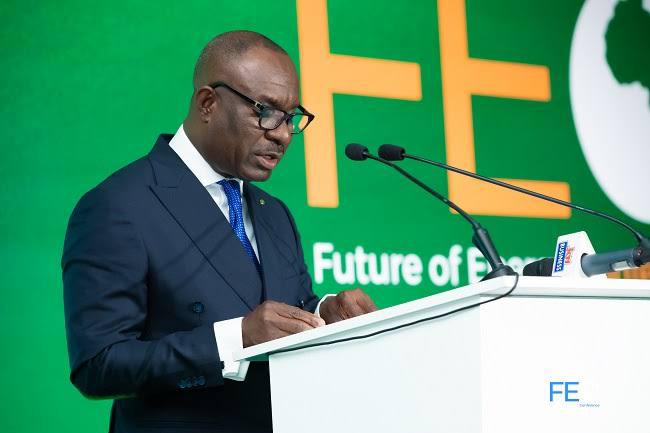
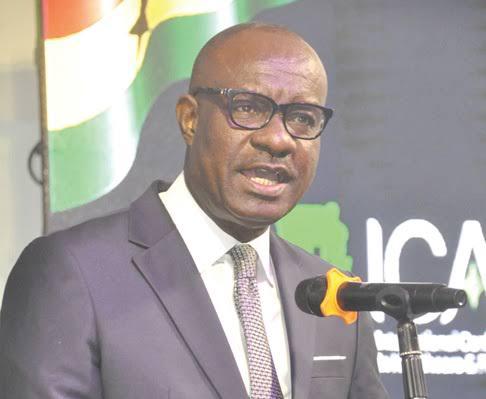
Dr. George Nana Agyekum Donkor, President of the ECOWAS Bank for Investment and Development (EBID), has highlighted the scale of Africa’s energy-financing challenge, warning that inadequate investment in electricity infrastructure continues to constrain access, productivity and industrial competitiveness across the continent.
Speaking at the Future of Energy Conference, Dr. Donkor noted that Africa requires substantial annual investment to achieve universal electricity access while simultaneously developing the infrastructure needed to support industrialisation.
He said the challenge is compounded by significant disparities in electricity access between countries and between rural and urban communities.
“These disparities undermine productivity and competitiveness.”
Dr. George Nana Agyekum Donkor, President, EBID
The financing challenge is particularly significant because expanding access is not simply a matter of generating more electricity.
Africa must also invest in transmission and distribution networks capable of delivering power reliably to households, businesses and productive industries.
High Electricity Costs And Subsidy Risks
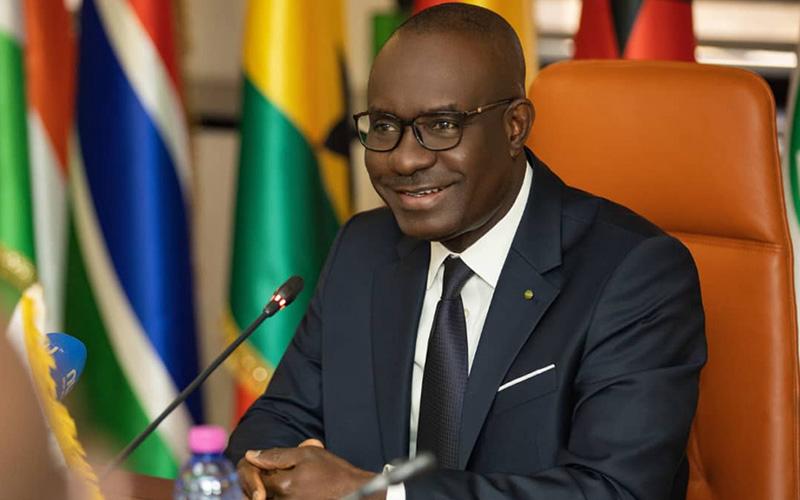
Dr. Donkor also drew attention to Africa’s electricity tariffs, noting that several African countries face some of the highest electricity costs globally.
Historically, subsidies and hydropower generation have helped keep consumer electricity prices relatively low in parts of the continent.
However, he cautioned that subsidies that are not financially sustainable can create wider problems for the electricity sector.
Persistent subsidy burdens can contribute to inefficiencies, the accumulation of sector debt and declining financial performance among utilities.
This creates a difficult policy balance for African governments: electricity must remain affordable enough to support households and industry, while pricing and subsidy structures must also allow utilities and energy systems to remain financially viable.
The implication is that simply increasing public expenditure on electricity subsidies may not provide a sustainable solution to Africa’s energy challenge.
Instead, governments need to address the underlying cost, infrastructure and financing constraints within the power sector.
Diversified Energy Mix Needed
To address these challenges, Dr. Donkor advocated a diversified energy system capable of combining different technologies and sources rather than relying excessively on a single form of generation.
His proposed approach includes modern and reliable transmission and distribution infrastructure, large-scale renewable energy, strategically deployed natural gas, embedded generation and stronger regional electricity markets and power pools.

“We need a mixed energy system capable of delivering reliable, affordable and sustainable electricity to productive sectors.”
Dr. George Nana Agyekum Donkor, President, EBID
The inclusion of natural gas alongside renewable energy reflects the need for reliability as African countries expand variable renewable generation.
Gas can provide dispatchable generation while renewable capacity grows, while embedded generation can bring electricity production closer to demand centres and reduce pressure on centralised systems.
At the regional level, stronger electricity markets and power pools could allow countries to share generation capacity and improve system efficiency, reducing the need for every country to independently develop sufficient generation capacity to meet its entire demand.
EBID Expands Role In Energy Financing
Dr. Donkor further highlighted the role of African financial institutions in closing the continent’s energy-investment gap.
EBID has already committed financing to energy infrastructure, including transmission and distribution projects, and has set an ambition to increase its energy-sector financing to $2 billion by 2030.
The target signals a greater role for regional financial institutions in mobilising capital for Africa’s energy infrastructure, particularly at a time when many governments face constrained fiscal space and high financing costs.
For Africa’s industrialisation agenda, the issue is therefore not only how much electricity is generated, but whether sufficient capital is available to build the networks, generation assets and regional systems needed to make that electricity reliable and affordable.
Dr. Donkor’s address consequently positioned energy finance as a central component of Africa’s broader development strategy, with stronger African-led financing mechanisms needed to reduce dependence on external capital and create energy systems capable of powering productive economic activity.
READ ALSO: Galamsey Fight Demands Coordinated Government Action — Minister-Designate For Environment