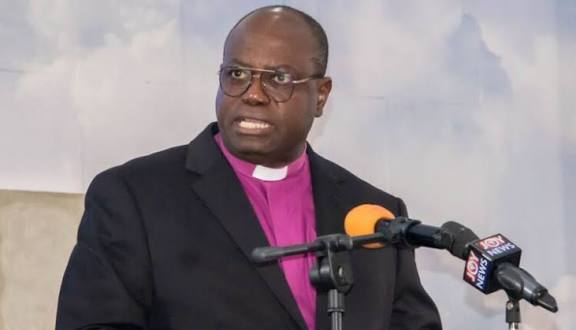
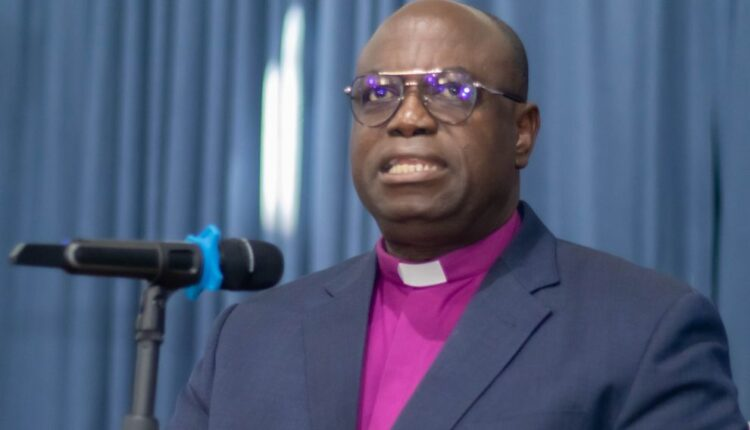
The Moderator of the Presbyterian Church of Ghana, Rt. Rev. Dr Abraham Nana Opare Kwakye, has attributed rising indiscipline in the country’s senior high schools to broader decay within Ghanaian society, arguing that schools are mirroring problems already present in the wider community rather than generating them independently.
Speaking on concerns raised in the Church’s recent communiqué regarding conduct in senior high schools, the Moderator outlined the scale of infrastructure pressure facing Presbyterian educational institutions, while also defending the Church’s decision to join a Supreme Court suit alongside the Catholic Church over the Wesley Girls’ Senior High School religious observance case.
Providing figures on the Church’s educational footprint, the Moderator said the Presbyterian Church of Ghana currently operates about 2,500 basic schools, alongside close to 40 secondary schools, including its technical institutes.
The Church also runs five colleges of education, located at Aburi, Akropong, Agogo, Kyebi and Abetifi, in addition to two tertiary institutions, the Presbyterian University Ghana and the Akrofi-Christian Institute, a postgraduate theological institution.
“Indiscipline in our schools is not created in isolation; it is largely a reflection of the values, attitudes and challenges within the wider Ghanaian society.”
Rt. Rev. Dr Abraham Nana Opare Kwakye
Overcrowding And Double-Track Strain
Addressing calls in some quarters for mission schools to revert fully to church control, the Moderator said such a shift would be feasible for some secondary schools but not others, citing severe capacity constraints already affecting Presbyterian institutions.

He disclosed that one school with an original capacity of roughly 1,000 to 1,200 students admitted close to 2,000 students in a single academic year, without a corresponding expansion in facilities.
He noted that a recent donation of a 600-bed facility by a school board member would help ease the pressure, but stressed that even with this addition, the institution would remain unable to fully close its infrastructure deficit and continue operating on the double-track system.
He said the Church remains hopeful of being included in government’s plans to phase out double-track scheduling in favour of a single-track system.
The Moderator further noted that feasibility of church takeover varies by school, pointing out that many Presbyterian institutions are located in rural areas and serve predominantly underprivileged communities, meaning their sustainability would depend heavily on external financing support rather than church resources alone.
Indiscipline Described as A Societal Reflection
Turning to concerns over discipline in senior high schools, the Moderator described a pattern of escalating violence, including reports of students carrying weapons, gang formation, inter-school clashes resulting in injuries and deaths, sexual assaults involving minors, and incidents of students attacking teachers.

He argued that these developments should be understood as symptoms of broader societal decline rather than isolated failures within the education system itself, stating that the classroom environment inevitably reflects conditions in the wider community.
He also linked the abolition of corporal punishment in schools to a rise in truancy and behavioural problems, noting that while the practice had previously been abused in some cases, its removal appeared to have emboldened some students toward greater indiscipline.
Mission School Identity Tied to Formation, Not Just Academics
Connecting the discipline discussion to the ongoing Wesley Girls’ lawsuit, the Moderator explained that Presbyterian education has historically been built around a concept referred to as “Presbyterian discipline,” under which academic instruction is paired with moral and character formation.
He cited the school anthem of Presbyterian Boys’ Senior High School, Legon, which references a “sure solid foundation” for Christian training, as reflecting this dual mission.
He argued that difficulties arise when students who decline to participate in a school’s religious formation programme remain enrolled within that institution, describing this as the central issue behind the Church’s decision to join the Catholic Church in contesting the Wesley Girls’ case at the Supreme Court.
He said the outcome of the case carries implications beyond Wesley Girls’ alone, potentially affecting all mission schools nationwide, which is why the Church opted to pursue a single consolidated legal position rather than address the matter school by school.
Balancing Religious Formation with Tolerance
The Moderator maintained that the Church does not seek to exclude students of other faiths from mission schools, noting his own academic background in interfaith study and the Church’s stated respect for religious diversity.
However, he argued that students who choose to enrol in Presbyterian institutions should be prepared to observe the additional religious and disciplinary expectations attached to those schools, distinct from requirements in purely secular government institutions.
He described the arrangement as requiring mutual tolerance, with the Church expected to respect the faith backgrounds of non-Presbyterian students, while those students are, in turn, expected to comply with the institutional rules that accompany enrolment in a Christian institution during their time there.
READ MORE: Deputy Education Minister Calls for Investments in Learning Infrastructure