President John Dramani Mahama has told African leaders that reparations have moved from a subject once treated as taboo to a live item on the global agenda, citing formal apologies, legal repeals and the return of looted artefacts in the five months since Ghana carried a landmark resolution through the United Nations.
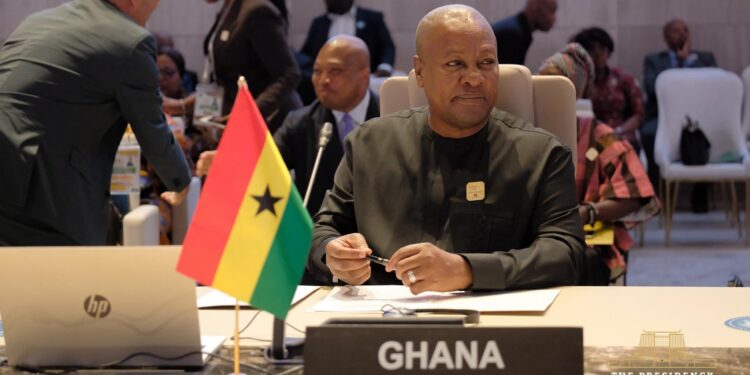
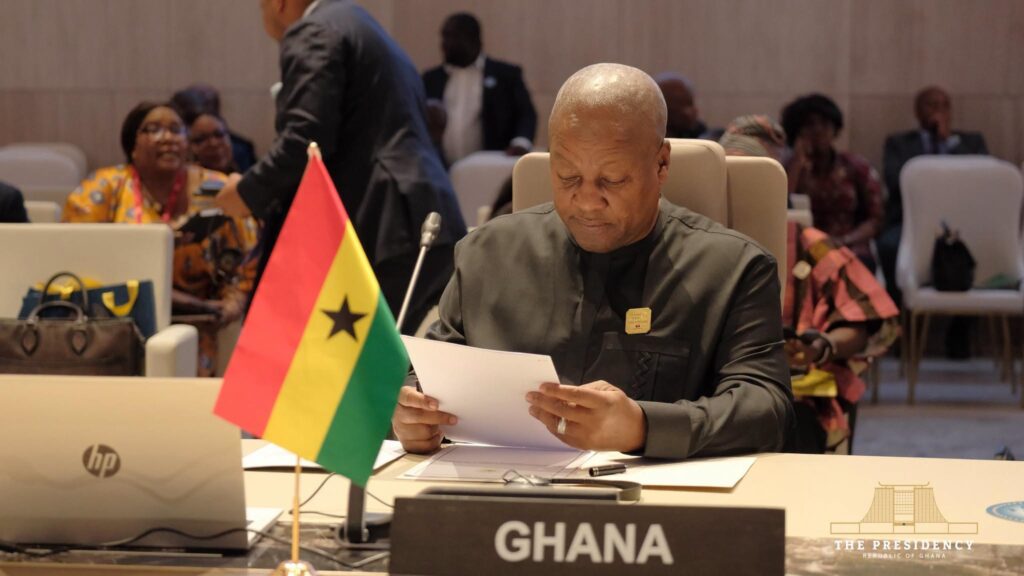
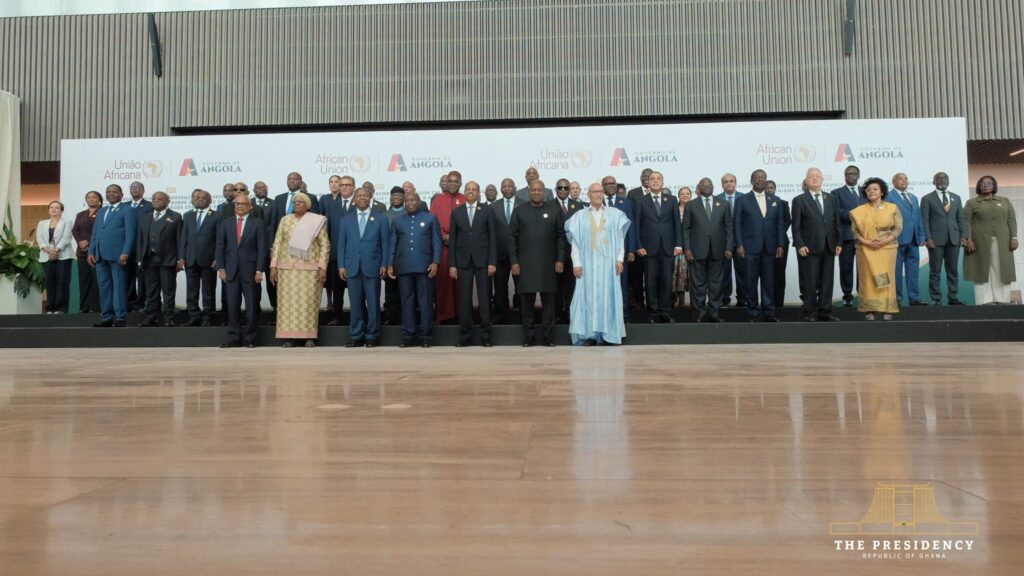
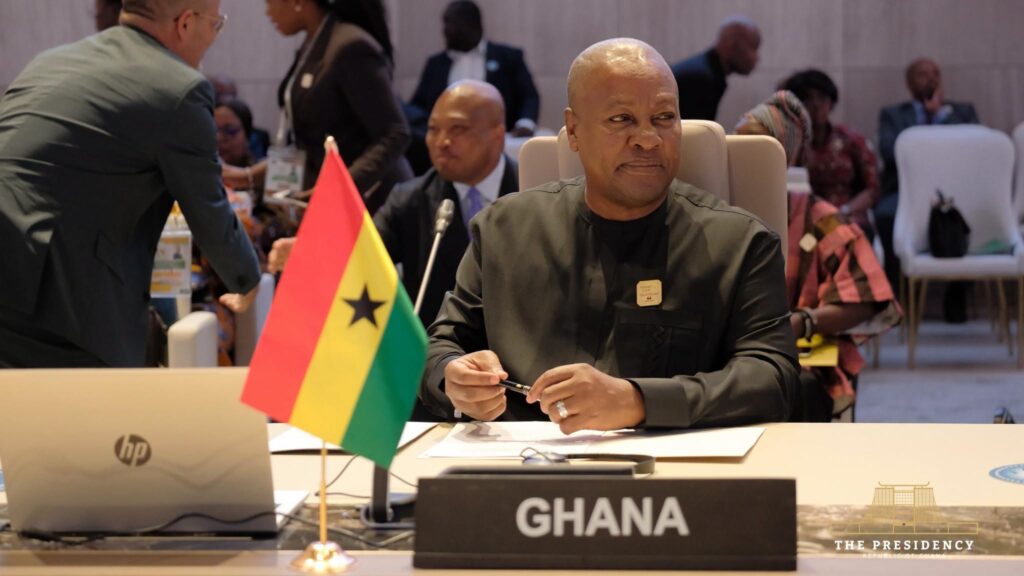
He was speaking at the 21st Extraordinary Session of the African Union Assembly in Luanda, Angola, on Sunday, August 30, 2026.
President Mahama, who serves as African Union Champion on Advancing the Cause of Justice and the Payment of Reparations, used the closing portion of his address to report on the follow-up work Ghana has led.
He invited fellow heads of state to a side event at the 81st United Nations General Assembly in September, where the bodies established in Accra will present their first updates.
The Resolution Ghana Carried
On 25 March, the General Assembly adopted Resolution A/RES/80/250, declaring the trafficking of enslaved Africans and racialised chattel enslavement the gravest crime against humanity. Ghana introduced the text, which passed with 123 votes in favour, three against and 52 abstentions.
President Mahama described the outcome as historic, noting that it took eighty years of the United Nations before the record carried such a declaration, and credited a coalition of the African Union, CARICOM and the African diaspora with securing it.
He thanked those who worked to achieve the result. The vote fell on the International Day of Remembrance of the Victims of Slavery and the Transatlantic Slave Trade. Argentina, Israel and the United States voted against.
The United Kingdom, Canada and all European Union member states abstained, several objecting that the text’s language implied a hierarchy among crimes against humanity and that its references to reparations conflicted with the principle of non-retroactivity in international law.
What Next After the Resolution
The question that followed adoption, in President Mahama’s account, was what to do with it. Ghana convened the High-Level Next Steps Conference on Reparatory Justice in Accra in June to answer it, bringing heads of state and government, ministers, scholars, legal experts and civil society organisations together to build a practical roadmap.
The conference took one substantive decision on scope. Delegates agreed to add indentured labour to the historical injustices against humanity requiring redress, extending the framework beyond chattel slavery to the system that succeeded it across the Caribbean, Indian Ocean and Pacific.
The conference created three mechanisms to carry the work forward. A High-Level Advisory Council on Reparatory Justice was established to steer the agenda politically. A Global Experts Panel on the Restitution of Cultural Heritage was set up to handle the return of artefacts, manuscripts and archives held in former colonial and slave-trading states.
A Global Legal Panel on Reparatory Justice was created to develop the legal architecture. The restitution panel has immediate work in front of it. The UN resolution calls for prompt and unhindered return of cultural property without charge, framing restitution as a matter of justice rather than goodwill, and the Netherlands and Germany made symbolic restitution presentations at the Accra opening ceremony.
Apologies, Repeals and Returned Artefacts
President Mahama offered a survey of movement elsewhere. Countries have begun to talk about reparations and address the question, he said, and looted artefacts are being returned.
He cited France’s repeal of the Code Noir, the 1685 ordinance that supplied the legal basis for the enslavement of Africans and people of African descent across the French empire. The French parliament voted unanimously to strip it from the statute book in May, though President Emmanuel Macron stopped short of an apology and committed no money.
He told the Assembly that Pope Leo XIV had formally apologised on behalf of the Catholic Church for its role in legitimising the slave trade, an acknowledgement that reaches back to the fifteenth-century papal bulls underpinning the Doctrine of Discovery.
He also said the Archbishop of Canterbury apologised in Cape Coast for the Church’s role and announced a reparatory justice fund of 100 million pounds. Ghana’s own position in that account is not incidental. Cape Coast Castle and Christiansborg at Osu were among the principal points of departure for enslaved Africans, which is why apologies delivered on Ghanaian soil carry particular symbolic force.
New York in September
The next milestone falls at the 81st United Nations General Assembly. Ghana will host a side event at which the High-Level Advisory Council and the expert panels established in Accra report on progress, and President Mahama extended an invitation to his colleagues to attend.
The Accra conference agreed to meet annually to assess implementation, and its final document was transmitted to the UN Secretary-General for consideration in reports to the General Assembly.
Further commitments announced around the June meeting include a diaspora homecoming and resettlement initiative and work towards establishing a transatlantic slave museum on African soil.
President Mahama’s framing throughout was that adoption of the resolution marked a beginning rather than a conclusion. The distance between a General Assembly declaration and any transfer of resources remains considerable, and the states best placed to fund reparations were among those that abstained in March.
What Accra built is the machinery for pressing the case, and September in New York is the first occasion on which that machinery reports whether it is working.
READ ALSO: Dr. Bawumia – Faith, Politics, and Running for President