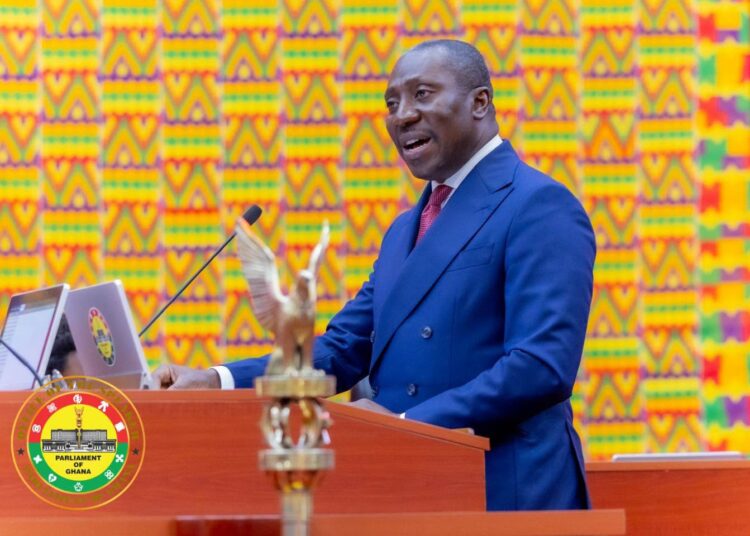
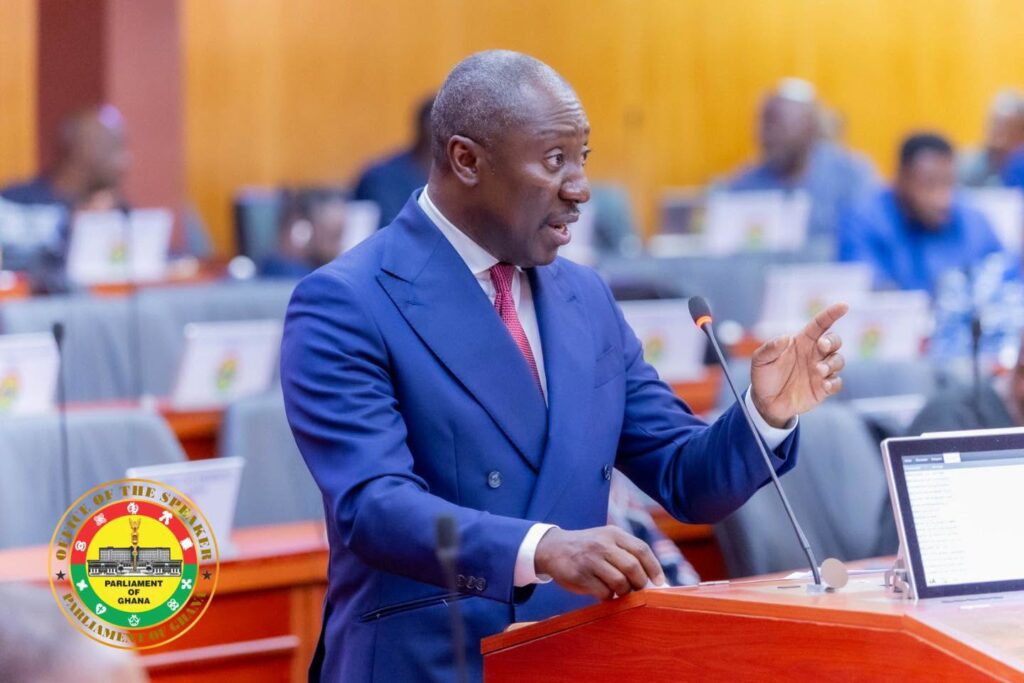
Hon. Alexander Afenyo-Markin, the Minority Leader, has welcomed the call by Majority Leader James Agalga to launch a comprehensive parliamentary investigation into Ghana’s gold losses.
The Minority Leader expressed his full support for extending the scope of the inquiry beyond the year 2025 to achieve full public accountability and bring total closure to the contentious state gold transaction issues.
Mr. Afenyo-Markin stressed that a broad parliamentary oversight exercise would provide a fair platform for all key institutional stakeholders to present their perspectives on the country’s precious metal aggregation and reserve accumulation programs.
“My simple answer is, I agree with him; let’s look at it. Why not? It will help all of us to understand the whole programme, so there should be no problem.”
Hon. Alexander Afenyo-Markin, the Minority Leader,

Major sector actors, including the Bank of Ghana (BoG), the International Monetary Fund (IMF), the Auditor General, gold aggregators, and international off-takers, will be able to submit crucial operational evidence to Parliament.
The Majority Leader, James Agalga, initiated the call for this broader investigation, asserting that limiting scrutiny strictly to 2025 or to GoldBod’s current operations would fail to capture the complete picture of the country’s domestic gold purchasing framework.
Hon. Agalga insisted that Parliament must trace the origin of these operations back to 2021 when the Domestic Gold Purchase Programme commenced, noting that an un-terminated agreement between the Precious Minerals Marketing Company (PMMC) and the Bank of Ghana dating back to 2023 remains active and warrants full scrutiny to determine if raw dore gold was improperly acquired at forex bureau rates instead of central bank rates.
Historical Mandates and Inter-Agency Agreements
The call to scrutinize past agreements reflects growing parliamentary concern over how historic state agency protocols continue to impact national revenue and central bank operations.
When the Bank of Ghana introduced the Domestic Gold Purchase Programme in 2021, the Precious Minerals Marketing Company (PMMC) operated as a primary purchasing agent tasked with securing dore gold from local small-scale miners.
However, structural discrepancies between official Bank of Ghana exchange rates and prevailing commercial forex bureau rates during initial aggregation efforts may have introduced substantial financial slippages.
Because contractual arrangements signed in 2023 between the PMMC and the central bank remain legally active, parliamentary leaders argue that isolating 2025 fiscal records overlooks years of underlying operational practices that may have eroded foreign exchange reserves.
Conducting a retroactive probe into these early agreements is essential to auditing legacy pricing models, verifying off-taker cost structures, and establishing whether past buying practices set precedents for revenue leakage.
FX Arbitrage and Structural Price Slippages
A critical focus of the legislative inquiry is identifying how exchange rate differentials influenced local gold procurement costs and foreign currency generation.
During the initial rollout of domestic gold purchases, local aggregators frequently navigated sharp divergence between official central bank reference rates and parallel forex market pricing.

When buying agents procured raw dore gold at elevated market rates while settling transactions under standard central bank benchmarks, systemic valuation gaps were created.
Parliament’s investigation seeks to establish whether these parallel rate valuations resulted in direct financial losses or artificial transaction costs borne by the state.
Uncovering these structural gaps allows lawmakers to evaluate how pricing mechanics affected local gold acquisition and to ensure that future reserve strategies eliminate unauthorized arbitrage opportunities.
Strengthening National Gold Aggregation Frameworks
A comprehensive multi-year audit offers Ghana a crucial opportunity to refine its extractive sector policy and enhance its overarching gold purchase programs.

By systematically evaluating historical operational losses from 2021 through 2025, Parliament can establish transparent regulatory benchmarks, mandate real-time transactional reporting, and clear operational friction between the central bank and primary aggregators.
This thorough institutional review will protect state gold accumulation targets, fortify domestic currency stabilization efforts, and ensure that gold trade frameworks generate maximum foreign exchange earnings for the national economy.
REEAD ALSO: Africa’s Push for Interoperability: Ghana Claims the First Position in Mobile Money Regulation