
The United Nations Committee on the Elimination of Racial Discrimination has issued a landmark General Recommendation concluding that states are legally bound to provide reparatory justice for harms arising from colonialism, the transatlantic trafficking of enslaved Africans, and racialised chattel slavery, arriving barely months after Ghana secured a historic UN resolution on the same cause.
General Recommendation No. 40, released as an advance unedited version, sets out authoritative guidance on the legal basis for state responsibility over both direct and indirect involvement in these historical injustices, clarifying the obligations of states parties under the 1965 Convention on the Elimination of All Forms of Racial Discrimination.
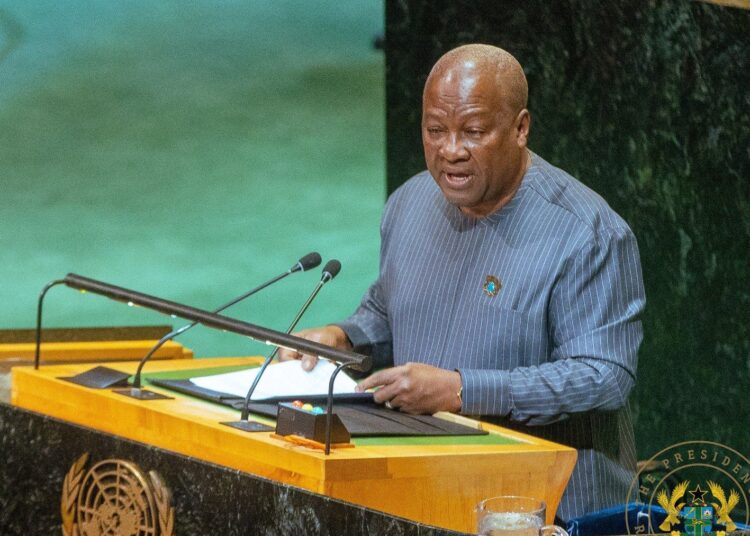
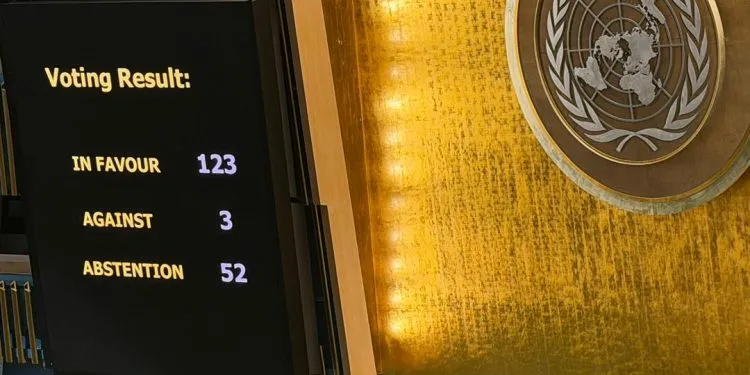
The timing places the Committee’s findings directly in the wake of Resolution A/RES/80/250, the Ghana-led UN resolution declaring the transatlantic enslavement of Africans the gravest crime against humanity in human history, a measure adopted at the United Nations earlier this year and championed personally by President John Dramani Mahama.
Grave and Systematic Harms With Lasting Legacies
The Committee’s Recommendation states plainly that the trafficking of enslaved Africans and racialised chattel slavery inflicted grave and systematic harms whose legacies remain reflected today in ongoing infringements of the rights to security of person, liberty, equality before the law, and the full range of civil, political, economic, social and cultural rights protected under Article 5 of the Convention.
These legacies, the Committee found, continue to shape laws, policies and institutions across many societies. The document identifies specific contemporary manifestations of that continuity.
It points to racial profiling and the disproportionate use of force by law enforcement officials, racial disparities within criminal justice systems, discriminatory laws and institutional practices affecting access to housing, education, employment and healthcare, and persistent structural inequalities affecting people of African descent and other affected communities.
Why the Committee Says Recognition Is Not Enough
The Recommendation’s central argument holds that the elimination of racial discrimination cannot be effective, thorough or lasting without examining and redressing the harms and continuing consequences of colonialism, the trafficking of enslaved Africans and racialised chattel slavery.
The Committee frames this work as more than an exercise in historical acknowledgment. Addressing these legacies is therefore not only a matter of historical recognition but also an essential requirement for achieving substantive equality and fulfilling States’ obligations under the Convention.
That framing positions reparatory justice as a present-day legal requirement rather than a symbolic or voluntary gesture, tying it directly to the substantive equality guarantees states have already accepted by ratifying the Convention.
A Sequence That Strengthens Ghana’s Diplomatic Position
The proximity of the two developments carries particular weight for Ghana’s campaign. Resolution A/RES/80/250 established the moral and political consensus that the transatlantic enslavement of Africans constitutes the gravest crime against humanity, a declaration Ghana carried through the UN system under Mahama’s leadership as African Union Champion for Reparations.
General Recommendation No. 40 arrives as a distinct but reinforcing development, supplying a treaty-based legal interpretation from an independent expert body that states parties to the 1965 Convention are already bound, as a matter of law rather than politics alone, to provide reparatory justice for the same historical harms.
That sequence, a political resolution followed within weeks by an authoritative legal interpretation from a UN treaty monitoring body, gives Ghana’s reparations campaign two distinct sources of international authority to draw on simultaneously, one rooted in the UN General Assembly’s collective political will and the other in the binding treaty obligations states have already accepted.
A Framework Built for Sustained Action
The Committee was explicit that meaningful redress requires more than acknowledgment of past wrongs. General Recommendation No. 40 calls for sustained action to address the continuing effects of historical injustices and to transform the structures that perpetuate racial inequality, moving beyond apology alone toward structural change in the laws, policies and institutions the Committee says still bear the imprint of these historical crimes.

The Committee has invited public input and feedback on the General Recommendation, alongside a broader thematic discussion on the issue, signalling that the document remains open to refinement even as it stands as the Committee’s most authoritative statement yet on the legal dimensions of reparatory justice.
What the Recommendation Means for States Parties
As an interpretive guidance document issued by a UN treaty monitoring body, General Recommendation No. 40 does not carry the binding force of a treaty provision itself, but it authoritatively interprets the obligations already accepted by the 182 states that have ratified the 1965 Convention.
That interpretation is expected to shape how reparations claims are argued and assessed going forward, giving Ghana, its African Union and CARICOM partners, and affected communities a clearer legal basis for demanding accountability, just weeks after Resolution A/RES/80/250 gave the same cause its strongest political mandate yet at the United Nations.
The full text of General Recommendation No. 40 is available through the Office of the High Commissioner for Human Rights, alongside the Committee’s call for input and its accompanying thematic discussion on reparatory justice.
READ ALSO: Ghana’s Fuel Tax Structure Faces Renewed Scrutiny