Tema Port congestion has moved from an operational inconvenience into a measurable cost for Ghana’s construction economy, after the Chamber of Cement Manufacturers, Ghana introduced a temporary GH¢12 clinker-demurrage surcharge per bag of cement.
The Chamber says the charge comprises GH¢10 before tax and GH¢2 in taxes and levies, and will run until December 31, 2026, subject to monthly monitoring. It attributes the measure to prolonged vessel waiting times and demurrage costs. COCMAG says it is not a general cement price increase, but buyers still face an additional cost.
That matters because it shows how delays at the port can move through firms’ balance sheets and eventually reach contractors, property developers, households and public projects.
Cargo Growth Outrunning Supporting Infrastructure
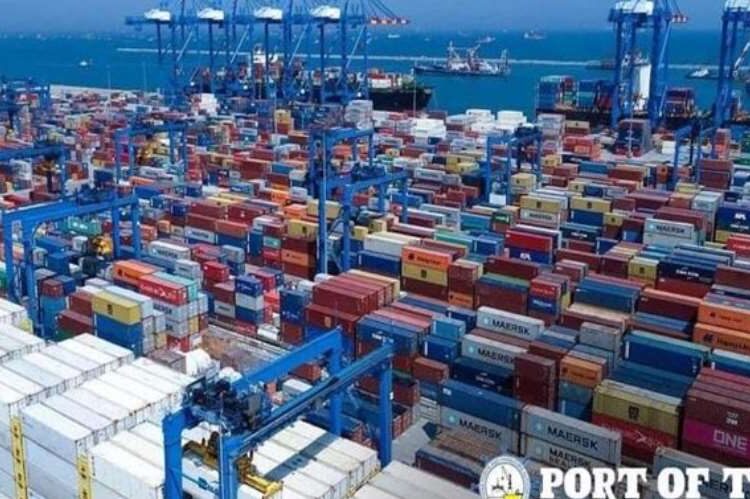
The pressure at Tema reflects success as well as strain. The Ghana Shippers’ Authority says cargo volumes rose from about 700,000 twenty-foot equivalent units in 2020 to 2.7 million TEUs in 2025, with current volumes at about 2.5 million TEUs ahead of the peak Christmas season. Around one million TEUs of the current volume are linked to transshipment cargo.
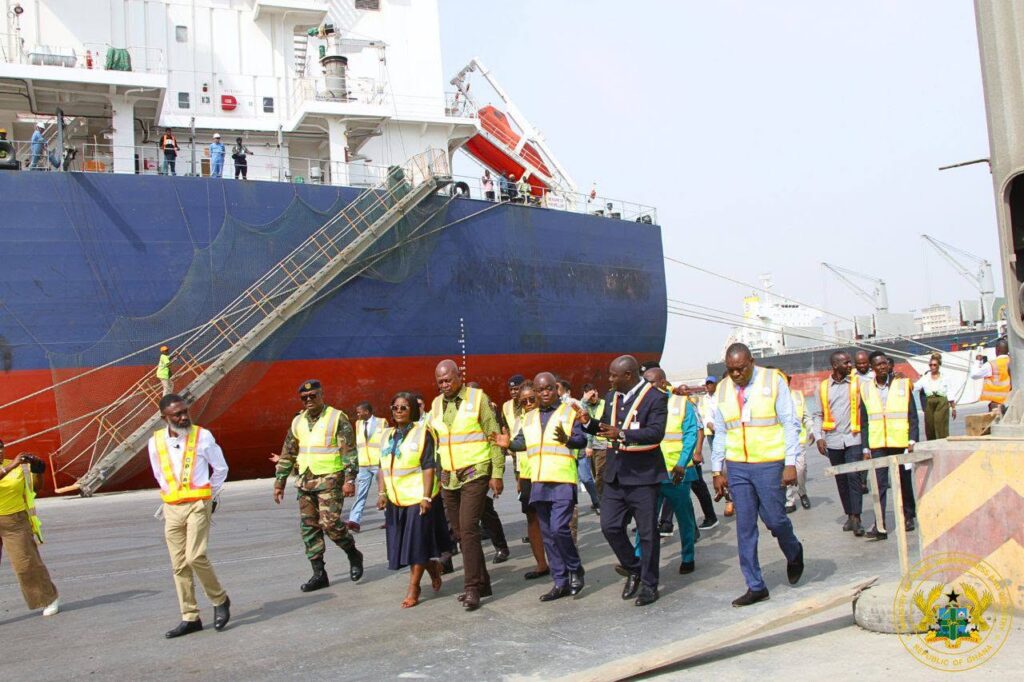
Meridian Port Services (MPS) told the Authority that Terminal 3’s expansion has strengthened Ghana’s position as a shipping and transshipment hub, but supporting roads and inland container-depot infrastructure have not expanded at the same pace. GPHA separately points to a 3.5 million-TEU container terminal as evidence of major investment in port capacity.
The problem is therefore not simply terminal capacity. A modern quay and larger yard generate their full value only when roads, depots, inspection systems and bulk-cargo berths can move goods through the wider logistics chain efficiently.
COCMAG says clinker-vessel waiting times increased from an average of seven days in January to between 30 and more than 40 days in August. It estimates industry-wide demurrage costs at US$45 million to US$50 million in the first eight months of 2026, with individual vessels reportedly incurring US$800,000 to US$1 million.
Inspection Delays Add Another Cost Layer
The Shippers’ Authority’s port visit also identified inspection as a source of delay. MPS told the Authority that about 70 percent of containers undergo intrusive physical inspection and argued that Ghana’s red-lane rate is far above what it regards as the global norm.
That is an operator’s assessment, not an official Customs statistic. GRA’s procedures confirm a risk-based system in which red consignments receive mandatory physical examination, yellow consignments are scanned and green consignments move through release procedures.
The policy question is not whether inspection should disappear. Customs must protect revenue and detect false declarations. The economic question is whether the same enforcement objective can be achieved with better risk calibration, concurrent inspections and stronger post-clearance audit for compliant traders.
ICC Ghana has separately warned that inspection delays are increasing the time and cost of doing business and has called for wider use of the Authorised Economic Operator programme for firms with proven compliance records.
Demurrage Becomes a Construction-Sector Cost
For cement manufacturers, vessel delay creates a direct foreign-currency cost because demurrage is charged when ships remain beyond agreed laytime. COCMAG says only three principal berths are currently available for clinker discharge, contributing to longer waiting times.
Manufacturers can absorb that cost through lower margins, reduce production or pass some of it forward to customers. The temporary GH¢12 surcharge is evidence of the third channel.
The transmission extends beyond cement factories. Cement is an intermediate input in housing, commercial property and infrastructure. A higher bag cost can raise project budgets, tighten contractors’ working capital and make marginal projects less viable. For government, persistent construction-input increases can reduce the quantity of infrastructure obtainable from a fixed capital budget.
A GH¢12 surcharge does not determine national house prices or overall inflation. But it shows how port inefficiency can become a domestic production cost.
Efficiency Now Matters as Much as Capacity
The immediate response should target the source of the surcharge rather than the surcharge alone. Faster vessel turnaround, better berth allocation, coordinated inspections and improved landside infrastructure would lower the cost created by delay.
GSA Board Chairman Mike Hammah said Ghana is competing with neighbouring ports and needs greater efficiency to remain a shipping and logistics hub. That competition matters because transshipment and transit cargo are mobile. Shipping lines can adjust routes when turnaround times, reliability or total logistics costs deteriorate.
The cement surcharge therefore provides a practical test of port reform. If congestion eases and demurrage costs fall, the temporary charge should disappear as COCMAG has indicated. If it persists, the additional GH¢12 will show that logistics frictions are being capitalised into the cost of building in Ghana.
Tema Port’s challenge is no longer simply to handle more cargo. It is to ensure that higher throughput does not convert Ghana’s growing trade volumes into higher costs for the economy the port is supposed to serve.
READ MORE: Government Moves to Resolve Cement Industry Port Crisis