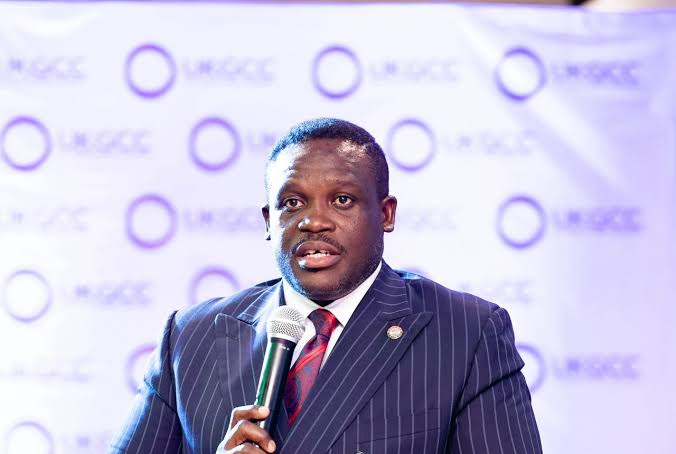
Minister for Communications, Digital Technology and Innovation Samuel Nartey George has announced that the legislative instrument governing Ghana’s new SIM card registration exercise has been laid before Parliament and successfully passed, clearing the way for the National Communications Authority to begin biometric verification of SIM cards before the end of 2026.
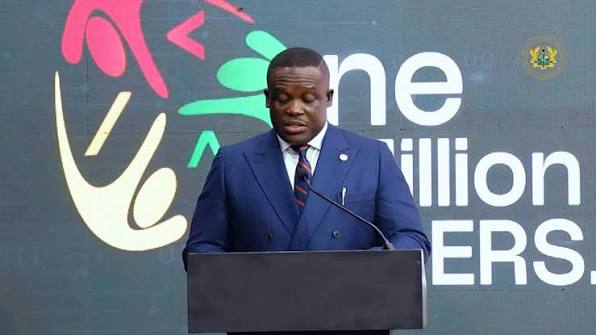
Sam George delivered the update during the Government Accountability Series at the Jubilee House on Monday, September 7, 2026, providing the clearest timeline yet for a registration framework he first announced in April 2025 as a deliberate departure from the widely criticised 2021 to 2023 SIM re-registration exercise.
Sam George has consistently framed the new exercise as legally distinct from its predecessor, describing it as a proper fresh registration built entirely around citizen convenience and digital security rather than a repeat of the earlier process.
With the legislative instrument now passed, that framework moves from policy design into implementation, with the NCA positioned to begin actual biometric verification once its systems are ready.
Real-Time Verification Against the NIA Database
The framework’s central innovation is its move away from static, printed biodata toward live electronic verification.
Rather than relying on biographical information printed on physical SIM cards, which can be altered, the system will cross-reference registrants in real time against the National Identification Authority’s database using fingerprints, facial recognition and a liveness test designed to confirm the person registering is physically present and genuine.
“This exercise will be the first in our history to have live verification against the NIA’s database and provide biometric verification for every registration,” Sam George said, describing the shift as a fundamental upgrade in the integrity of Ghana’s telecommunications identity system.
The new framework introduces a self-service option intended to prevent the long queues and public frustration that characterised the earlier exercise.
Individuals who own smartphones will be able to register both physical SIMs and eSIMs from home through a dedicated digital platform, removing the need to visit a physical registration centre for many subscribers.
Sam George has also given explicit assurance that the exercise will not be driven by strict, sudden deadlines that risk disrupting subscribers’ network access, a direct response to complaints that accompanied the compressed timelines of the 2021 to 2023 rollout.
The process remains entirely free for subscribers, with mobile network operators absorbing the core validation costs rather than passing them on to customers.
Telecom Agents Excluded to Curb Fraud
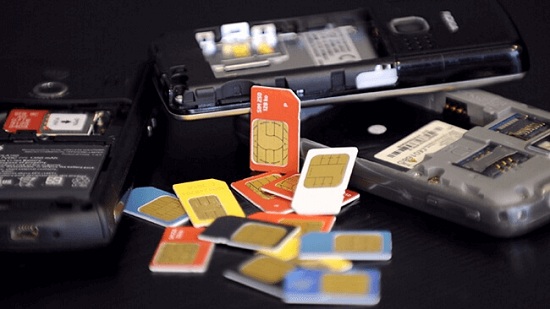
In a significant departure from previous practice, the new framework bans external telecom agents from conducting registrations altogether.
The exercise will instead be managed through a state-owned framework overseen jointly by the NCA and the NIA, a change designed specifically to protect subscriber identity data and curb the mobile money fraud that has periodically been linked to agent-managed registration processes in the past.
The Ministry has structured documentation requirements around distinct subscriber categories, each validated by a different backend agency. Ghanaian citizens will register using the standard Ghana Card, verified through the NIA.
Foreign residents will use the Non-Citizen Ghana Card, also validated by the NIA, while refugees will present the Refugee Non-Citizen ID Card under the same NIA verification channel. Visitors and tourists will need a valid passport alongside proof of entry, verified through the Ghana Immigration Service rather than the NIA.
Corporate entities must present a Certificate of Incorporation together with a signatory’s Ghana Card, validated by the Office of the Registrar of Companies. Diplomats will register using an official diplomatic ID or passport, verified through the Ministry of Foreign Affairs.
That segmentation is designed to route each category of subscriber through the government agency best positioned to confirm their identity, rather than funnelling every registrant through a single generic verification process.

With the legislative instrument now passed, the practical test shifts to implementation.
Sam George’s stated target of beginning biometric verification before the end of 2026 gives the NCA a defined window to operationalise the self-service portal, coordinate backend verification with the NIA, GIS, ORC and Ministry of Foreign Affairs, and prepare the public communication needed to guide subscribers through a process that, unlike its predecessor, is designed to unfold without imposed urgency or the network disruptions that accompanied the earlier exercise.
READ ALSO: Mr Eazi Buys Stake in Ghana Pharma Firm