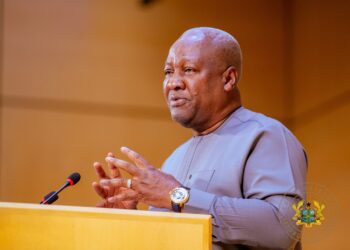
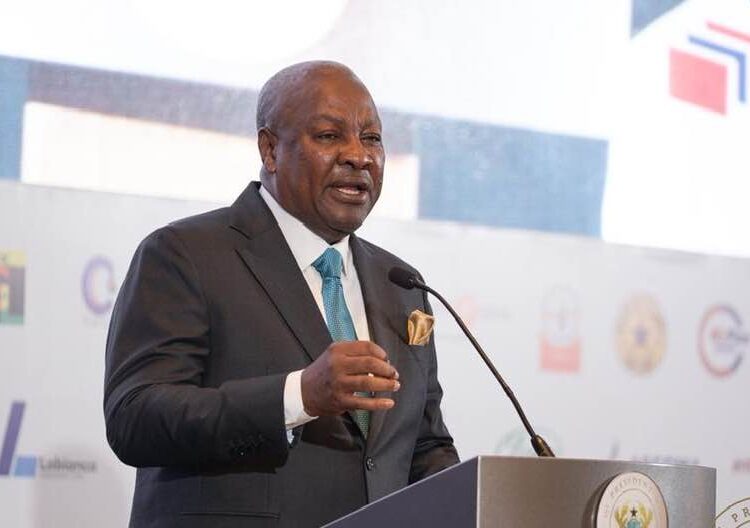
President John Dramani Mahama has cautioned the boards and chief executives of Ghana’s state institutions that the sector’s return to profit rests substantially on favourable currency movements rather than on stronger operations. He delivered the warning at the SIGA Governing Boards and CEOs’ Conference in Accra on Thursday, 10 September 2026.
The President accepted the headline numbers as real while refusing to let the room treat them as vindication. His argument was that a portfolio rescued by exchange rates and cheaper debt has been given breathing space, not a clean bill of health, and that converting that relief into durable operational performance is now the only test that counts.
The 2025 State Ownership Report records combined revenue for state-owned enterprises rising from GH¢137.64 billion in 2024 to GH¢176.43 billion in 2025, growth of roughly 28.12 percent.
The sector swung from an aggregate net loss of GH¢2.26 billion to a net profit of GH¢19.8 billion. Efficiency ratios moved with it. Return on assets improved from 1.3 percent to 6.31 percent, while return on equity climbed from negative 1.6 percent to 15.7 percent.

President Mahama placed the qualifier immediately beside the achievement. Approximately GH¢11.72 billion in net foreign exchange gains and a 42.5 percent fall in aggregate finance costs contributed significantly to the improvement.
He noted that the broader recovery in the business environment lifted private enterprises too, which means the state sector cannot claim the gain as evidence of superior management. “Our task is therefore to convert this favourable financial relief into sustained operational efficiency and stronger underlying performance,” he said.
The consistent performers
The President commended ten state-owned enterprises that posted positive net profits in every year from 2021 through 2025. Ghana National Petroleum Corporation led on average annual profit at approximately GH¢2.25 billion, followed by Ghana Ports and Harbours Authority at GH¢1.41 billion.
The Minerals Income Investment Fund averaged GH¢773.9 million, and BOST, which President Mahama described as the newest entrant to the dividend roll, averaged GH¢348.1 million.
He also recognised sustained profitability at Bui Power Authority, Ghana Exim Bank, Ghana National Gas Company, TDC Development Company Limited, Ghana Supply Company Limited and the Venture Capital Trust Fund.
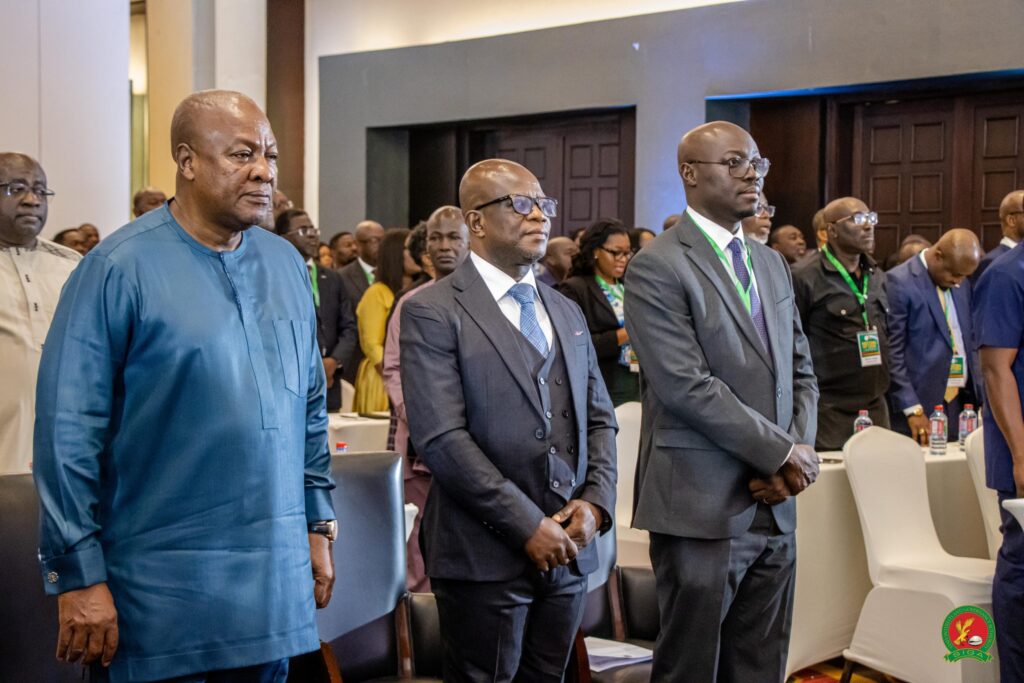
Consistency across five years earns acknowledgement, the President said, but it also creates an obligation on those entities to aim higher, tighten governance and return greater value to the state rather than settle into a comfortable record.
Turnarounds worth naming
Several entities reversed heavy losses during the year. Tema Oil Refinery moved from a net loss of approximately GH¢745 million to a net profit of GH¢1.09 billion, its first profit in nearly a decade.
Ghana Water Company Limited turned a GH¢3.06 billion loss into a profit of roughly GH¢635 million. Ghana Cocoa Board swung from a GH¢5.73 billion loss to a GH¢5.11 billion profit. BOST lifted net profit from about GH¢398 million to GH¢684 million.
The Ghana Gold Board, singled out in the report’s entity spotlight, recorded net profit of approximately GH¢896.5 million against GH¢178.5 million in 2024. President Mahama read that result as evidence of what transparent and accountable structures around the gold trade can deliver.

He returned to his caution each time. These results deserve commendation, he said, but they must be sustained through stronger core operations and cannot depend indefinitely on a better business environment and exchange rate movements. A one-year turnaround is encouraging. Sustained performance proves.
The weaknesses progress cannot hide
The President was equally direct about what the aggregate figures conceal. Five state-owned enterprises recorded losses in every year between 2021 and 2025.
Other state entities, a category covering 73 institutions in the portfolio, posted an aggregate deficit of approximately GH¢10.48 billion in 2025 against GH¢2.40 billion the previous year, with average aggregate liabilities exceeding net assets.
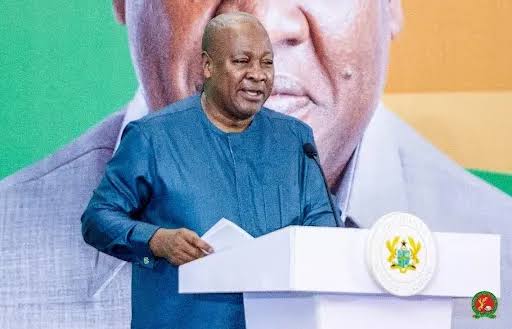
President Mahama framed the task ahead as moving decisively from isolated successes to system-wide improvement, and he set the next report as the marker.
It must show measurable gains in audited accounts, operational efficiency, profitability, dividends, service quality and corporate governance across all specified entities rather than a handful of strong performers carrying an uneven portfolio.
He grounded the demand in why these institutions exist at all. The state did not create enterprises to maintain offices and pay salaries, he said, but because certain activities are strategically necessary for national development, essential to the public interest, or required to close gaps the market cannot resolve on its own.
Whether the 2026 report can show that purpose being met without a favourable currency doing the work is the question the President has effectively set for every board in the room.
READ ALSO: Profit Without Dividend Is Not Public Value, SIGA Boss Tells State Boards