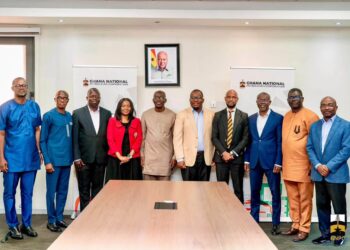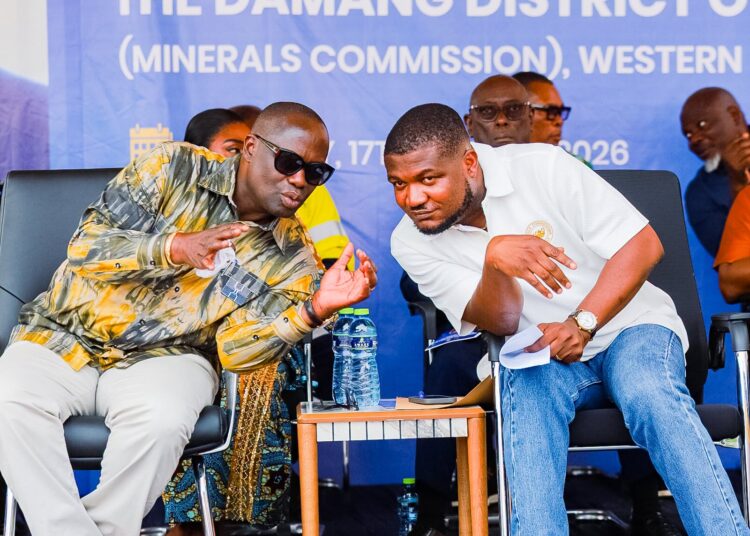
Ghana High Commissioner to Australia, Ms. Doris Brese, led a high-level government delegation to the 2026 Africa Down Under (ADU) Summit in Perth, positioning the nation as a stable, reform-driven destination for critical minerals investment.
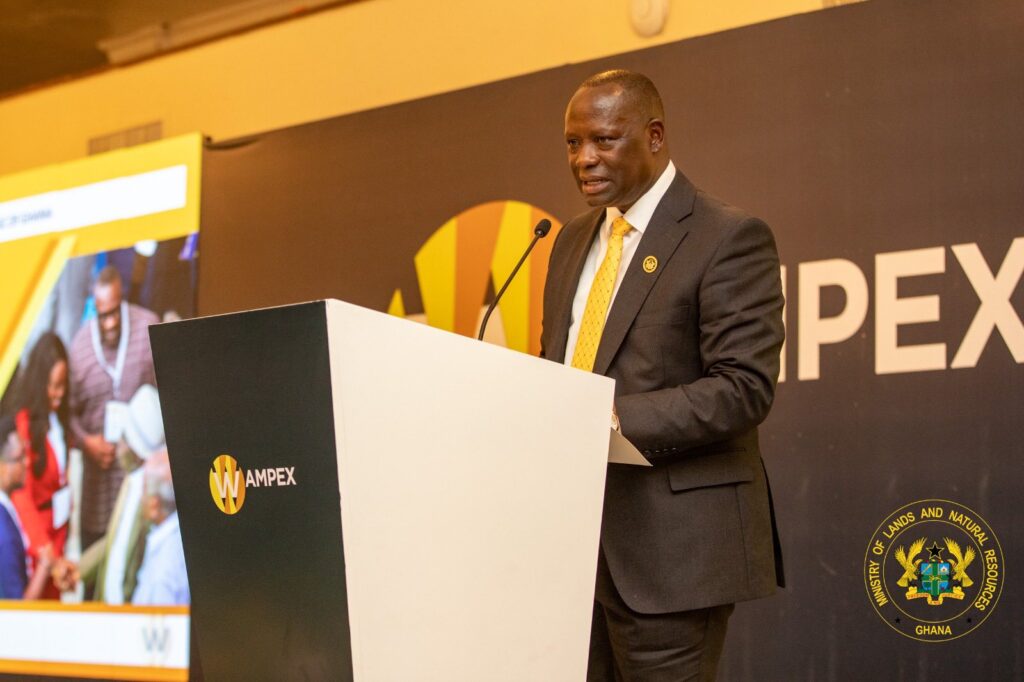
Joining her was the Deputy Chief Executive Officer in charge of Small Scale and Industrial Minerals at the Minerals Commission, Maxwell Yao Akpene Klu, who pitched the country’s fast-growing critical minerals framework to global financiers, policymakers, and mining executives.
The strategic engagement sought to secure international capital and technical partnerships as Ghana actively transitions from traditional gold extraction toward value-added battery minerals essential for global green energy supply chains.
“Our country is not just about extracting resources; we are committed to a paradigm shift in mining, one that moves beyond the dig-and-ship model to a value-added approach for the creation of jobs and wealth locally. Value addition transforms raw goods into higher-value products to boost income margins, reduce waste, and create jobs, and again let me say, the era of dig-and-ship materials at its raw state is over, hence the need to deliver value-added minerals while working towards industrialization.”
Maxwell Yao Akpene Klu
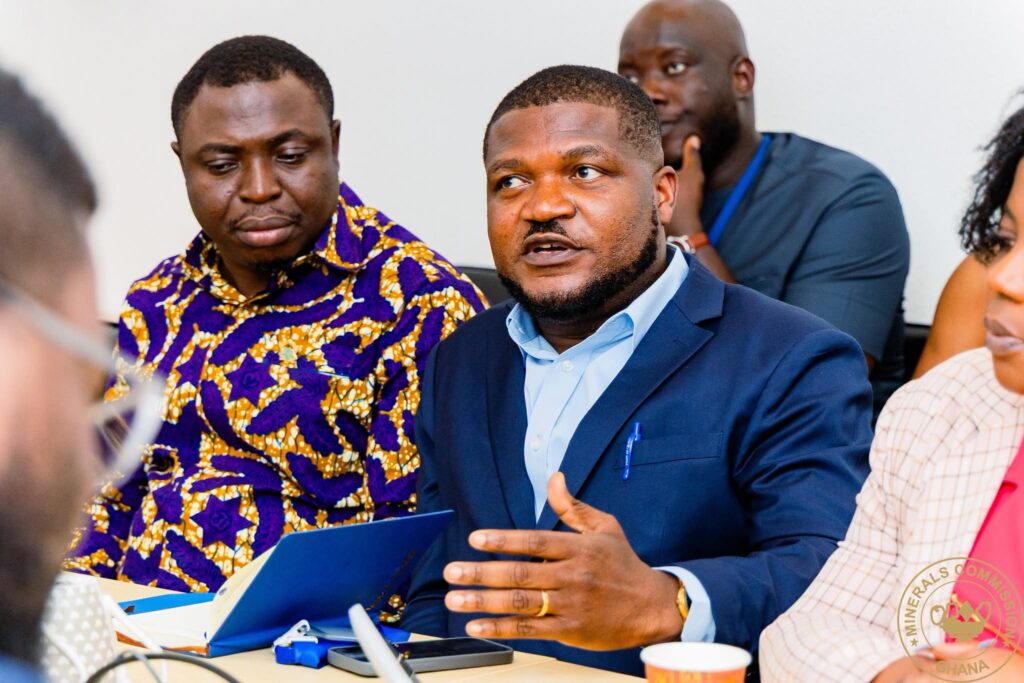
While expanding on the pitch delivered in Western Australia, the delegation reaffirmed Ghana’s position as Africa’s top gold producer while highlighting a massive strategic pivot toward lithium, iron ore, bauxite, and base metals.
Speaking at the continent’s largest African-focused mining event outside Africa, officials outlined how structural economic reforms implemented over the past 18 months under the administration’s reset agenda have anchored fiscal transparency and regulatory predictability.
By shifting away from raw resource exportation, Ghana aims to leverage its geological potential to create local industrial value, expand job creation, and establish domestic processing hubs for green technologies.
The Strategic Shift: Transitioning Beyond Gold to Battery Minerals
For over a century, Ghana’s extractive narrative was dominated by precious metals, but emerging global demands for clean energy technologies have compelled a decisive policy shift. Gold extraction continues to provide vital foreign exchange earnings, yet raw ore exports leave domestic economies vulnerable to external commodity price shocks while missing out on high-value processing margins.
To capture higher yields along the global value chain, state regulators are actively promoting integrated industrialization models.
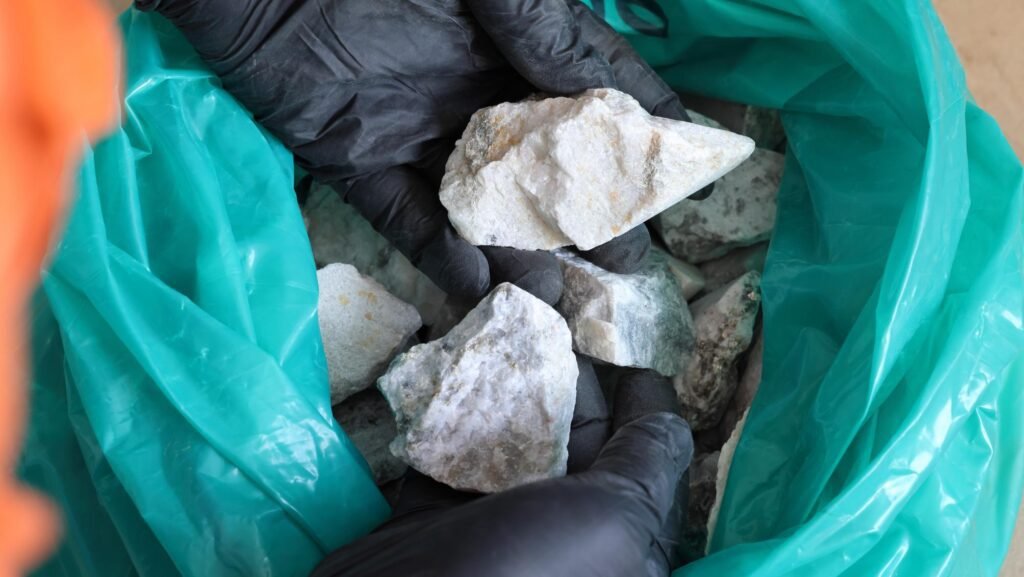
Ghana holds over one billion tonnes of iron ore deposits alongside significant commercial reserves of lithium and bauxite. Through dedicated state entities like the Ghana Integrated Iron and Steel Development Corporation (GIISDEC), the government is actively seeking private sector equity partners to establish local refineries and smelting plants.
Re-engineering the mining framework ensures that raw resources feed directly into domestic manufacturing industries rather than shipping out as untreated rock.
Presently, hundreds of active exploration projects are targeting critical green minerals across the country.
This shift aligns with global automotive and energy manufacturing demands, positioning the country to supply vital inputs for electric vehicle battery production, solar hardware, and utility-scale energy storage systems.
Legal Stability, Investor Security, and Human Capital
Attracting multi-billion-dollar commitments for energy transition minerals requires rigid constitutional guarantees and a modernized legislative environment.
Mr. Klu assured Australian investors that capital defense remains guaranteed through legal frameworks anchored in Ghana’s 1992 Constitution and the Minerals and Mining Act 703 of 2006.
Furthermore, active parliamentary reviews and targeted exploration waivers are designed to streamline project timelines and improve fiscal yields for long-term ventures.
“The investor community is investing in Ghana with confidence and knowing that their investments are protected by a stable political environment and a government that upholds the principles of good governance, including the rule of law and the sanctity of contracts.”
Maxwell Yao Akpene Klu
Beyond legislative assurances, the delegation highlighted human capital development as a cornerstone of sustainable resource management.
Demonstrating this commitment, Ghanaian officials attended the graduation of sponsored mining students at Curtin University in Perth.
Two out of 25 students under the Minerals Commission sponsorship programme officially completed their advanced degrees, with eight more scheduled to graduate in February next year. Building localized technical expertise guarantees that future mineral processing facilities are operated by a highly skilled domestic workforce.
Imperatives for Local Value Addition and Sustainable Mining
The urgent requirement for an integrated minerals framework stems from historical industrial gaps where resource-rich African nations exported raw wealth only to import expensive finished products.
Embracing environmental sustainability while enforcing strict local content mandates ensures that host communities benefit directly from resource extraction without incurring irreversible ecological degradation.
Prudent resource management serves as a prerequisite for protecting long-term investor returns while shielding delicate forest and water ecosystems.
Ms. Doris Brese underscored that economic management over the past 18 months under His Excellency JM’s administration has intentionally prioritized transparency, institutional accountability, and stable rule of law.
By marrying rigorous regulatory oversight with attractive investment incentives, Ghana offers global energy partners a predictable, low-risk environment.
This proactive strategy directly addresses global supply chain vulnerabilities. As western nations and automotive conglomerates race to secure ethical critical minerals, Ghana provides a transparent, legally sound, and environmentally responsible alternative.
Through strategic international partnerships built on localized refining and manufacturing, the country is set to entrench its status as the premier hub for West Africa’s industrial transition.
READ ALSO: Houthis Seize Port City Of Mokha