
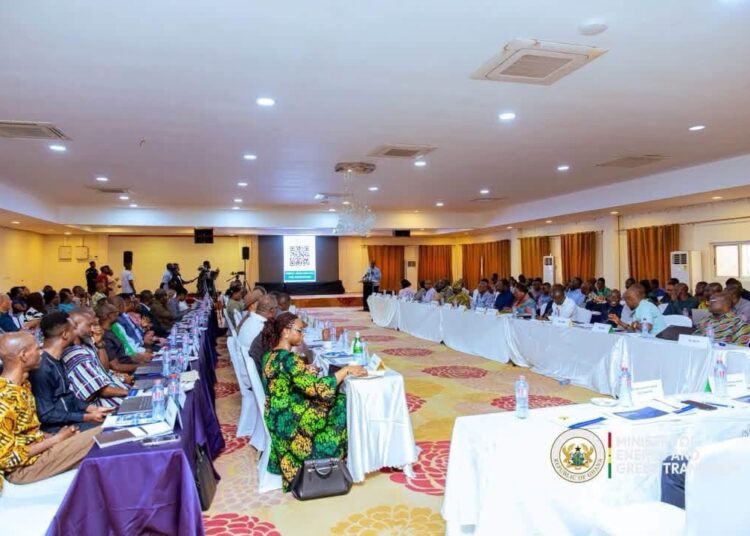
Energy Minister Dr John Abdulai Jinapor has challenged agencies and institutions under the Ministry of Energy and Green Transition to demonstrate measurable performance, warning that persistent delays and failure to deliver results will not be acceptable as the government prepares its priorities for 2027.
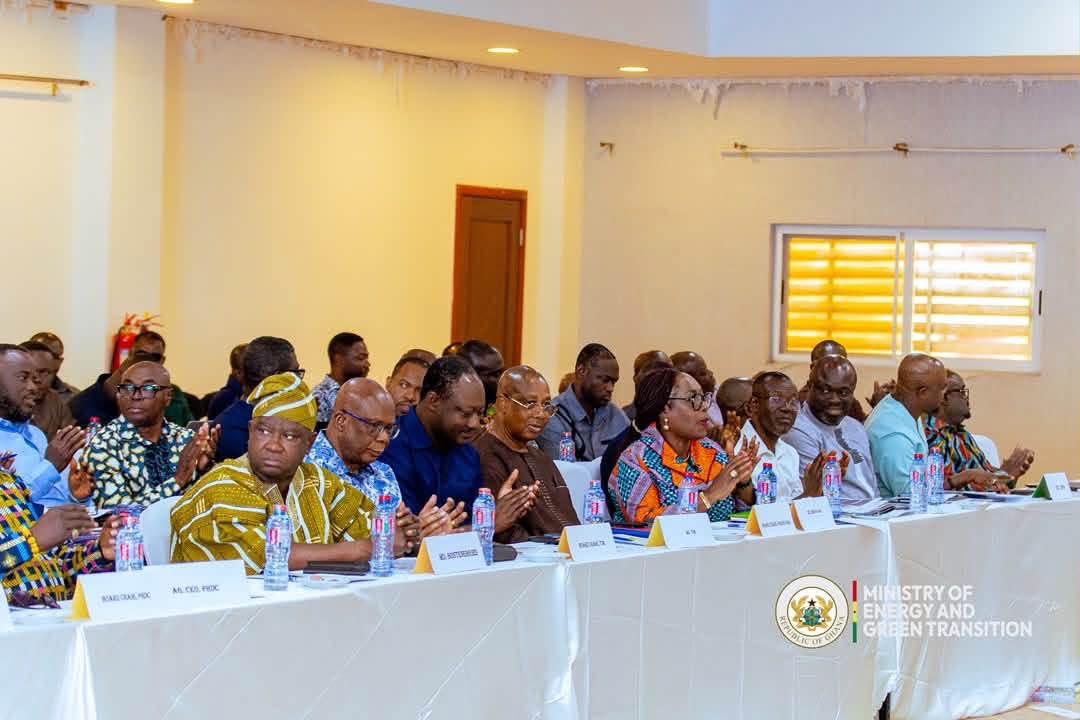
The minister’s position follows a performance review with the leadership of institutions under the ministry, aimed at assessing progress made in 2026, addressing outstanding challenges and establishing priorities for the coming year.
In a statement shared on his social media page, Dr Jinapor acknowledged progress in strengthening Ghana’s energy security but stressed that the next phase of implementation must translate policy commitments into tangible outcomes.
The emphasis on accountability comes as the ministry looks to advance electricity infrastructure, expand access, strengthen power generation and revive domestic oil refining—areas with implications for the reliability, affordability and resilience of Ghana’s energy supply.
Accountability Becomes Central To 2027 Priorities
Dr Jinapor’s message placed institutional performance at the centre of the ministry’s forward planning, signalling that progress will need to be assessed through results rather than commitments alone.
The minister said he had made clear that accountability, efficiency, transparency and value for money must guide the work of the ministry and its agencies.

“Every Agency and its leadership must demonstrate tangible results, with no room for unnecessary delays or persistent non-performance,” he stated.
The directive sets a demanding expectation for agency leadership as the ministry moves from reviewing its 2026 performance to implementing its priorities for 2027.
However, the minister’s statement did not outline specific performance indicators, deadlines or sanctions that would be applied to institutions that fail to meet their targets.
Those details will be important in determining how the accountability message translates into operational change. Clear targets, regular performance assessments and transparent reporting would give the ministry a basis for distinguishing between commitments made and outcomes delivered.
Transformer Rollout And Electricity Access In Focus
Among the progress highlighted by the minister was the plan to install 3,000 transformers, alongside developments in power generation and an increase in electricity access to 89.13%.
The planned transformer installation points to the importance of electricity distribution infrastructure in the wider energy agenda.
Expanding generation capacity alone does not guarantee reliable electricity supply if distribution networks cannot adequately serve communities and manage demand.
The programme’s eventual impact will therefore depend not only on the number of transformers installed but also on where they are deployed, how effectively they address local network constraints and whether consumers experience improvements in supply.
The minister cited the transformer plan as part of the progress made in strengthening national energy security. However, his statement did not specify the installation schedule, the number of transformers already procured or installed, or the locations targeted under the programme.
Electricity access, meanwhile, was reported at 89.13%, providing another indicator of the sector’s progress. Sustaining improvements will require attention to both the extension of access and the quality and reliability of the electricity supplied.
Domestic Refining Returns To The Energy Agenda
Dr Jinapor also pointed to renewed efforts to revitalise domestic oil refining, placing local refining capacity among the ministry’s priorities for strengthening energy security.

A stronger domestic refining industry could help Ghana increase the role of local processing in meeting its petroleum needs. The extent of that benefit, however, will depend on the practical progress made in restoring refining operations and the capacity that can be sustained commercially.
The minister did not provide details on specific refining milestones, investment commitments or a timetable for the efforts referenced in his statement.
For the ministry, the challenge will be to turn renewed attention to refining into an implementable programme with clear responsibilities and measurable progress.
This will be particularly important if the initiative is expected to contribute meaningfully to the country’s broader energy security objectives.
From Policy Commitments To Delivery
The minister’s statement frames 2027 as a year in which implementation and institutional discipline must take precedence over promises.

“Our focus for 2027 is to build a reliable, affordable, sustainable and resilient energy sector that supports economic growth and delivers meaningful benefits to the Ghanaian people,”
Dr Jinapor
The objective brings together several demands on the sector: maintaining reliable electricity supply, keeping energy affordable, strengthening resilience against disruptions and ensuring that infrastructure and policy decisions support economic activity.
Achieving those goals will require coordination across the institutions operating under the ministry. It will also require priorities to be translated into specific deliverables, with progress measured against clear benchmarks.
While the minister acknowledged the challenges encountered during 2026, his statement did not identify those challenges individually or set out how they would be resolved. Addressing them will be central to determining whether the ministry’s priorities for the coming year can be achieved.
Performance Review Sets The Tone For 2027
The engagement with agency and institutional leadership provides a framework for reviewing the sector’s performance and setting expectations for the next year. Its significance will ultimately depend on how the ministry follows through on the commitments outlined during the meeting.

For the transformer programme, electricity access and generation, as well as efforts to revitalise domestic refining, progress will need to be demonstrated through verifiable milestones rather than broad declarations.
Dr Jinapor’s message is clear: the ministry expects its institutions to deliver results, operate efficiently and account for their performance.
The test for 2027 will be whether that directive produces visible improvements in energy infrastructure, supply reliability, affordability and the wider contribution of the energy sector to Ghana’s economic growth.
READ ALSO: Black Stars Coach Search Deadline Extended