Ghana’s petroleum revenue rebounded sharply in the first half of 2026, but the surge is raising a more consequential question for the country’s public finances: how much of the improvement reflects a lasting recovery in the oil sector, and how much depends on favourable crude prices that could change?
The Public Interest and Accountability Committee (PIAC), in its 2026 Semi-Annual Report, says petroleum receipts rose by 52 per cent to US$561.41 million between January and June 2026, from US$370.34 million during the corresponding period in 2025.
The increase offers short-term relief for a government that relies on petroleum income to support budgetary spending and build financial buffers.
However, the figures reveal a revenue rebound that remains exposed to external market conditions, even as crude production improves.
Higher achieved oil prices and increased Corporate Income Tax collections were the principal drivers of the revenue growth, making it important to distinguish a stronger half-year performance from a durable improvement in Ghana’s petroleum revenue base.
PIAC’s report puts the average achieved crude oil price for the Ghana Group at US$92.81 per barrel, compared with the government’s 2026 benchmark price of US$76.22.
The realised price was approximately 22 per cent above the benchmark, providing a substantial boost to receipts.
The Committee’s assessment is clear about the principal drivers of the increase:
“Total petroleum receipts for the period increased by 52 percent, from US$370,343,681.17 in H1 2025 to US$561,408,307.36 in H1 2026, driven mainly by significantly higher achieved crude oil prices during the period and a corresponding 37 percent increase in Corporate Income Tax collections.”
The distinction matters for fiscal planning. A government can benefit from a favourable oil market without necessarily having resolved the structural weaknesses that make future revenue uncertain.
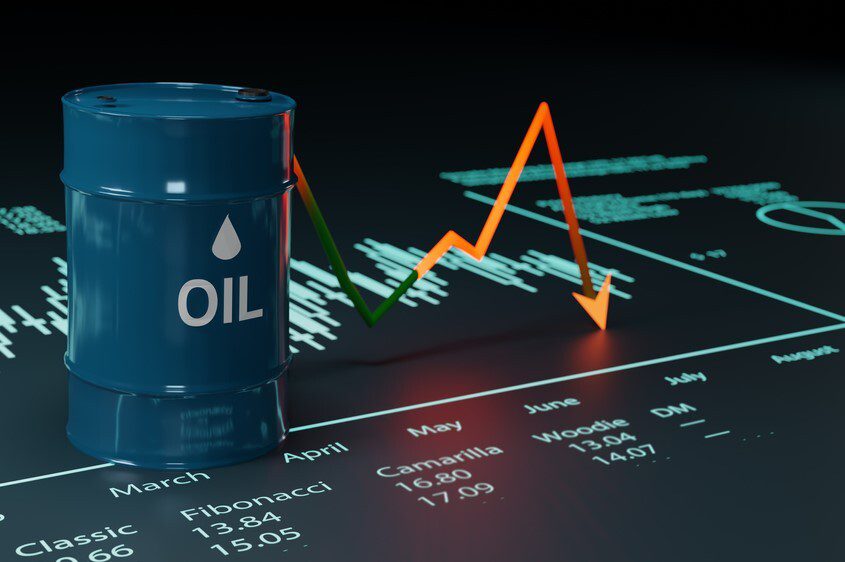
If international prices retreat, the same production volumes could generate lower receipts, placing pressure on budget projections and the financing arrangements that depend on petroleum income.
Higher Prices Strengthen Receipts, But Expose Fiscal Risk
The revenue increase was supported by several major streams. Carried and Participating Interest (CAPI) contributed approximately US$215.37 million, Corporate Income Tax generated about US$203.98 million, and royalties accounted for roughly US$140.12 million.
Interest on the Petroleum Holding Fund added around US$1.38 million, while surface rental payments contributed approximately US$556,159.
Corporate Income Tax collections increased by 37 per cent, according to PIAC. The rise strengthened the overall outturn, but the report identifies higher realised crude prices as a key factor behind the improvement.
This suggests that revenue performance should not be assessed only by the headline percentage increase; the composition of the growth is equally important.
The government’s benchmark price is used in preparing fiscal projections, while actual realised prices determine the value obtained from crude oil sales.
When the realised price exceeds the benchmark, receipts can outperform budget expectations. That difference can provide fiscal breathing room, but it should not automatically be treated as a recurring source of funding for permanent expenditure commitments.
The central policy challenge is therefore to preserve the gains without building the budget around assumptions that may not hold.
Stronger revenue assurance, conservative forecasting and prudent management of petroleum-funded spending become particularly important when the revenue outturn benefits from market conditions beyond the government’s control.
Production Recovery Offers Support, But Not a Complete Solution
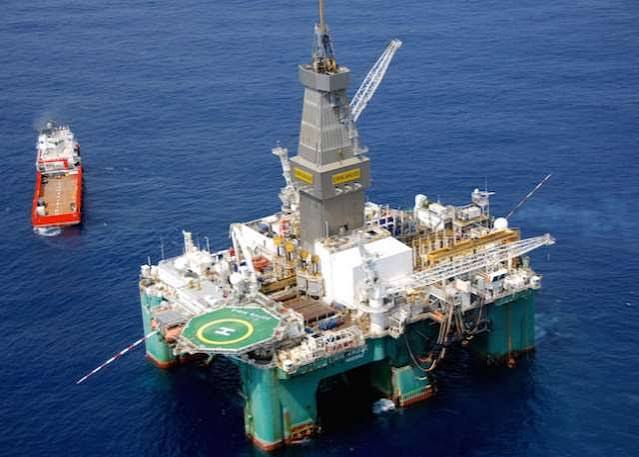
Ghana also recorded an increase in crude oil production during the period. Output from the three producing fields rose by 11.73 per cent, from approximately 18.42 million barrels in the first half of 2025 to 20.58 million barrels in the first half of 2026.
Jubilee remained the largest producing field, contributing approximately 12.82 million barrels. Sankofa-Gye Nyame (SGN) produced about 5.07 million barrels, while the TEN field delivered approximately 2.68 million barrels.
The production increase is significant because higher output can support receipts even when prices are less favourable. Yet the distribution of production across the fields and the pace of investment in future output remain central to the outlook.
A six-month increase does not, by itself, establish that Ghana has reversed the longer-term challenges facing its maturing offshore petroleum portfolio.
PIAC’s report identifies the need to stimulate investment in existing producing fields, particularly TEN, where production has fallen short of initial projections.
It also points to the importance of strengthening the regulatory and fiscal framework and improving data acquisition in new basins.
These priorities matter because Ghana’s revenue prospects depend on more than the price received for each barrel.
They also depend on whether existing fields can sustain production, whether discoveries can be advanced towards development and whether fresh investment can replenish output as established fields mature.
Gas Growth and Lower Flaring Add to the Picture
The report also records an increase in gas production. Output rose by approximately 4.4 per cent to 136,151.09 million standard cubic feet during the first half of 2026, with higher production from SGN offsetting declines from Jubilee and TEN.
Gas flaring declined across all three producing fields compared with the same period in 2025. PIAC recorded reductions of 74.02 per cent at Jubilee, 40.79 per cent at TEN and 79.73 per cent at SGN.
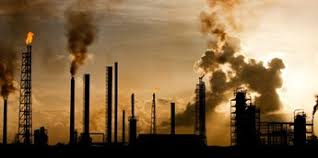
Lower flaring is a positive development for resource efficiency and environmental performance.
However, the figures should be considered alongside the need to improve gas utilisation and ensure that production translates into reliable supply and sustainable financial returns.
The report also notes that no amount was paid into the Petroleum Holding Fund for raw gas supplied during the period, consistent with the government’s zeroed gas pricing policy under the Cash Waterfall Mechanism.
The broader issue is whether Ghana can strengthen the value obtained from its petroleum resources across production, processing, sales and revenue collection, rather than relying primarily on favourable crude prices to improve receipts.
Turning a Revenue Rebound Into Lasting National Value
PIAC’s assessment places the stronger half-year performance against continuing concerns about investment activity and the durability of production.
The report’s central conclusion is that the revenue increase should not be mistaken for a resolution of the sector’s underlying challenges.
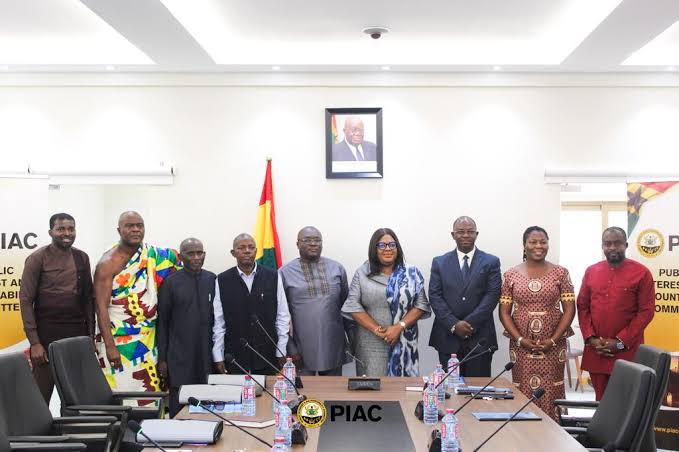
“The central issue is therefore not simply whether petroleum revenues have improved, but whether the improved outturn can be sustained and translated into enduring national value.”
That warning shifts the debate from the size of the revenue increase to the quality of the recovery.
The immediate gain is real: petroleum receipts rose, production improved and gas flaring fell. But those indicators do not remove Ghana’s exposure to oil-price volatility or the need for new investment in its upstream sector.
For fiscal managers, the task is to avoid treating a favourable half-year as a guarantee of future income. For petroleum-sector institutions, it is to strengthen production prospects, revenue assurance and transparency.
For policymakers, it is to ensure that petroleum income supports productive public investment rather than creating commitments that become difficult to sustain when prices weaken.
Ghana’s US$561.41 million petroleum revenue outturn is therefore a welcome improvement, but its long-term significance will depend on what follows.
The test is whether the country can convert a period of stronger prices and production into a more resilient revenue base before the next downturn exposes the limits of the rebound.
READ ALSO: GSE Composite Index Rises as Six Stocks Suffer Losses