
The Chief Executive Officer of the National Ambulance Service (NAS), Dr George Kojo Owusu, has urged the Ghana Medical Association (GMA) to lead a campaign for an Emergency Care Act that would bar facilities from turning away emergency patients. He argued that repeated government directives have failed to end the “no bed syndrome.”
Dr Owusu, an emergency physician specialist with over 20 years’ experience, made the call in a presentation titled “Emergency Care Capacity and Infrastructure: Ending the No Bed Syndrome in Ghana.” He spoke at the GMA’s 68th Annual General Conference at the Trinity Hall, Central University in the Greater Accra on the 5th of November.
Dr. Owusu demands law instead of directives
Dr Owusu stressed that the profession should press for legislation rather than another order. The President had given a directive, he noted, “but perhaps a directive is not a system.” “Not a directive, not a guideline, but an act,” he declared, adding that it must apply to every facility, public and private.

He maintained that enforcement must rest on statute.“It must be law, not exhortation,” he insisted. He argued that the history of the problem proves the point.
“When the same instruction has to be given in 2014, in 2018, and then in 2026, it tells us that exhortation without infrastructure is theatre,” he observed. “And as a profession, we cannot continue to perform in this way.”
Dr. George Kojo Owusu, CEO of the National Ambulance Service
Each directive follows a tragedy
Dr Owusu traced a pattern of warnings and orders. He recalled that in 2014 a lecture at the Ghana College of Physicians and Surgeons cautioned that chronic congestion at emergency units was undermining care.
In 2018, a 70-year-old patient died after being turned away from seven hospitals in one night. That led to a parliamentary inquiry and a Ministry of Health directive that no emergency patient be refused care.This year, on February 6, a 29-year-old engineer was knocked down by a hit-and-run vehicle at the Circle Overpass in Accra.
NAS crews reached him and stabilised him, but he was turned away at three hospitals with no bed available. On February 27, in the State of the Nation Address, the President instructed that no patient be turned away.
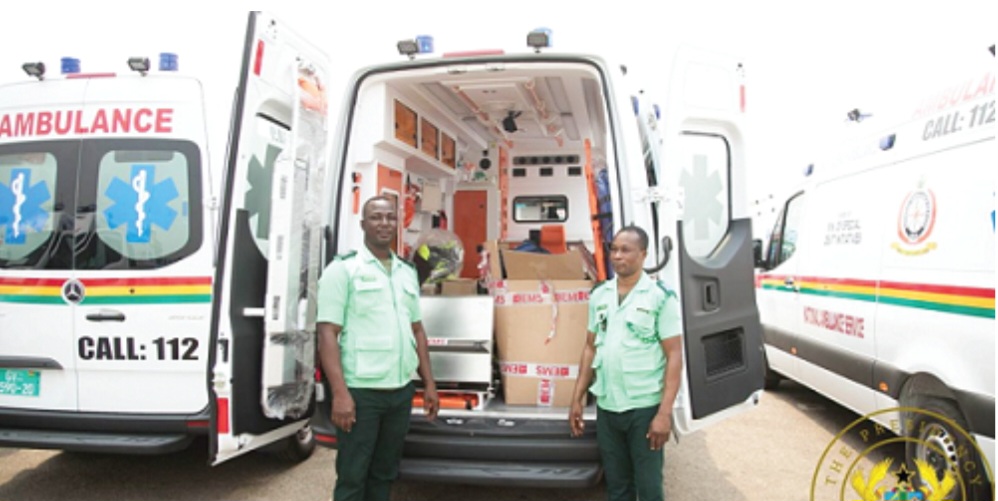
Dr Owusu pointed out that Ghana already has a 2012 referral policy and guidelines, a patient charter and a Ministry of Health directory. Directives, however, are not enforceable laws, he explained, and “no bed” refusals continue without legal consequence.
Act would bar payment before assessment
He outlined five components that a law should contain. It should apply to all facilities, prohibit demanding payment before an emergency is assessed, require evaluation and stabilisation, set penalties for refusal, and empower a regulator. He suggested the Health Facilities Regulatory Agency (HeFRA) as the likely enforcer, one “with a spine and means” to act.
He explained that research documented in 2020 had set out these elements. To his knowledge, he added, no African country has achieved all five, which gives Ghana an opportunity to be the first.He also noted that the country keeps tackling the weaknesses one at a time while they fail the patient all at once.
GMA urged to petition and audit refusals
Dr Owusu acknowledged it is tempting to treat the problem as one for the government, the next government or the budget. The GMA, he argued, holds the moral authority of the white coat, technical knowledge at the bedside and daily decisions that are either humane or not.
He asked the Association for three commitments. The first is a formal petition on emergency care to the Ministry of Health, the Ghana Health Service, HeFRA, Parliament’s Select Committee on Health and the President, demanding a legislative framework with timelines.
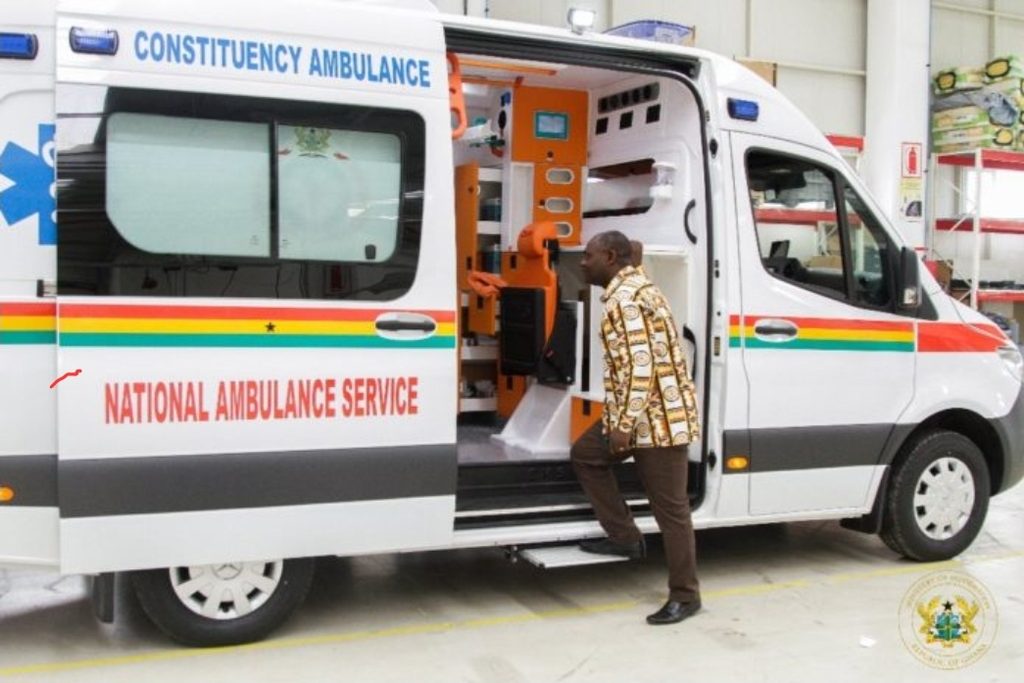
The second is to make Basic Life Support, Advanced Life Support and structured triage training a CPD requirement for every clinician. He noted that the 2018 directive already called for this, yet it has not been made universal.
The third is to treat a baseless refusal like any other deviation from the standard of care, and to audit and scrutinise it.
The law is one part of Dr Owusu’s wider proposals, which also include a real-time national bed tracker, a coordinated referral centre and regional emergency networks. Attention now turns to whether delegates adopt the petition before the conference ends.