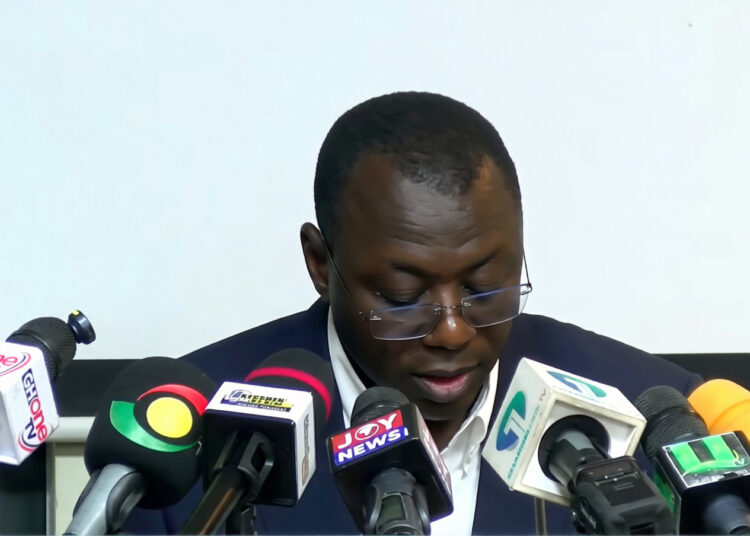
The Minority in Parliament has challenged the Government to demonstrate tangible economic results in the 2027 Budget.
The caucus maintains that the upcoming fiscal statement must establish how the Government intends to translate economic recovery into jobs, improved household incomes and sustainable opportunities for businesses.
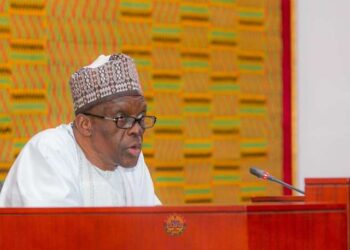
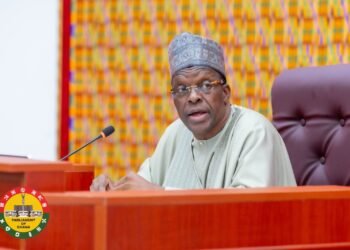
Speaking ahead of the reading of the 2027 Budget, the Member of Parliament for Karaga, Dr Mohammed Amin Adam, questioned whether the Government has demonstrated the capacity, financing and policy discipline required to deliver its proposed economic transformation.
“Ghanaians deserve more than another catalogue of promises. They deserve a credible plan backed by realistic financing, measurable outcomes, and accountability for results.”
Dr Mohammed Amin Adam
Dr Adam cautioned that ambitious policy declarations could not substitute for effective implementation, particularly when previous budget commitments remain unresolved. He characterised the proposed $10 billion New Economy Programme as an initiative that must withstand scrutiny over its practical arrangements, funding and expected outcomes.
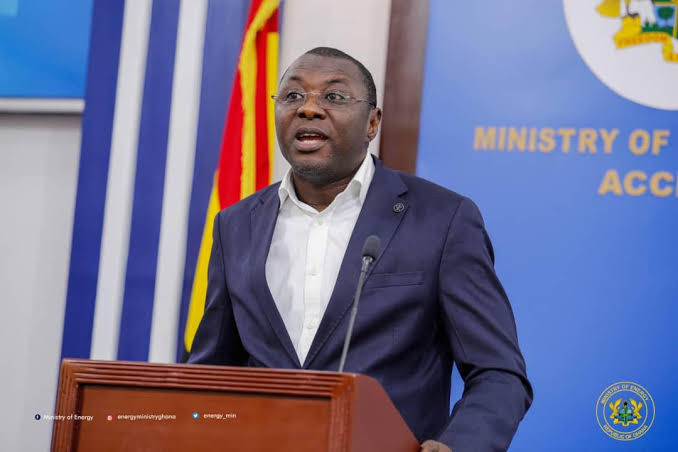
“The ambition is welcome; we love our country, and so we will welcome any good policy,” he described the initiative, while insisting that the Government must move beyond slogans to expand productive capacity, strengthen agriculture and industry, and create opportunities for the growing youth population.
In addition, the Karaga MP questioned the progress made under the 2025 and 2026 budgets, demanding clarity on the 24-hour economy initiative, investment mobilisation, sustainable job creation and delays affecting development programmes. He believes the Finance Minister must account for those commitments before presenting another major economic undertaking.
Dr Adam also cautioned that the completion of Ghana’s International Monetary Fund programme “does not mean the country has overcome its fiscal constraints.” Revenue mobilisation remains challenging, debt-service obligations continue to compete with development expenditure, while affordable external financing could not be taken for granted.
Consequently, he called for an explanation of how the Government would finance its new ambitions while honouring existing commitments and preserving macroeconomic stability. He further proposed that the 2027 Budget should demonstrate how economic improvements would translate into meaningful gains for ordinary citizens.
For farmers, he identified input costs and harvest returns as essential measures of progress, while traders needed stronger consumer purchasing power. Young graduates, meanwhile, require decent employment opportunities, and workers needed earnings capable of meeting the rising cost of essential services.
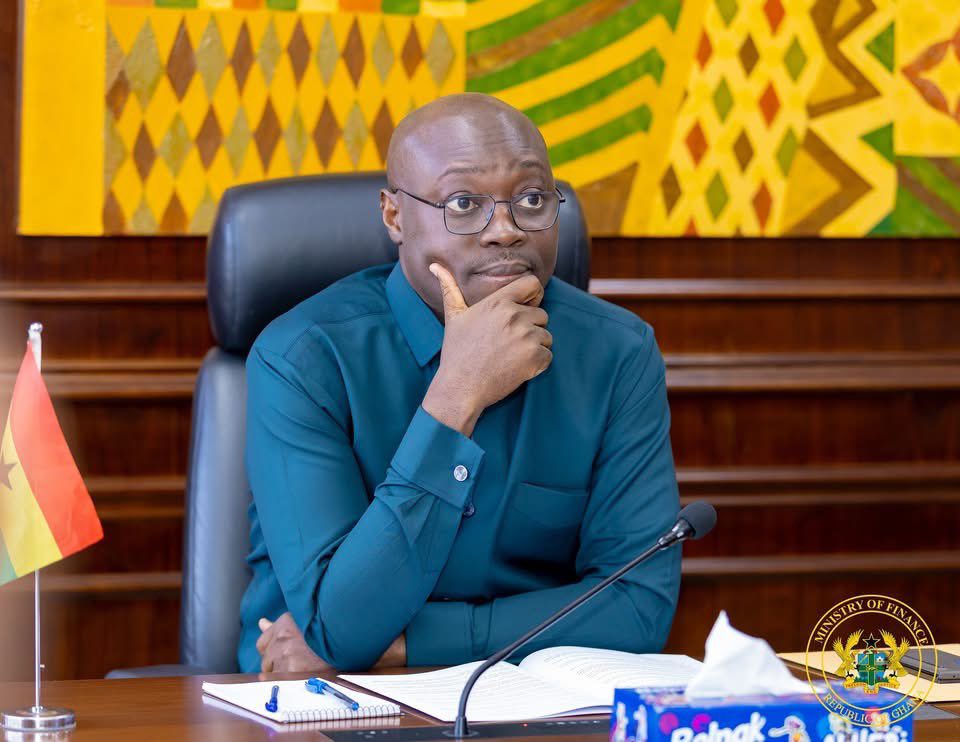
Although lower inflation, improved reserves and a stronger external position could indicate progress, Dr Adam cautioned against treating those indicators as sufficient evidence of improved economic welfare. He argues that stabilisation must produce jobs, stronger real earnings, affordable essentials and viable businesses.
The Minority therefore expects Thursday’s fiscal presentation to provide measurable commitments and credible financing arrangements.
Minority Questions Government’s New Economy Financing Plans
Meanwhile, the Minority in Parliament also questioned the Government’s proposed New Economy Programme, contending that its principal components overlap with projects already announced under the 24-hour economy initiative.
The caucus believes the proposed programme risks presenting existing commitments under a new label without adequately accounting for the earlier initiative’s financing and implementation record.
The Member of Parliament for Karaga, Honourable Mohammed Amin Adam, challenged the Government to explain the relationship between the two programmes. He particularly questioned the financing arrangements, arguing that the Government must clarify which investments represent additional commitments and which depend on existing allocations or private-sector funding.
“The $4 billion that they were supposed to raise to implement the 24-hour economy has not been raised. Against a $4 billion financing requirement, the 2026 budget rather allocated just 110 million Ghana cedis to the program. They also promised $300 million and $400 million in seed capital.”
Dr Mohammed Amin Adam
The programme also targeted 1.7 million jobs by the end of 2028 through its 1-3-3 model, which envisaged one job operating across three shifts with three workers.
However, the Karaga MP disputed claims of substantial progress, pointing to the difference between projected investment and funds actually mobilised. He further challenged the presentation of joint development agreements worth $5.5 billion as evidence of financing, characterising them as “agreements on paper” rather than money raised and disbursed.
On employment, Dr Adam cited an October 19, 2026, statement by the Chief Programme Officer of the 24-hour economy secretariat, who reportedly could not provide a figure for the total number of jobs created under the initiative. He also questioned the use of 268 filling stations and 33 manufacturing companies operating shifts as headline achievements, observing that some filling stations already operated at night before the programme began.

In addition, he pointed to changes in the Government’s plans for 24-hour markets. On October 5, 2026, the Minister for Local Government reportedly redesignated them as “district economy markets” divided their implementation into two phases and moved the expected completion date to 2028, although the original delivery target was 2026.
Subsequently, Dr Adam characterised the proposed New Economy Programme as a “possible rebranding of the existing initiative, identifying commercial agriculture, energy, critical minerals, textiles and garments, tourism and pharmaceuticals among the overlapping pillars.”
He also questioned differences between the Government’s financing descriptions. The 2027 fiscal strategy document reportedly envisages annual investment equivalent to 1.5 percent of GDP over four years, while the President has outlined $2 billion annually for five years.
Although the two financing envelopes may be broadly comparable in aggregate, Dr Adam insists Parliament must receive clarification on their coverage, funding sources, fiscal treatment and implementation timelines. In particular, he wants the Government to distinguish additional investments from existing budget allocations and explain which commitments depend on private financing.
READ ALSO: Bagbin Demands Punctuality Under New Parliamentary Sitting Schedule