

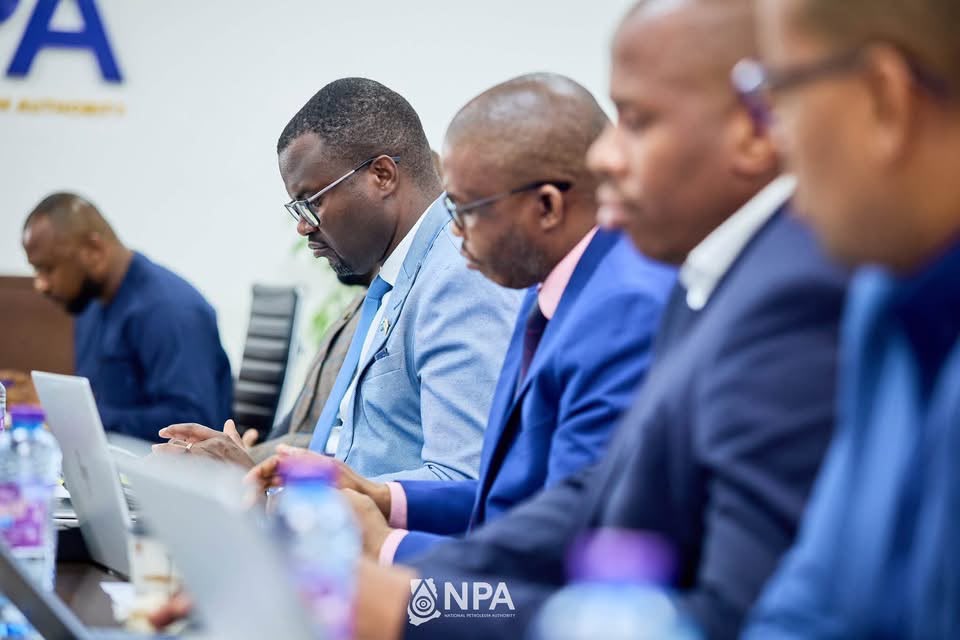
Ghana’s downstream petroleum regulatory framework is attracting interest from regulators in Southern Africa, with the National Petroleum Authority (NPA) hosting delegations from Botswana and Eswatini for a technical benchmarking visit aimed at examining its regulatory practices.
The Botswana Energy Regulatory Authority (BERA) and the Eswatini Energy Regulatory Authority (ESERA) are in Ghana to study the NPA’s approach to regulating the downstream petroleum industry, in an engagement expected to strengthen institutional cooperation and facilitate the exchange of regulatory knowledge.
The visit offers Ghana an opportunity to share the institutional experience it has developed in overseeing petroleum importation, storage, transportation, distribution and marketing, while giving the visiting authorities an opportunity to assess approaches that could be relevant to their respective markets.
Welcoming the delegations at separate meetings on Monday, November 23, the Chief Executive of the NPA, Godwin Kudzo Tameklo, Esq., emphasised the importance of sustained engagement among energy regulatory institutions.
He noted that exchanging practical experiences and regulatory information was essential to strengthening regulatory frameworks and improving institutional effectiveness.
Mr Tameklo also highlighted the cordial relations between the participating countries, stressing the importance of translating diplomatic ties into practical institutional partnerships to address common energy-sector challenges.
The engagement reflects a growing recognition that effective petroleum regulation requires more than legislation.
It depends on technical capacity, institutional systems, enforcement practices and the ability of regulators to respond to changing market conditions.
Ghana’s Downstream Framework Under Study
Ghana’s NPA was established under the National Petroleum Authority Act, 2005 (Act 691), with responsibility for regulating, overseeing and monitoring activities in the downstream petroleum industry.
The legislation gives the Authority oversight across a broad range of commercial activities, including petroleum importation, exportation, transportation, processing, refining, storage, distribution, marketing and sale.
Section 2 of the Act identifies the Authority’s central responsibility as follows:
“The object of the Authority is to regulate, oversee and monitor activities in the petroleum downstream industry and where applicable do so in pursuance of the prescribed petroleum pricing formula.”
This mandate places the NPA at the intersection of market regulation, consumer protection, product quality and petroleum supply arrangements.
Its regulatory work also includes licensing petroleum service providers, monitoring compliance with operational standards and protecting the interests of consumers and industry participants.
For the visiting regulators, examining how these responsibilities are implemented in practice could provide useful lessons for strengthening their own regulatory systems.
BERA, established under Botswana’s Energy Regulatory Act, 2016, has a wider energy-sector mandate covering electricity, petroleum products, natural gas, coal, solar and other renewable energy resources.
Its responsibilities include licensing petroleum-sector activities and overseeing infrastructure such as storage facilities, pipelines and retail service stations.
ESERA, meanwhile, administers Eswatini’s Petroleum Act, 2020, through the licensing and inspection of downstream petroleum activities. Its regulatory responsibilities cover wholesale and retail operations, storage, distribution, liquefied petroleum gas and other petroleum-related activities.
Although the three institutions operate within different national markets and legislative frameworks, their mandates overlap in important areas, particularly licensing, compliance monitoring, infrastructure oversight and consumer protection.
That creates scope for practical knowledge-sharing on how regulatory institutions can strengthen enforcement, improve service standards and maintain confidence in petroleum markets.
Regional Cooperation Beyond Diplomatic Relations
The visit also reflects the potential for African regulators to develop stronger working relationships beyond formal government-to-government engagements.
Petroleum markets across the continent face shared regulatory challenges, including the need to ensure product quality, monitor market participants, improve safety standards and maintain reliable supply systems.

Differences in national regulations can also complicate cross-border petroleum trade and investment, particularly where companies operate across multiple jurisdictions.
In this context, technical exchanges can help regulators understand how their counterparts approach similar challenges and identify areas where greater regulatory alignment may be beneficial.
The NPA has previously participated in such institutional exchanges. In October 2026, the Authority hosted a delegation from the Eswatini National Petroleum Company (ENPC), which visited Ghana to examine the country’s downstream regulatory experience and the institutional systems supporting product quality, safety and market oversight.
At the time, the NPA’s Director of Quality Assurance, Setsoafia K. Agbenoto, underscored the value of cooperation among African petroleum institutions.
“Knowledge-sharing among African petroleum institutions is essential as countries work to strengthen energy security and build resilient petroleum industries,”
The latest visit broadens that engagement by bringing together two regulatory authorities rather than focusing on a national petroleum company alone.
It also creates an opportunity for the participating institutions to exchange perspectives on the relationship between regulation and the wider energy-sector objectives of their respective countries.
From Benchmarking to Institutional Capacity
The value of regulatory benchmarking, however, will depend on whether the lessons exchanged translate into practical improvements.
A study visit can expose institutions to different licensing arrangements, inspection procedures, enforcement mechanisms and regulatory instruments.
But adopting those practices requires an assessment of their suitability for each country’s market structure, legal framework and institutional capacity.

For Ghana, the engagement provides an opportunity to demonstrate the experience accumulated by the NPA in managing a complex downstream petroleum market.
It also reinforces the importance of maintaining a regulatory system capable of responding to developments in refining, storage, distribution, pricing and consumer protection.
For Botswana and Eswatini, the exercise offers access to practical experience from another African jurisdiction, while providing an opportunity to compare approaches and identify areas for further cooperation.
The exchange could also create a foundation for continued technical engagement, including staff development, information-sharing and cooperation on regulatory standards.
Ultimately, the significance of the visit will not be determined simply by the number of delegations hosted or presentations delivered.
Its longer-term value will depend on whether the participating authorities maintain the relationships established and apply relevant lessons to strengthen their regulatory systems.
As African countries seek more resilient petroleum markets and stronger energy institutions, cooperation among regulators could become an important part of building the technical capacity needed to support energy security, investment and consumer confidence.
READ ALSO: BoG Eyes Cheaper Remittances Through African Payment Reforms