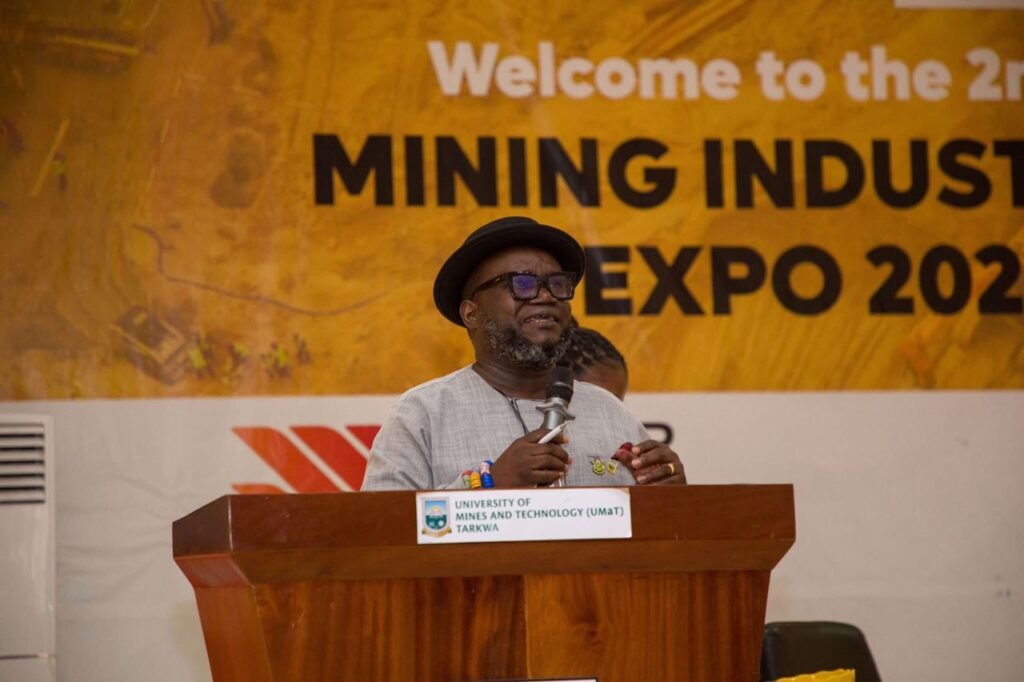
The Chief Executive Officer of the Ghana Chamber of Mines, Ing. Keneth Ashigbey, has asserted that the impending renewal of Gold Fields’ Tarkwa mining lease carries profound economic consequences that extend far beyond the extractive sector, owing to the miner’s deep integration with indigenous enterprises and ancillary industries across Ghana.
Speaking at a community infrastructure commissioning in the Western Region, the industry leader emphasized that national deliberations surrounding the April 2027 expiration must weigh the company’s extensive footprint in local supply chains, domestic value retention, and regional socio-economic transformation.
“The renewal of Gold Fields’ Tarkwa mining lease has implications beyond the mining industry, given the company’s contribution to local businesses and other sectors of Ghana’s economy. Discussions surrounding the April 2027 expiration must take into account the broader economic opportunities created through the miner’s operations, including the expansion of Ghanaian enterprises and sustained development within host communities.”
Ing. Ken Ashigbey
As the statutory deadline approaches, the debate over extending Gold Fields’ operational mandate at Tarkwa one of West Africa’s largest open-pit gold mines has intensified among policymakers, traditional leaders, and civil society.
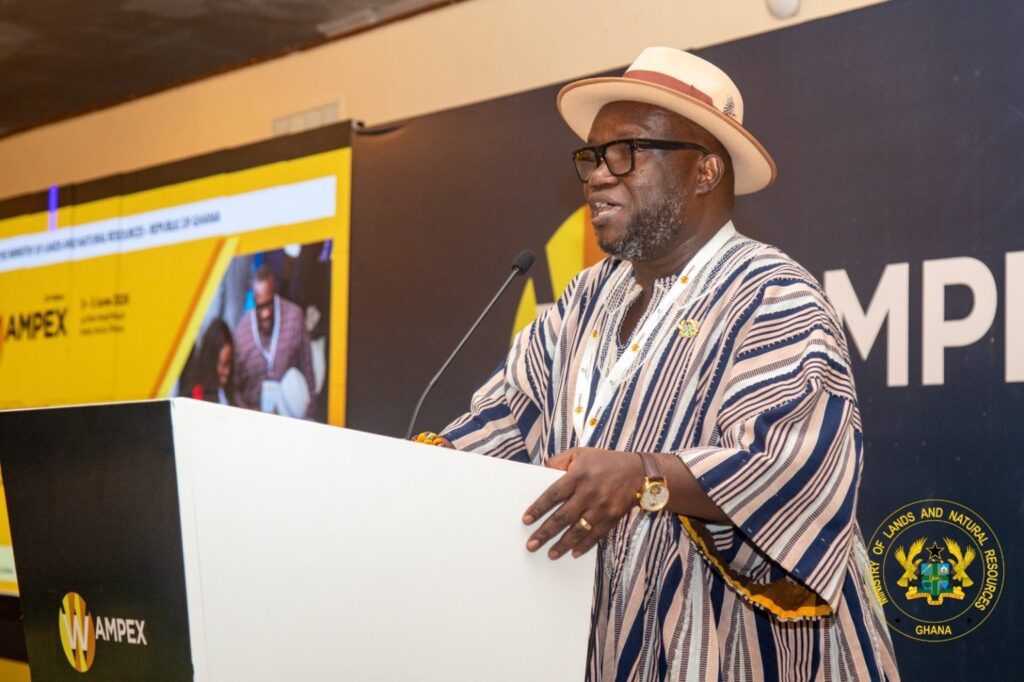
Ing. Ashigbey noted that evaluating the lease purely through a narrow extractive lens overlooks how multi-decade capital commitments anchor peripheral sectors such as energy, haulage, engineering, and financial services.
According to Chamber of Mines data, roughly 74 per cent of the financial value generated by Gold Fields remains within the Ghanaian economy through fiscal payments, royalties, state dividends, employee remuneration, local procurement, and social investments.
Catalysing Indigenous Enterprise and Cross-Border Expansion
Delivering his remarks during the official handover of the newly constructed 2.26-kilometre Budo City to Bogoso Junction Road in the Tarkwa-Nsuaem Municipality a double-sealed bitumen infrastructure project valued at over GH¢11.6 million and financed by the Gold Fields Ghana Foundation.
Ing. Ashigbey pointed to tangible corporate success stories birthed through the miner’s local content ecosystem.

He specifically highlighted indigenous firms such as Zen Petroleum and Genser Energy as prime examples of Ghanaian-owned businesses that leveraged contracts and operational partnerships with Gold Fields to scale domestically and expand their footprints into wider regional markets.
Industry analysts observe that the survival and competitiveness of domestic suppliers in Ghana’s capital-intensive mining value chain depend heavily on predictable, long-term anchor clients.
When major producers secure operational continuity, local contractors gain the balance-sheet stability required to access commercial credit, invest in technical capacity, and retain skilled Ghanaian engineers.
“We must ensure that discussions on this renewal also deliberately address how even more Ghanaian businesses can secure high-value contracts in the mining sector, guaranteeing that domestic enterprises benefit more directly from major capital inflows,” Ing. Ashigbey remarked.
Balancing Statutory Compliance with Investor Confidence
Navigating the regulatory pathway toward April 2027 requires strict adherence to Ghana’s legal framework alongside strategic economic foresight.
Ing. Ashigbey drew attention to Section 43 of the Minerals and Mining Act, 2006 (Act 703), which legally entitles the holder of a mining lease to apply for a renewal provided the operator has fulfilled all statutory, environmental, and contractual obligations.
While the Minister for Lands and Natural Resources, Emmanuel Armah Kofi Buah, has maintained that the renewal will not be automatic and will be rigorously guided by regulatory compliance and a review of operational plans, the Chamber of Mines CEO cautioned that upholding statutory predictability is vital for preserving Ghana’s reputation as a premier investment destination.
In a direct appeal to key decision-makers, Ing. Ashigbey urged traditional authorities in the Wassa Fiase Traditional Area, Parliament, and President John Dramani Mahama to objectively assess Gold Fields’ operational track record and support the extension.
Beyond fiscal contributions, he underscored the company’s environmental stewardship, noting an average annual rehabilitation expenditure of US$4.2 million and a dedicated closure bond arrangement with Absa Bank Ghana backed by monthly allocations of US$500,000 toward its US$107.19 million reclamation liability.
Securing Long-Term Value for Host Communities
The need for a timely and mutually beneficial lease renewal is further underscored by the socio-economic realities of mining host communities in the Western Region.
Infrastructure interventions such as the Budo City–Bogoso Junction road executed by local contractor Woodbine Ventures to ease traffic congestion and connect New Atuabo to major commercial arteries demonstrate how corporate social investment bridges critical municipal infrastructure deficits.
Without long-term lease certainty, mining companies face heightened difficulty justifying multi-year capital expenditure on deep-pit expansion, modern processing technology, and community trust funds.
By aligning regulatory oversight with commercial continuity, stakeholders can secure a framework that protects national sovereignty, deepens local content participation, and sustains vital community development across Tarkwa and the broader Ghanaian economy.
READ ALSO: Cheaper Tankers Give Jubilee Crude an Asian Opening