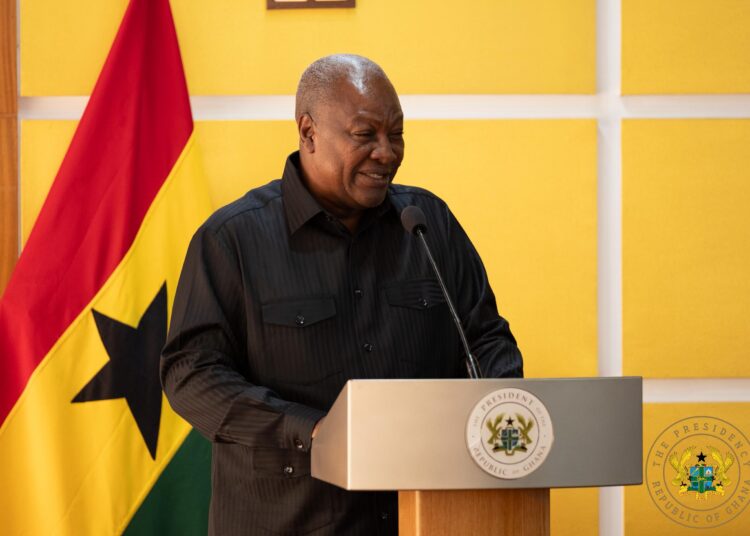
In a major push for industrialization in the Upper East Region, President John Dramani Mahama has announced a strategic roadmap to revive the long-dormant Pwalugu Tomato Factory.
Speaking during a courtesy visit by the Upper East Regional House of Chiefs, the President underscored that regional development is the cornerstone of his administration’s agenda. The revival of the factory is not merely a rehabilitation project but a comprehensive value-chain intervention starting with the very biology of the local crops.
“The President of the House of Chiefs mentioned development. And that is our focus. We know that the Upper East region has very great potential if we put investments into it”
President John Dramani Mahama
President Mahama identified a critical mismatch between the raw materials currently produced by local farmers and the requirements of modern industrial processing, noting that for decades, the Pwalugu facility has faced operational hurdles due to the high water content of indigenous tomato varieties, which made processing inefficient and costly.

Central to his address was the introduction of a high-yield, industrial-grade tomato variety designed to replace the traditional “watery” types. The traditional variety, according to the President, consists of nearly 80% water and only 20% flesh, making it unsuitable for high-quality puree production.
“There’s a new variety that is more beefy with less water. And that is good for processing and preservation for making tomato puree and all that. And so as I speak, under the Ministry of Agriculture, our Feed Ghana Programme… the experts are working with the farmers and giving them that new variety”
President John Dramani Mahama
Under the vegetable component of the Feed Ghana Programme, agricultural experts are already on the ground in the Upper East, distributing these climate-resilient seeds to farmers.
According to the President, this “beefy” variety is expected to double local yields, with researchers at the CSIR-CRI projecting outputs of up to 20 tonnes per hectare, compared to the current average of 8 to 10 tonnes.

The Scoping Of Pwalugu
President Mahama revealed that the government is currently “scoping” the Pwalugu facility to determine the precise technical upgrades needed to bring it back to life.
“We need some additional equipment to make it fully functional,” he added, noting that the reactivation plan involves more than just fixing old machines; it includes the installation of state-of-the-art packaging equipment to ensure the final products are market-ready and competitive with international brands.
The President expressed optimism that the reactivation would be completed soon, potentially ending the “annual glut” where farmers are forced to watch their produce rot due to a lack of a reliable offtake market. This situation has triggered civil society responses recently. The House of Chiefs welcomed the news, noting that the Pwalugu factory has the potential to be the economic heartbeat of the region.
By creating a direct link between the farm gate and the processing floor, the government aims to curb the influence of “Market Queens” and ensure farmers are paid fairly based on weight and quality.
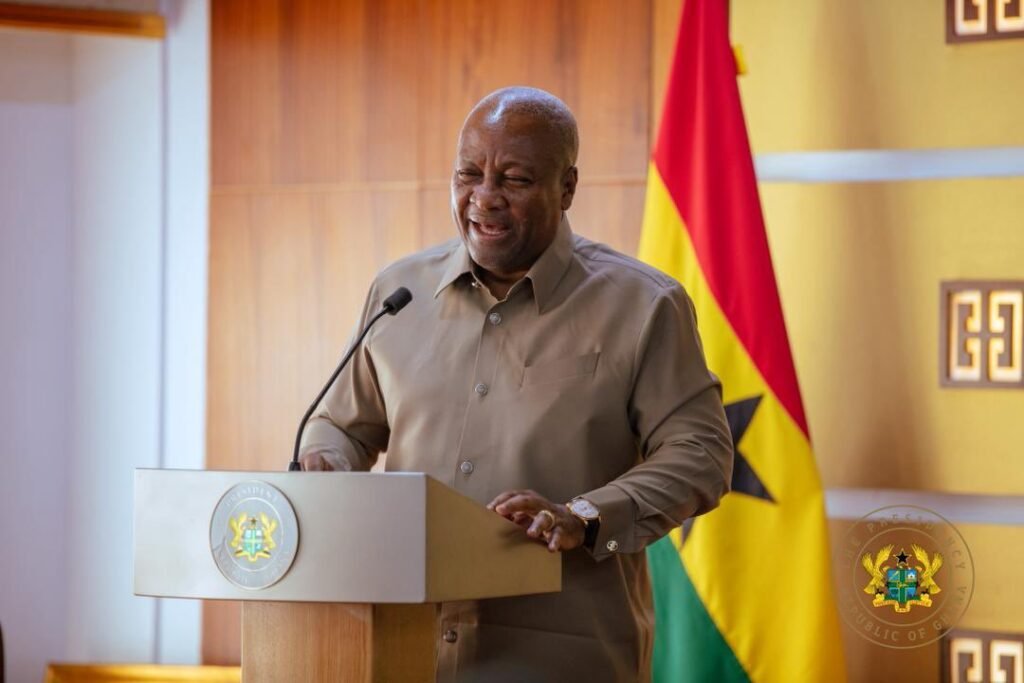
The President concluded by reaffirming his commitment to personally oversee the final reactivation phase, signaling that the “Upper East Industrial Hub,” is no longer a campaign promise but a practical priority.