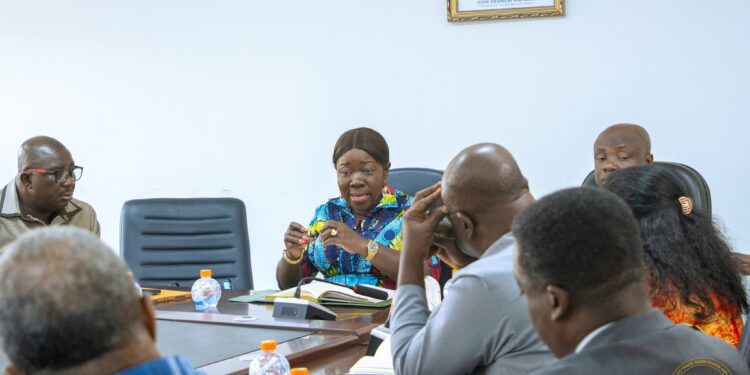
The Ministry of Trade, Agribusiness and Industry (MoTAI) has moved to synchronize government strategy with private sector realities following a high-level roundtable with agribusiness CEOs. The engagement served as a final diagnostic session for the upcoming Agribusiness Policy, which is now being readied for Cabinet consideration.
As the ministry’s mandate expands under President John Dramani Mahama’s “Resetting Ghana” agenda, the dialogue, led by the Minister for Trade, Agribusiness and Industry, Hon. Elizabeth Ofosu-Adjare, underscored a pivot toward making agribusiness the primary engine of job creation and industrial value addition.
“Industry captains from across the poultry, rice, maize, and horticultural sectors presented a unified front in welcoming the initiative, but warned that local production is being suffocated by high operational costs and unfair competition from imports”
MoTAI
According to the Ministry, a recurring theme during the roundtable was the widening gap between local manufacturing costs and the price of unregulated imports, as agribusiness leaders pointed to the heavy burden of high electricity tariffs and limited access to affordable financing as major deterrents to scaling production.

In the poultry and rice sectors specifically, participants noted that imported products often benefit from tax holidays in their countries of origin, allowing them to enter the Ghanaian market at prices that local producers, burdened by high tax costs and energy prices, simply cannot match.
Shared Responsibility
Hon. Ofosu-Adjare acknowledged these “legitimate concerns,” but insisted on a paradigm shift regarding financing.
She argued that the high cost of borrowing in Ghana’s agribusiness sector is inextricably linked to a “poor loan repayment culture,” which drives risk premiums up across the banking sector.
In a candid address to the CEOs, the Sector Minister positioned affordable credit as a shared responsibility rather than a unilateral government handout. She challenged industry players to honor their financial obligations to signal to the banking sector that agribusiness is a low-risk, high-return venture.
“If we want cheaper financing, we must make it affordable by paying back what we borrow. When banks see agribusiness as a sector that repays loans, they will lend more and at better rates”
Hon. Elizabeth Ofosu-Adjare, Minister for Trade, Agribusiness and Industry
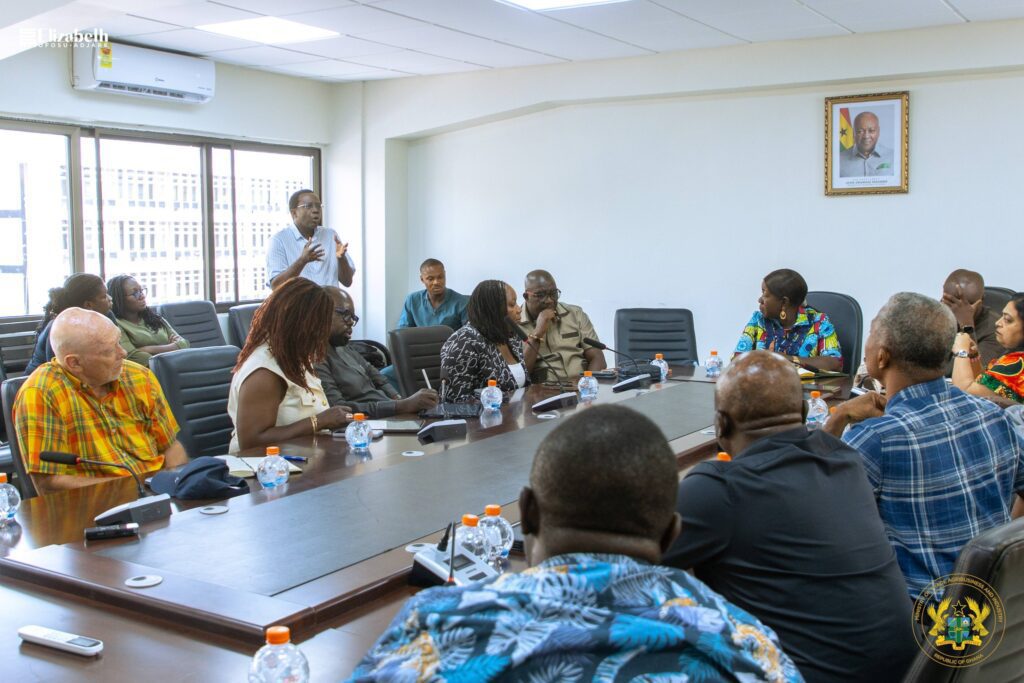
The Minister further pledged that the government would not impose new tax measures in isolation. Instead, the ministry aims for “predictability and consultation” to ensure that tax rates remain reasonable enough to improve compliance without stifling the liquidity needed for industrial expansion.
Beyond the balance sheets, the dialogue touched on the physical security of agricultural investments. Agribusinesses reported rising insecurity on farmlands, primarily driven by unregulated sand winning and poor rural infrastructure.
Noting that these activities not only destroy topsoil but pose a direct threat to the long-term viability of commercial plantations, Hon. Ofosu-Adjare assured participants that all issues of farmland insecurity would be escalated for targeted intervention in collaboration with the Ministries responsible for Lands, Natural Resources, and Local Government.
The Minister added that to combat these threats, the MoTAI is strengthening linkages between farmers and industry through aggregation and commercial contracts. By coordinating production planning, the government intends to prevent seasonal gluts and stabilize prices, ensuring that “Made in Ghana” becomes a hallmark of both quality and consistency.
The meeting concluded with a directive that the Ministry will review the current import licensing framework, particularly for the poultry sector, to protect local industry without undermining regional trade obligations under AfCFTA.
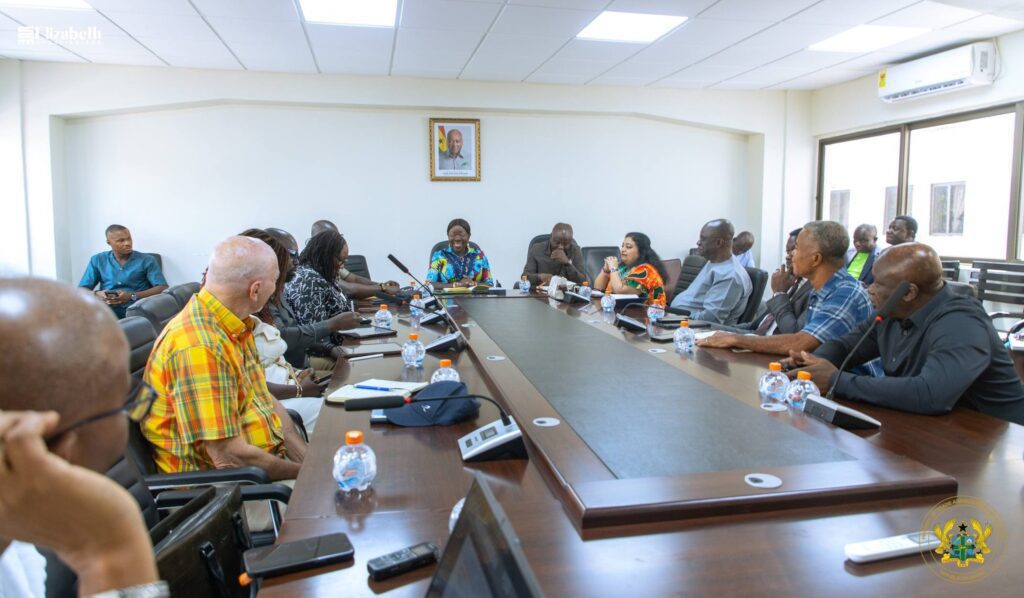
The ultimate goal is to ensure that every product carrying the “Made in Ghana” label signals premium standards to the global market.
“We cannot industrialise without agribusiness. Government cannot do this alone. We need a strong, confident private sector to drive growth, create jobs and expand production”
Hon. Elizabeth Ofosu-Adjare, Minister for Trade, Agribusiness and Industry
READ ALSO: AU Executive Council’s 48th Ordinary Session Opens