In a strategic move to safeguard the nation’s burgeoning industrial and agricultural sectors from restrictive global trade regimes, the Ministry of Trade, Agribusiness and Industry (MoTAI) has launched a high-stakes consultative process.
The Ministry, in a recent joint operation with Ghana’s Permanent Mission in Geneva, convened a two-day virtual stakeholder workshop to synchronize the nation’s trade priorities. It also served as the foundation for Ghana’s participation in the 14th World Trade Organization (WTO) Ministerial Conference (MC14), scheduled for next month in Yaoundé, Cameroon, where the future of multilateral trade rules will be decided.
“The workshop, which drew over 55 heavyweights from academia, the private sector, and trade policy institutions, underscores the Mahama administration’s commitment to ensuring that global trade serves local development.
“By harmonizing these voices now, the government aims to project a unified Ghanaian First agenda on the global stage, challenging the status quo where international trade rules often collide with the sovereign needs of developing economies”
MoTAI
According to the Ministry, the centerpiece of Ghana’s MC14 agenda, as articulated by the Deputy Minister for Trade, Agribusiness, and Industry, Hon. Sampson Ahi, is the absolute protection of food security.
At the heart of this struggle is the pursuit of a permanent solution for Public Stockholding (PSH) – a mechanism that allows the state to purchase and store food from local farmers to stabilize prices and ensure supply during shocks.
Ghana and the broader African Group are pushing the WTO to recognize these programs as vital humanitarian tools rather than trade-distorting subsidies, ensuring that the Great Industrial Reset is not undermined by external legal challenges. This priority is critical as it provides the regulatory cover needed for the state to support local producers without fear of international sanctions.
Preserving Policy Space
Beyond agriculture, the Ministry is focused on defending the “policy space,” required for Ghana to diversify its economy. The Deputy Minister emphasized that the WTO’s reform agenda must be development-centered, allowing developing nations the flexibility to support their nascent industries.

This includes protecting the right to implement targeted subsidies for manufacturing and ensuring that Special and Differential Treatment (S&DT) provisions are not just symbolic but operational tools that provide Ghana with a competitive edge in the global marketplace.
“Hon. Ahi highlighted the need to preserve policy space for developing countries to support industrialisation, agriculture and economic diversification, and ensure that ongoing negotiations on fisheries subsidies remain development-responsive”
MoTAI
With a major concern for the 2026 trade year being the rapid expansion of electronic commerce, Ghana is advocating for e-commerce negotiations that reflect the reality of the digital divide, ensuring that international rules do not “lock in” the advantages of technologically advanced nations at the expense of African digital growth.
The Ministry’s stance is that global trade in the digital age must facilitate inclusion, not create new barriers for the small and medium enterprises (SMEs) that form the backbone of the Ghanaian economy.
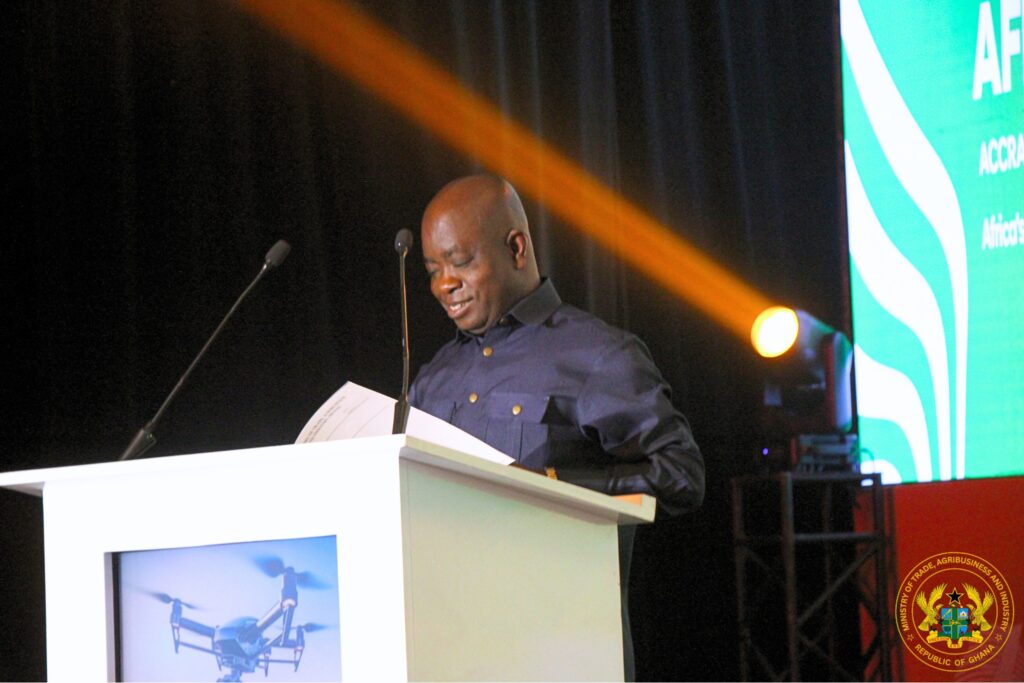
Hon. Ahi made it evident that Ghana will not be a passive observer in Cameroon. Instead, it is positioning itself as a leader for the African continent, demanding a trading system that is fair, predictable, and, most importantly, responsive to the needs of the developing world.
He noted that MC14 presents a critical opportunity for Ghana and other developing countries to push for outcomes that support development, equity and inclusive growth.
READ ALSO: Ghana Clears GH¢10bn Debt Interest