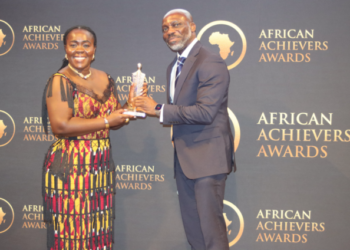

Minister for Trade, Agribusiness and Industry, Hon. Elizabeth Ofosu-Adjare, has announced that Ghana’s economy expanded by 6 percent in 2025, declaring the nation fully open for strategic corporate investments and industrial collaborations at the London-Africa Business Summit held at City Hall, London.
Delivering an executive address on behalf of President John Dramani Mahama, the Trade Minister highlighted the country’s aggressive macroeconomic recovery, improving fiscal indicators, and sharp decline in inflation. She positioned Ghana as the premium entry gateway for international direct investments seeking high-yield opportunities within a rapidly integrating African continent.
The Ministry of Trade, Agribusiness and Industry (MoTAI) noted that the London-Africa Business Summit, convened by the Mayor of London to deepen cross-border commercial cooperation, provided a high-profile platform for Ghana to showcase its structural shifts toward domestic value addition and industrial modernization.
“The Hon. Minister conveyed the President’s message that ‘Africa is ready and Ghana is open for strategic partnerships and business,’ emphasizing that the continent remains one of the most attractive frontiers for investment despite global economic uncertainties”
Ministry of Trade, Agribusiness and Industry
Relying not just on traditional commodity market dynamics, Hon. Ofosu-Adjare, addressing the global assembly of financial policymakers, sovereign wealth managers, and corporate executives, presented Ghana as a stable, legally predictable environment where international assets can be safely deployed alongside state-backed infrastructure projects.
The presentation in London placed Ghana’s individual economic turnaround within the broader context of sub-Saharan Africa’s strengthening economic fundamentals. Despite ongoing global disruptions, supply chain realignments, and volatile credit markets, the wider African economy is currently projected to achieve a robust 4.3 percent GDP growth rate across the 2026 fiscal year.

This upward economic trajectory is being driven by a combination of a highly youthful demographic profile, an expanding digital economy, and rapidly growing consumer markets across regional urban hubs.
Central to this continental growth is the operational expansion of the African Continental Free Trade Area (AfCFTA), an agreement that connects 55 sovereign nations into a single, unified trading bloc.
Eliminating historical tariff walls and harmonizing customs regulations across a market of 1.4 billion consumers with a combined GDP of $3.4 trillion, the AfCFTA allows foreign investors establishing factories in Ghana to easily scale their operations continent-wide.
The Trade Minister emphasized that this free trade framework turns localized factory production into a direct gateway to the entire African consumer market.
Expanding the Commercial Corridor
A major focus of Hon. Ofosu-Adjare’s briefing was the long-standing and deepening trade relationship between Ghana and the United Kingdom, noting that macroeconomic data from the 2025 fiscal year confirms that bilateral trade between the two countries reached £1.6 billion, demonstrating strong ongoing commercial exchange.
Furthermore, active British investment within the Ghanaian economy stood at £1.8 billion, spread across 671 distinct projects in various sectors, establishing the UK as a primary institutional funding partner for the country’s industrial goals.
MoTAI is leveraging these strong financial relationships to push past raw material exports and drive domestic value-chain development, as the trade relationship focused on exporting primary resources, leaving local markets vulnerable to foreign processing systems in the past.

Hon. Ofosu-Adjare explained that Ghana is actively shifting this dynamic by recording significant growth in non-traditional exports and implementing state-backed programs to maximize local refining, packaging, and processing capabilities for its two largest commodity sectors: cocoa and gold.
To support this shift toward an export-driven, value-added economy, the government is prioritizing large-scale structural infrastructure projects. A key highlight of the London summit was the details shared regarding the newly operational UK-Ghana Growth Partnership 2026-2028.
This bilateral state framework includes a dedicated £101 million capital investment specifically allocated for constructing a modern ship repair and dry-docking facility at the strategically vital Takoradi Port.
According to the Trade Minister, this major maritime project will transform the logistics capability of the Western Region, allowing Ghana to provide comprehensive maintenance, engineering, and repair services for international commercial vessels and regional industrial fleets.
She highlighted it as a clear template for the type of co-investment models Ghana is actively seeking to build with global partners. Yet, beyond large-scale industrial projects and traditional maritime trade, Ghana’s investment strategy is increasingly focusing on high-growth digital markets and human capital reserves.
Hon. Ofosu-Adjare praised global African diaspora communities for their critical role in fueling innovation and bringing tech-driven efficiency to key sectors of the domestic economy.
Ghana is actively creating specialized frameworks to make it easier for diaspora professionals to transfer knowledge, technology, and capital into high-growth areas like fintech, specialized education, and the creative industries, integrating advanced financial technology platforms with rural agricultural supply chains and urban consumer retail markets.

For international fund managers and venture capital firms at the London summit, this digital transformation offered a highly profitable landscape for investment.
Concluding her executive address at City Hall, Hon. Elizabeth Ofosu-Adjare made a strong, direct call to action, urging global financiers to move past outdated risks and lock in capital commitments immediately to secure long-term positioning in the world’s fastest-growing trade frontier.
READ ALSO: SSNIT’s Digital Strategy Transforms Pension Service Delivery