
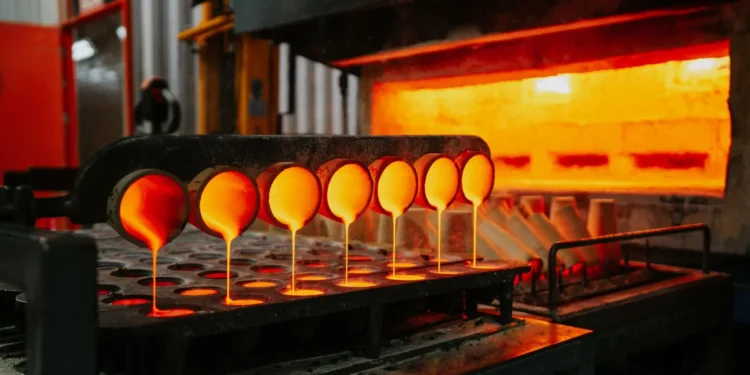
Finance Minister Cassiel Ato Forson has announced a sweeping Ghana Gold Reserves Policy that will require all gold acquired from the large-scale mining sector to be in doré form and processed locally to promote value addition.
Speaking on the floor of the Parliament of Ghana, Dr. Forson described the initiative as the country’s first comprehensive reserves-building framework, aimed at strengthening Ghana’s physical gold holdings while deepening domestic participation in the gold value chain.
“The gold acquired from the large-scale mining sector shall strictly be in the form of doré and processed in Ghana to promote local value addition.”
Dr Cassiel Ato Forson, Finance Minister
The policy forms part of a broader strategy to enhance transparency, reduce acquisition costs and retain greater economic benefits from Ghana’s gold production.
Reforming the 20 Percent Acquisition Arrangement
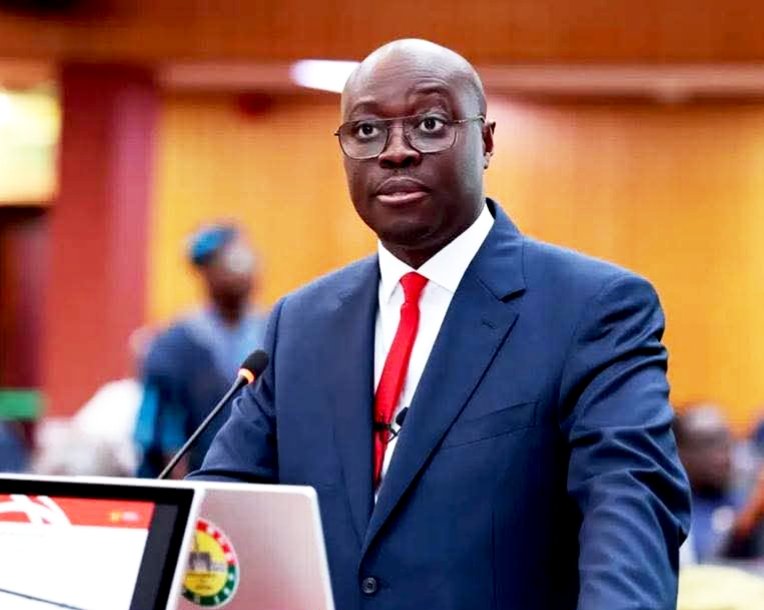
Under the new policy, government will implement changes to the current arrangement whereby the Bank of Ghana acquires 20 percent of gold output from large-scale mining companies.
Dr. Forson explained that to ensure compliance, “government will establish an Inter-Agency Committee co-chaired by the Minister for Lands and Natural Resources and the Minister for Finance.”
Membership will include the Governor of the Bank of Ghana and the Chief Executive Officers of the Minerals Commission and the Ghana Gold Board.
The Minister for Lands and Natural Resources, he noted, will invoke the preemption right under section 3(d) of the Ghana Gold Board Act, 2025 (Act 1140) and section 7 of the Minerals and Mining Act, 2006 (Act 703) to purchase a minimum of 20 percent of large-scale gold output.
This translates to at least 0.57 tonnes of gold per week, according to the Finance Minister.
Transactions in Cedis at Interbank Rates
Dr. Forson further clarified that transactions under the revised arrangement will be conducted strictly in Ghana cedis.
“The transaction shall be in cedis only, at the prevailing interbank exchange rate and at a discount to be determined by the parties,” he said, adding that applicable discount rates would be volume-based.
By denominating purchases in cedis, the policy seeks to reduce foreign exchange pressures while strengthening the local currency’s role in gold transactions.
The approach also aims to provide greater cost certainty and transparency in state acquisitions of gold for reserve purposes.
“Mr. Speaker, the purchased gold (doré) under this new acquisition arrangement shall be refined by local gold refineries, shipped to LBMA refineries for melting, bar casting, and stamping, and added to the country’s physical gold reserves.”
Dr Cassiel Ato Forson, Finance Minister
The measure is expected to stimulate growth within Ghana’s refining sector and support local refineries in attaining LBMA certification standards, enhancing their competitiveness in global bullion markets.
Government believes this will deepen domestic value retention and reduce reliance on foreign processing facilities.
Strict Oversight and Limited Sales

Under the policy framework, gold accumulated as part of the reserves-building initiative will only be sold by the central bank with prior approval from Cabinet and Parliament.
The requirement introduces an additional layer of oversight intended to safeguard the integrity of the country’s gold reserves and prevent arbitrary disposals.
Officials say the move reinforces principles of good governance and accountability in reserve management.
The Ghana Gold Board will play a central role in implementing and enforcing the new acquisition arrangement.
Dr. Forson noted that as the national assayer, the Board maintains field officers in the gold rooms of all large-scale mining firms and conducts assays of gold samples before export.
This operational presence positions the Board to monitor compliance and ensure that minimum acquisition requirements are met.
“The Ghana Gold Board has successfully piloted this new acquisition arrangement with nine (9) large-scale mining firms in the last six (6) months.”
Dr Cassiel Ato Forson, Finance Minister
Strengthening Reserves and Local Industry
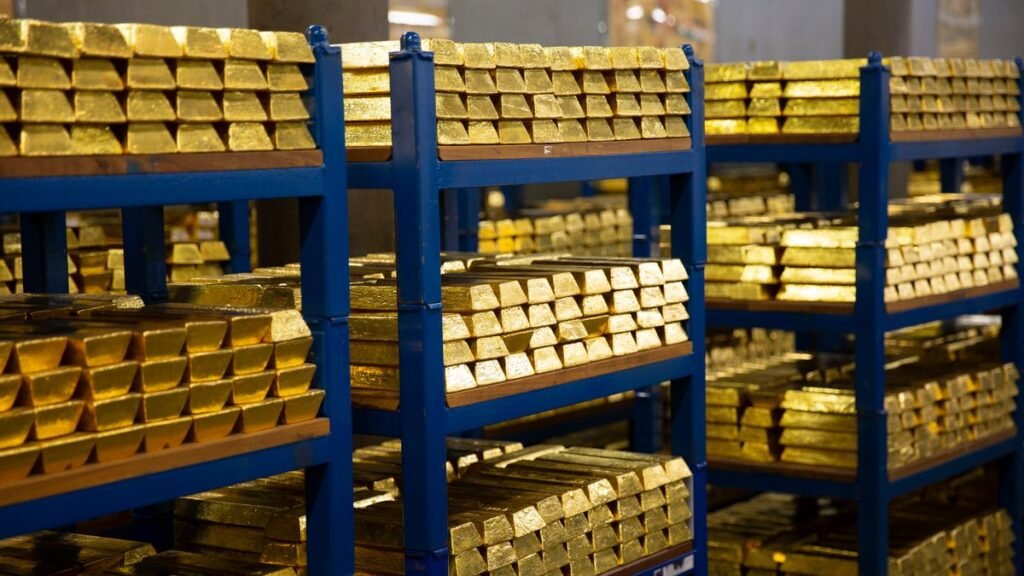
Government officials argue that the Ghana Gold Reserves Policy will strengthen the country’s financial buffers while promoting industrial development.
By linking reserve accumulation with local refining and cedi-based transactions, authorities aim to integrate monetary policy objectives with broader economic transformation goals.
Dr. Forson said the measures would ensure strict enforcement of commitments by large-scale mining firms, enhance transparency and reduce acquisition costs, all while supporting the growth of domestic gold refineries.
As Ghana continues to leverage its status as one of Africa’s leading gold producers, the new reserves policy signals a strategic shift toward retaining more value within the country and building a more resilient economic foundation anchored on its mineral wealth.
READ ALSO: Cocoa Price Cut Poll Divides Voters, 56% of Farmers Back Government