Ghana Chamber of Mines has intensified its call for the immediate repeal of the Growth and Sustainability Levy (GSL), describing the fiscal measure as a significant bottleneck to the long-term viability of the country’s extractive sector.
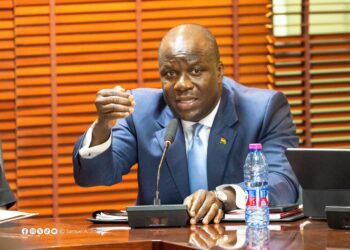
According to the Chamber Chief Executive Officer, Ing. Kenneth Ashigbey, the levy which is currently pegged at 3% of gross production for mining firms places an undue burden on operators by taxing revenue regardless of whether a company is turning a profit or incurring heavy operational losses.
“The challenge with some of the taxes within our sector is that the taxes are fixed at the gross level. By the time you start your production, whether you are making losses or not, you need a 3% to stake it. It becomes regressive, and the ideal way of taxation is taxing out of the returns that happen.”
Ing. Kenneth Ashigbey.
This demand comes at a time when the industry is grappling with rising costs of production and a complex fiscal regime that the Chamber argues is increasingly regressive.
Unlike traditional corporate income taxes that apply to net returns, the GSL is calculated at the gross level, meaning it is “staked” against the company the moment production commences.
Industry experts warn that by failing to account for the actual cost of doing business, the levy acts as a deterrent to reinvestment, potentially stifling the expansion of existing mines and the development of new projects across the country.
Regressive Nature of Gross-Level Taxation

A primary concern for the Ghana Chamber of Mines is the non-deductible status of both the Growth and Sustainability Levy and mineral royalties.
In standard accounting and competitive global mining jurisdictions, taxes are typically deductible expenses when determining a company’s chargeable income.
However, in Ghana, these “top-line” charges must be paid out of pocket without relief, effectively increasing the “Average Effective Tax Rate” (AETR) to levels that the Chamber describes as unsustainable.
When taxes are fixed at the gross level, they “divert into conservation the operating cost,” forcing companies to prioritize tax compliance over essential maintenance, safety upgrades, and exploration. This structure creates a “loss-making trap” for marginal mines.
If a firm’s operating costs are high, a 3% levy on total revenue can wipe out slim margins entirely, turning a break-even operation into a loss-making venture.
The Chamber advocates for a transition toward a more “progressive form of taxation” that mirrors the ebb and flow of business cycles.
Impact on Ghana’s Mining Competitiveness

The current 3% GSL, when combined with a 5% royalty on gross revenue, a 35% corporate income tax, and a 10% free-carried interest for the state, makes Ghana one of the most expensive places in the world to mine gold and other minerals.
This heavy fiscal weight is particularly damaging to member companies of the Chamber who are looking to capitalize on high global mineral prices to extend the life of their mines.
According to the Chamber, the “unpredictability of fiscal terms” and the imposition of levies that disregard contract sanctity especially those that override existing stability agreements disincentivize international investors.
The Chamber urged government to consider scrapping these taxes as it was done in the exploration levy.
For many members of the Chamber, the GSL represents a “unilateral variation” of the fiscal terms under which they initially committed hundreds of millions of dollars in capital.
If the levy remains, there is a looming risk of “disinvestment,” where global mining giants may choose to divert their exploration budgets to more tax-friendly jurisdictions in the sub-region.
The Path to Sustainability: Scrapping vs. Replacing

Scrapping the Growth and Sustainability Levy would provide immediate liquidity to mining firms, allowing them to reinvest in local communities and modernize their operations.
The Chamber’s view is clear: the GSL should be “taken away and possibly replaced with a particular tax that takes into consideration the cost of producing.”
By shifting the focus to net returns, the government ensures that it still shares in the wealth of the mines while protecting companies during lean periods or high-cost cycles.
Ultimately, the goal is to create a “sweet spot” where the state secures sustainable revenue without “undermining Ghana’s competitiveness as a mining destination.”
A progressive system would mean that “the more profit you make, the more that you pay,” ensuring a fair distribution of value that accounts for the massive capital expenditure required to bring an ounce of gold to the surface.
As the government navigates its fiscal recovery, the Chamber insists that “meaningful consultation” is the only way to develop a framework that supports both national development and industry growth.
READ ALSO: Oil Prices Surge After Strait of Hormuz Disruption Shakes Global Markets