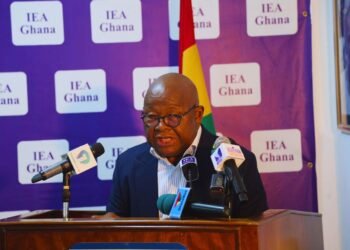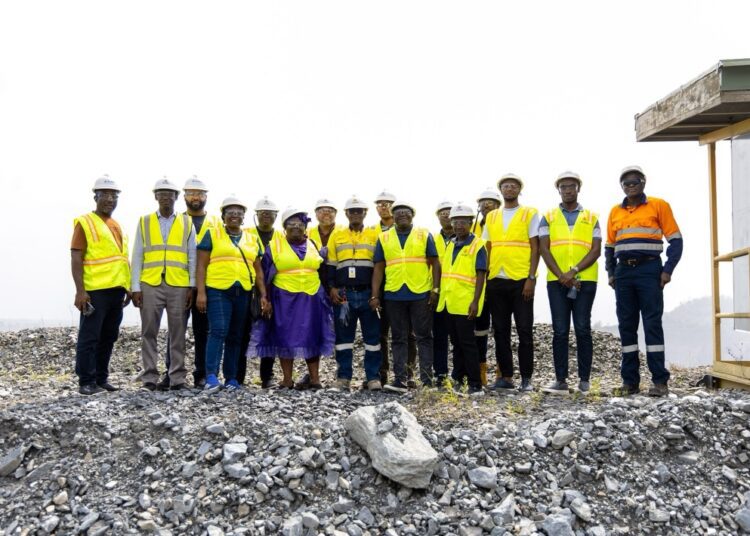
Mr. Isaac Tandoh, Chief Executive Officer of the Minerals Commission, spearheaded a landmark strategic dialogue aimed at synchronizing Ghana’s mineral extraction framework with national climate objectives.
This high-level engagement with the Minister of State for Climate Change and Sustainability, Hon. Issifu Seidu, serves as the primary catalyst for the Commission’s new “Innovative Policy Alignment Strategies,” a movement designed to transform regulatory oversight into tangible environmental gains.
By prioritizing the convergence of mineral resource development and the country’s broader sustainability agenda, the Commission is setting a new benchmark for how extractive industries can transition from traditional profit models to a more holistic, climate-conscious approach that guarantees long-term sector viability.
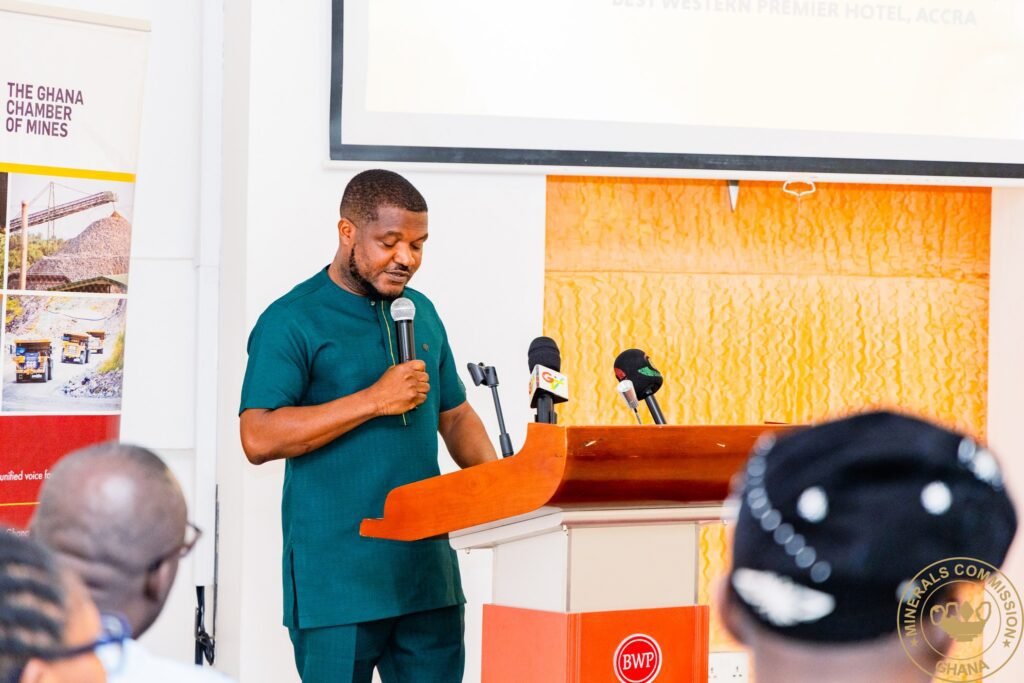
“The engagement provided an important platform to deepen collaboration between government institutions and reinforce a shared responsibility: ensuring that mineral resource development is environmentally responsible, socially inclusive, and economically beneficial. At a time when global attention is increasingly focused on climate action, Ghana’s mining industry must position itself as a leader in sustainable resource management.”
Minerals Commission
The Commission is moving beyond its traditional administrative mandate of licensing and monitoring to become an active architect of environmental stewardship.
The focus on “measurable outcomes” implies a transition toward data-driven regulation where emission reductions, biodiversity protection indices, and the success rates of land reclamation projects are rigorously tracked.
This policy alignment ensures that every stage of the mining value chain from the initial scratch of exploration to the final stages of mine closure is governed by a unified set of Environmental, Social, and Governance (ESG) standards.
By integrating these global benchmarks into local regulatory frameworks, the Commission seeks to mitigate the historical environmental footprint of mining, ensuring that the pursuit of mineral wealth does not come at the expense of Ghana’s forest reserves or water security.
Bridging the Gap Between Policy and Practice
The necessity for innovative policy alignment arises from the increasing complexity of global climate demands and the local urgency to protect vulnerable ecosystems.
Historically, mining regulations and environmental policies often operated in silos, leading to enforcement gaps that allowed for ecosystem degradation.
By bridging these gaps, the Commission ensures that mining companies are no longer just “compliant” in a legal sense, but are active participants in the “national development and climate resilience” strategy.
This synergy is crucial for attracting green investment, as international capital increasingly flows toward jurisdictions with transparent and robust sustainability frameworks.
Innovation in this context refers to the deployment of technology-driven monitoring systems that provide real-time data on mining activities. According to the Minerals Commission, leveraging “innovation, data, and policy alignment” allows for a more proactive rather than reactive regulatory stance.
This approach enables the Commission to safeguard forest reserves and water bodies with greater precision, ensuring that “responsible water use” becomes a standard operating procedure rather than a suggestion.
When policies are aligned, the friction between economic growth and environmental preservation is minimized, allowing for a “shared responsibility” that benefits both the industry and the host communities.
Enhancing Accountability Through ESG Integration
To enhance responsible mining, the Commission is embedding ESG principles directly into the heart of the extractive sector’s operations.
This evolution means that “environmental stewardship and responsible land use” are now prerequisites for maintaining a social license to operate.
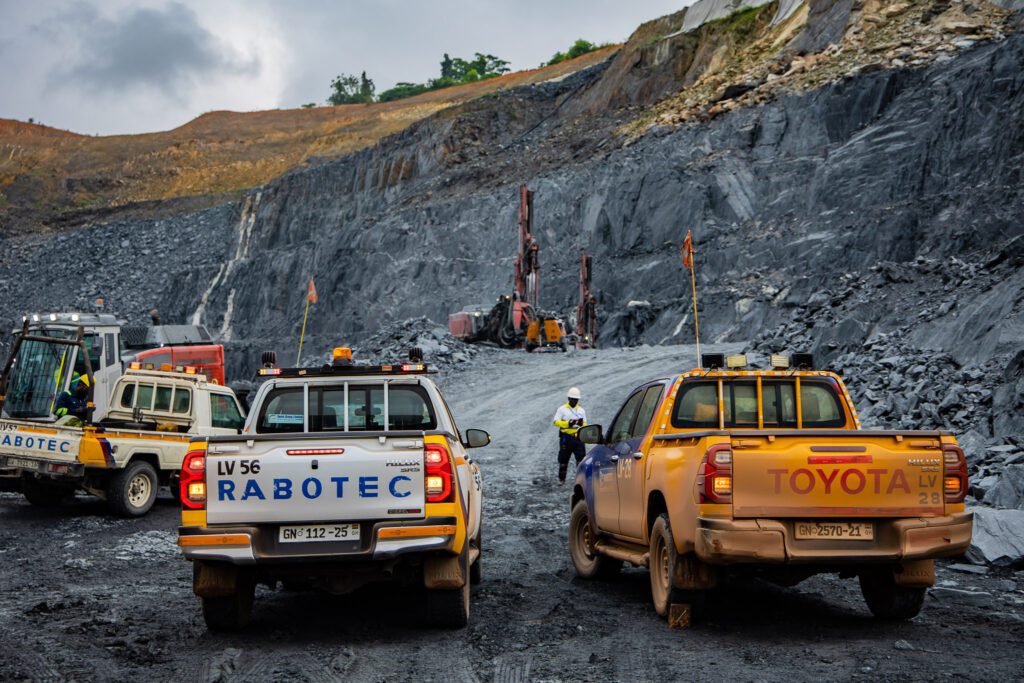
By requiring mining firms to adopt best practices in emission reduction and “effective land reclamation strategies,” the regulator is effectively raising the barrier to entry for irresponsible actors while rewarding those who invest in sustainable technology.
This shift ensures that the exploitation of Ghana’s gold, bauxite, and lithium contributes to a “climate-conscious” economy rather than detracting from it.
Furthermore, the collaboration with state agencies, as highlighted during Mr. Tandoh’s engagement with Hon. Issifu Seidu, reinforces the “collaborative governance” model necessary for success.
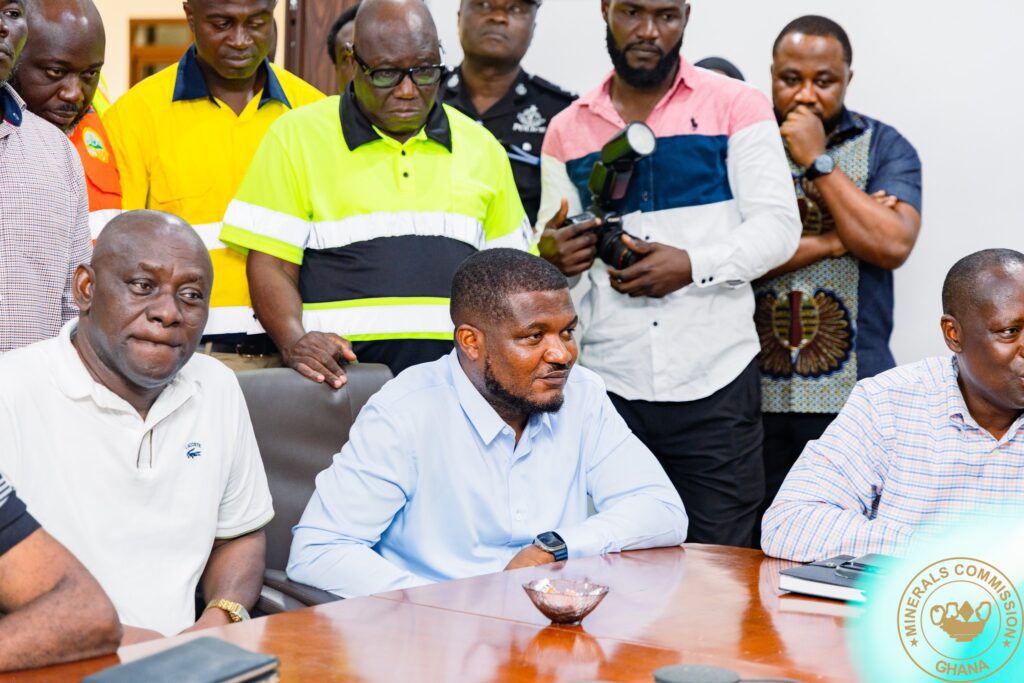
This inter-agency cooperation is vital for “strengthening compliance” across diverse landscapes, particularly in areas where mining intersects with protected forest reserves. As the Commission positions Ghana as a “leader in sustainable resource management,” the alignment of policies serves as a roadmap for other African nations.
The ultimate goal is a resilient mining sector that serves as a cornerstone for “economic growth and environmental preservation for future generations,” ensuring that the wealth beneath the soil provides a legacy of prosperity rather than a trail of ecological debt.
READ ALSO: Vice President Backs DACF Funding Strategy Reform